
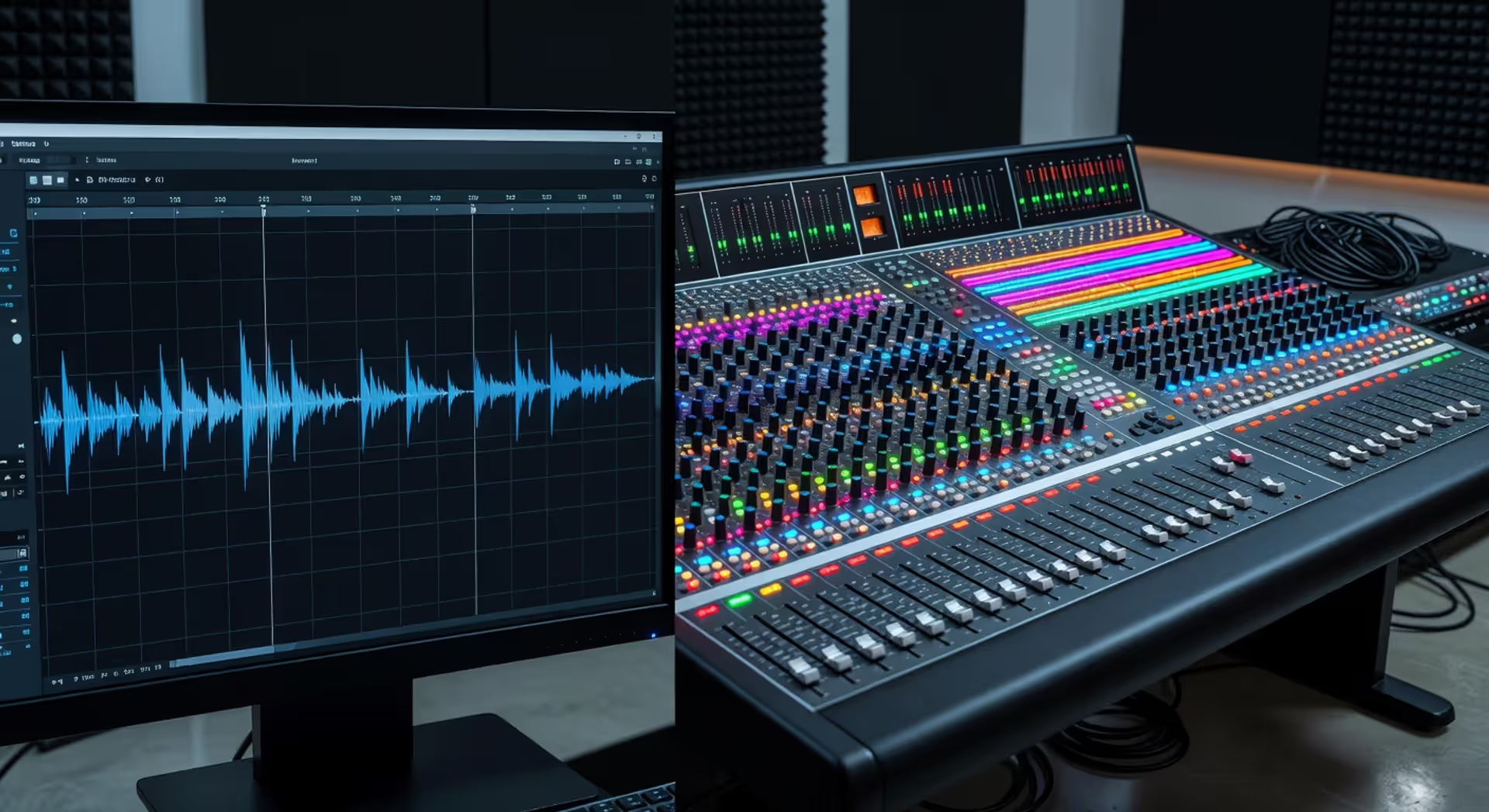
Audio Production vs Music Production Explained
Audio Production vs Music Production Explained
If you've ever wondered whether audio production and music production are the same thing, you're not alone. The terms get tossed around interchangeably, but they describe two distinct disciplines with different goals, workflows, and career paths. Audio production casts a wider net—it covers everything from podcast editing to film sound design. Music production, on the other hand, zeroes in on creating, recording, and shaping songs. Understanding the difference between audio and music production matters if you're choosing a career path, hiring a professional, or simply trying to figure out which skill set you need to develop. Let's break down what sets these two fields apart and where they overlap.
What Is Audio Production?
Audio production is the broad discipline of capturing, editing, mixing, and delivering sound for any medium. It's the umbrella term that covers all types of production work involving audio—whether that's dialogue for a documentary, sound effects for a video game, or the final mix of a commercial.
Audio producers work across industries. You'll find them in film and television, podcasting, advertising, corporate video, live event production, and broadcast radio. Their job is to ensure the audio serves the project's purpose, whether that's clarity in a voiceover or immersive soundscapes in a thriller.
What audio production covers is vast. It includes recording spoken word, editing dialogue, designing sound effects, mixing multi-track sessions, mastering final deliverables, and even field recording for nature documentaries or news segments. An audio producer might spend Monday editing a true-crime podcast, Tuesday mixing a car commercial, and Wednesday recording ADR (automated dialogue replacement) for a TV show.
The technical side is crucial. Audio producers need to understand microphone placement, signal flow, acoustics, noise reduction, and how to work with various recording formats. But the creative side matters just as much—knowing when to add reverb to create space, how to layer sounds for impact, or how to balance dialogue against background music.
Who do audio producers work with? Directors, video editors, marketing teams, podcast hosts, game developers, and live event coordinators. The common thread: these clients need high-quality sound to support a visual or spoken narrative, but music isn't necessarily the star of the show.
Author: Declan Wrenford;
Source: lamat-records.com
What Is Music Production?
Music production is the art and craft of creating recorded music. It focuses on songwriting support, arrangement, recording performances, and shaping the sonic character of a track from demo to final master.
The scope of music production centers on the music industry. Music producers collaborate with artists, songwriters, labels, and A&R teams to bring songs to life. They're involved in pre-production (choosing tempos, keys, instrumentation), tracking (recording vocals and instruments), editing (tuning, timing, comping takes), mixing (balancing levels, EQ, effects), and sometimes mastering.
A music producer's role varies by project. On one session, they might be programming beats and synthesizers for a pop track. On another, they're coaching a vocalist through an emotional performance or deciding whether the bridge needs a string section. Some music producers are also songwriters or instrumentalists; others focus purely on the technical and creative direction of the recording.
The end product is always a song or album meant for release—streaming platforms, vinyl, sync licensing, live performance backing tracks. Music production lives and breathes in studios, home setups, tour buses, and increasingly in bedrooms with a laptop and an audio interface.
Music producers work closely with recording artists, session musicians, mixing engineers, and mastering engineers. The relationship between producer and artist can be deeply collaborative, almost like a co-writer or creative partner. Think of the producer as the director of a film, but for a song.
Key Differences Between Audio and Music Production
The difference between audio and music production boils down to focus, output, and context. Here's a side-by-side look at how these disciplines diverge.
| Feature | Audio Production | Music Production |
| Primary focus | Clarity, narrative support, functional sound | Musical creativity, emotion, sonic identity |
| Typical projects | Podcasts, films, ads, games, broadcasts | Songs, albums, beats, music for artists |
| Key skills | Dialogue editing, sound design, field recording, post-production mixing | Arrangement, songwriting support, vocal production, beat-making |
| Common tools/DAWs | Pro Tools, Adobe Audition, Reaper, Nuendo | Ableton Live, Logic Pro, FL Studio, Pro Tools |
| Work settings | Post-production studios, broadcast facilities, on-location, corporate offices | Recording studios, home studios, artist rehearsal spaces |
| Typical clients | Filmmakers, podcasters, ad agencies, game studios, corporations | Recording artists, labels, songwriters, sync libraries |
| End deliverables | Dialogue tracks, sound effects libraries, mixed audio for video, podcast episodes | Released songs, instrumental tracks, album masters |
Comparing production disciplines reveals that audio production is problem-solving for sound in context—how do you make this interview intelligible, or this explosion feel real? Music production is about expression and vibe—how do you make this chorus hit harder, or this verse feel intimate?
Workflow Differences
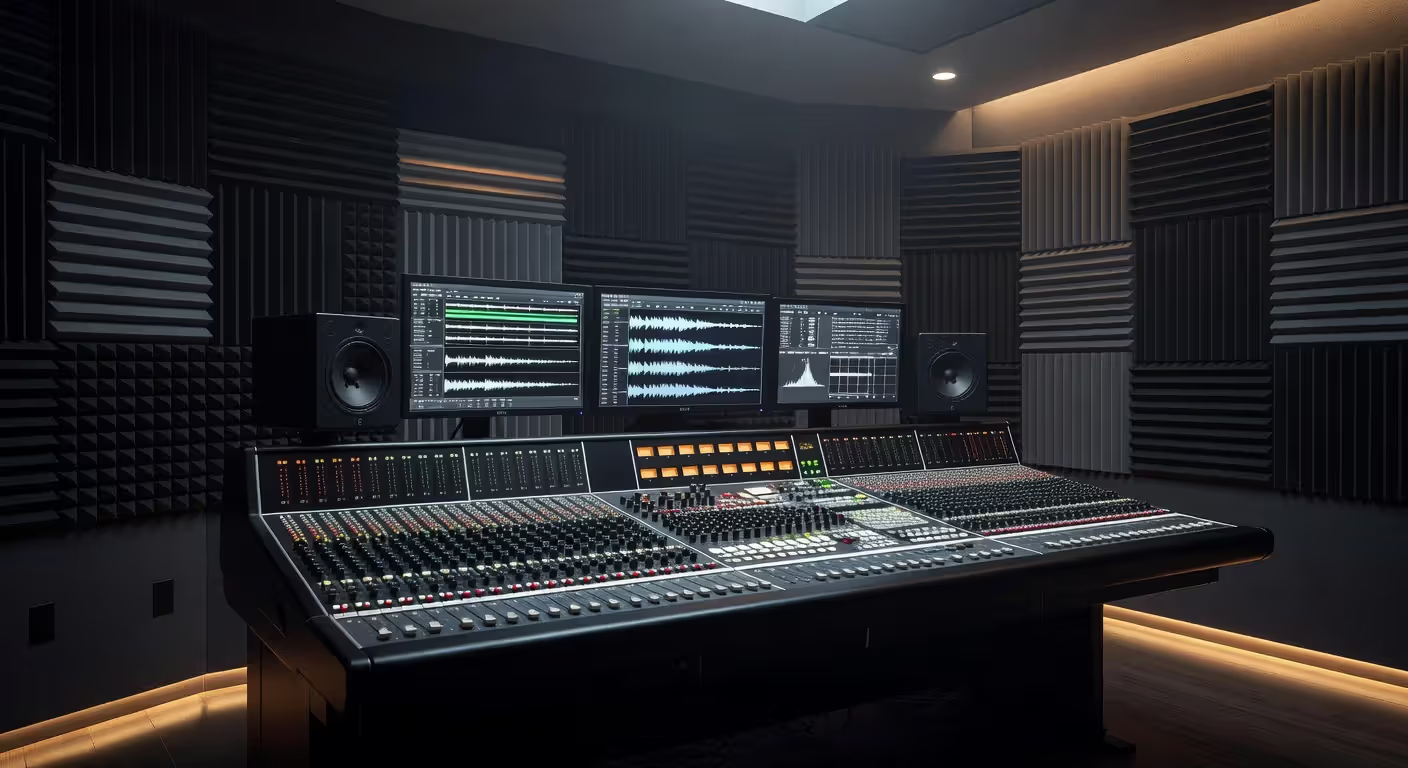
Audio versus music workflows diverge early. An audio producer often starts with existing material—footage, a script, or raw field recordings. The workflow is linear: import, edit for clarity, add or remove elements, mix for the medium (broadcast, streaming, cinema), and deliver in the required format.
Music production workflows are more iterative and exploratory. A session might begin with a beat or a chord progression, then layer drums, bass, melody, and vocals. Producers loop sections, try different arrangements, record multiple takes, and comp the best parts together. The process is less about fixing and more about building.
Author: Declan Wrenford;
Source: lamat-records.com
One workflow prioritizes efficiency and technical precision. The other prioritizes creativity and emotional impact. Both require attention to detail, but the questions they ask are different.
Tools and Software Used
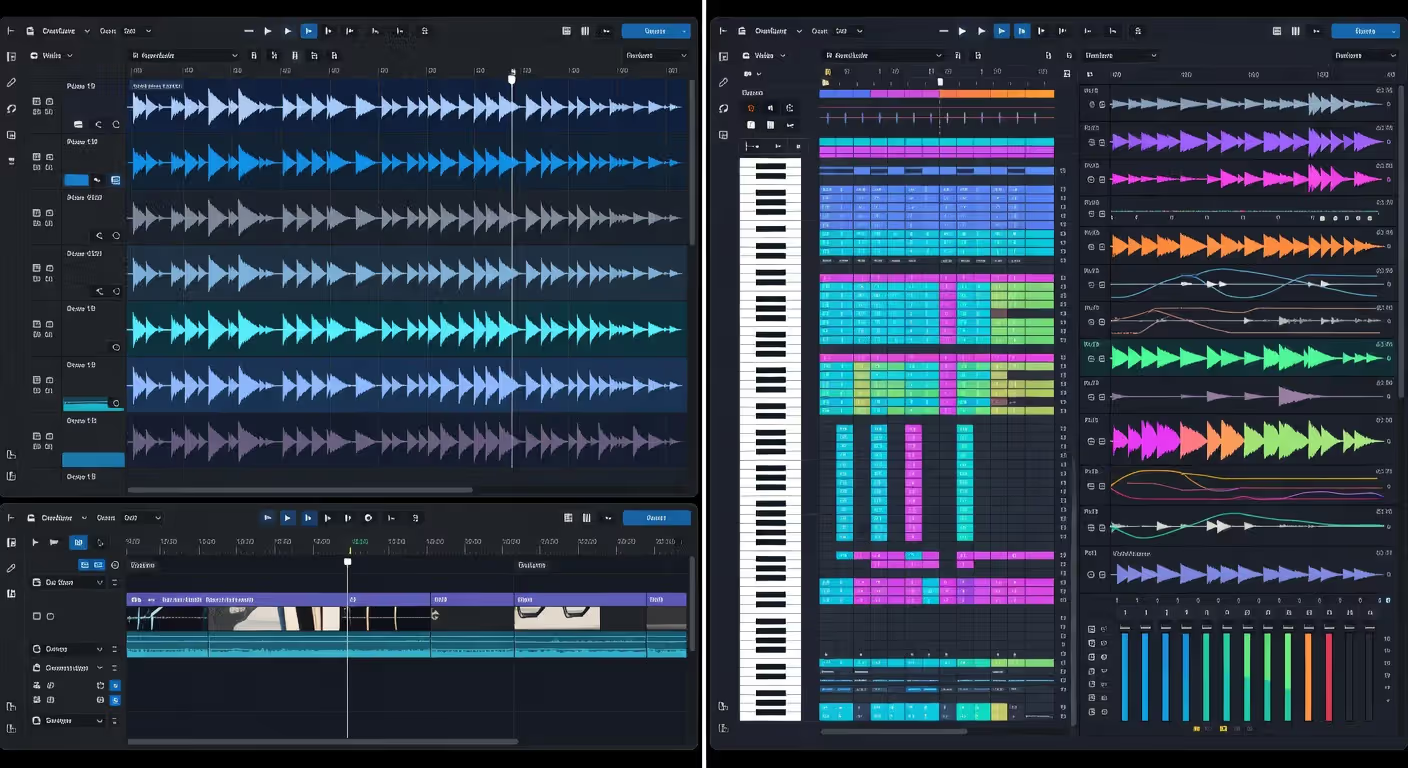
Both fields use digital audio workstations (DAWs), but preferences vary. Pro Tools dominates audio post-production for film and TV because of its robust editing features and industry-standard status. Adobe Audition is popular for podcasters and radio producers. Reaper and Nuendo also serve audio-focused workflows well.
Music producers gravitate toward DAWs optimized for MIDI, virtual instruments, and loop-based composition. Ableton Live is a favorite for electronic music and live performance. Logic Pro and FL Studio are go-to choices for beat-makers and songwriters. Pro Tools is used in music production too, especially in professional recording studios, but it's less common in bedroom production setups.
Plugin ecosystems differ as well. Audio producers rely heavily on noise reduction tools (iZotope RX), dialogue processors, and precision EQs. Music producers load up on synthesizers, drum machines, sample libraries, and creative effects like chorus, delay, and saturation.
The gear also diverges. Audio producers often need field recorders, shotgun mics, and lavalier systems. Music producers invest in MIDI controllers, studio monitors, audio interfaces with multiple inputs, and microphones suited for vocals and instruments.
Skills Required for Each Production Discipline
Both disciplines demand a mix of technical chops and creative instincts, but the emphasis shifts.
Audio producers need strong editing skills—cutting, fading, aligning, and cleaning up audio quickly and accurately. You'll spend a lot of time removing breaths, fixing plosives, and syncing sound to picture. Understanding acoustics helps when recording in less-than-ideal environments. You also need to grasp loudness standards for broadcast (LUFS targets), file formats, and delivery specs for different platforms.
Collaboration in audio production often means taking direction from a creative lead—a director, a showrunner, a brand manager. You're serving the story or message, not necessarily expressing your own artistic vision.
Music producers, by contrast, need musicality. You don't have to be a virtuoso, but you should understand melody, harmony, rhythm, and song structure. Arrangement skills are critical—knowing when to add a synth pad, when to strip things back, or how to build tension into a pre-chorus. Vocal production is a specialized skill: coaching performances, tuning, timing, and creating vocal stacks.
The creative side of music production is more personal. You're often shaping an artist's sound or developing your own signature style. That requires taste, intuition, and the confidence to make bold choices.
Both roles require patience, problem-solving, and the ability to work under deadlines. But audio production leans technical and service-oriented, while music production leans creative and collaborative in a more artistic sense.
The line between audio and music production is blurring, especially with younger producers who grew up making beats and editing podcasts on the same laptop. But the mindset is still different—audio production asks 'is this clear and does it serve the content?' and music production asks 'does this feel right and does it move you?' Both are valid, both are hard, and the best producers can toggle between those modes depending on the project.
— Thompson Michael
Career Paths and Work Environments
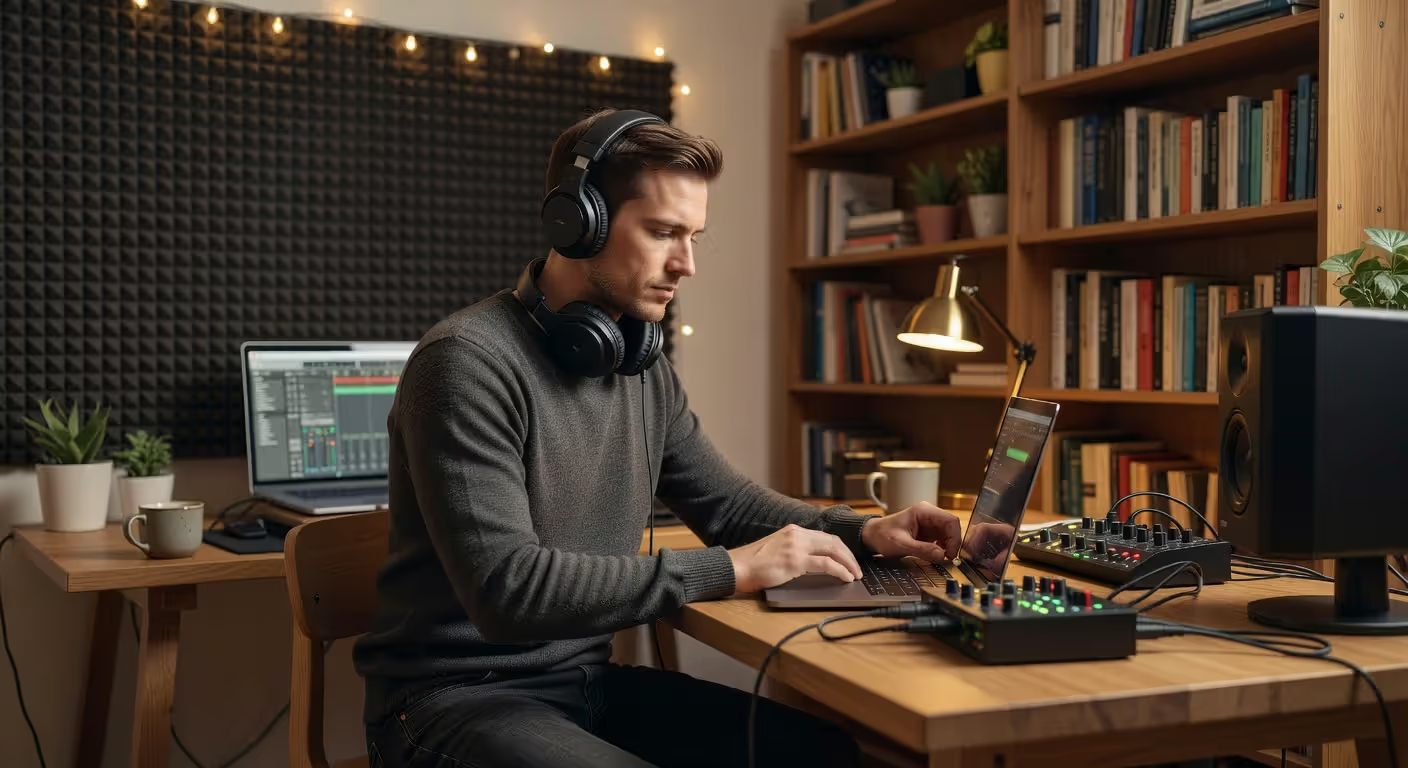
Production role distinctions shape where and how you work. Audio producers often find employment in post-production houses, broadcast networks, podcast production companies, game studios, and corporate media departments. Freelancing is common, especially for those specializing in podcasts or commercial work.
Music producers tend to work as freelancers, in-house at record labels, or as part of a production collective. Some run their own studios and take on clients; others produce exclusively for one artist or band. The rise of home studios and affordable recording gear has made music production more accessible, but breaking into the industry still requires networking, a strong portfolio, and often a few lucky breaks.
Salary ranges vary widely. Entry-level audio producers in corporate or broadcast settings might earn $40,000–$55,000 annually in 2026. Experienced audio post-production engineers in major markets can command $70,000–$100,000 or more. Freelance rates depend on the project—podcast editing might pay $50–$150 per finished hour, while a commercial mix could bring in $500–$2,000.
Music producers' income is even more variable. A producer working with independent artists might earn $200–$1,000 per song, plus potential royalties if the track gets released. Established producers with major-label credits can negotiate five-figure advances per project and earn substantial backend royalties. Beat sales and sync licensing offer additional revenue streams.
Job outlook for both fields is stable but competitive. Podcasting continues to grow, and streaming platforms need audio content. The music industry is healthy, but breaking in requires persistence. The pattern I see most often is that producers who diversify—doing both audio and music work, or offering mixing and mastering services—tend to have steadier income.
Author: Declan Wrenford;
Source: lamat-records.com
Which Production Path Is Right for You?
Choosing between audio production and music production starts with honest self-assessment. Ask yourself: do you get more excited about supporting a story or crafting a song? Do you prefer working with dialogue and sound effects, or beats and melodies? Are you drawn to film, podcasts, and media, or to artists and albums?
If you love music, play an instrument, or spend hours tweaking beats, music production is probably your lane. If you're fascinated by how sound shapes a scene in a movie, or you enjoy the puzzle of cleaning up a noisy interview, audio production might be a better fit.
Consider the types of production work that energize you. Do you want to work with creative teams in advertising and film? Or do you want to collaborate with singers and rappers in the studio? Your answer will guide your training and portfolio.
The good news: you don't have to choose forever. Many producers start in one discipline and expand into the other. A music producer might take on podcast editing gigs for steady income. An audio post engineer might produce beats on the side. The skills overlap more than you'd think—both require DAW fluency, mixing chops, and an ear for detail.
Transitioning between disciplines is easier if you build a versatile skill set. Learn multiple DAWs. Practice both music arrangement and dialogue editing. Network in both communities. The more you can do, the more opportunities you'll have.
One last thing: don't wait for permission. Start producing. Record your friends, edit a podcast, make beats, mix a short film. The fastest way to figure out which path fits is to try both and see which one you can't stop thinking about.
Frequently Asked Questions
Both audio production and music production offer rewarding, creative careers with room to grow and specialize. If you're drawn to sound, you can't go wrong diving into either field—or both. The key is to start making things, keep learning, and stay curious about how sound shapes the way we experience stories and songs.
Related Stories
Read more
Read more

The content on this website is provided for general informational and educational purposes only. It is intended to explain concepts related to music production, recording, mixing, mastering, music industry roles, and distribution.
All information on this website, including articles, guides, and examples, is presented for general educational purposes. Results and success in music production may vary depending on skill level, equipment, and effort.
This website does not provide professional music production services or guarantees of commercial success, and the information presented should not be used as a substitute for consultation with qualified music producers, audio engineers, or music industry professionals.
The website and its authors are not responsible for any errors or omissions, or for any outcomes resulting from decisions made based on the information provided on this website.