

Classical Guitar Nut Width Guide
Classical Guitar Nut Width Guide

Understanding classical guitar nut width can make or break your playing comfort. It's one of those specs that doesn't get much attention until you pick up a guitar that feels just slightly off. Maybe your fingers crowd together, or you struggle to fret cleanly. Often, the culprit is nut width. This guide breaks down everything you need to know about this small but mighty measurement—from what it is to how to choose the right one for your hands and playing style.
What Is Nut Width and Why It Matters
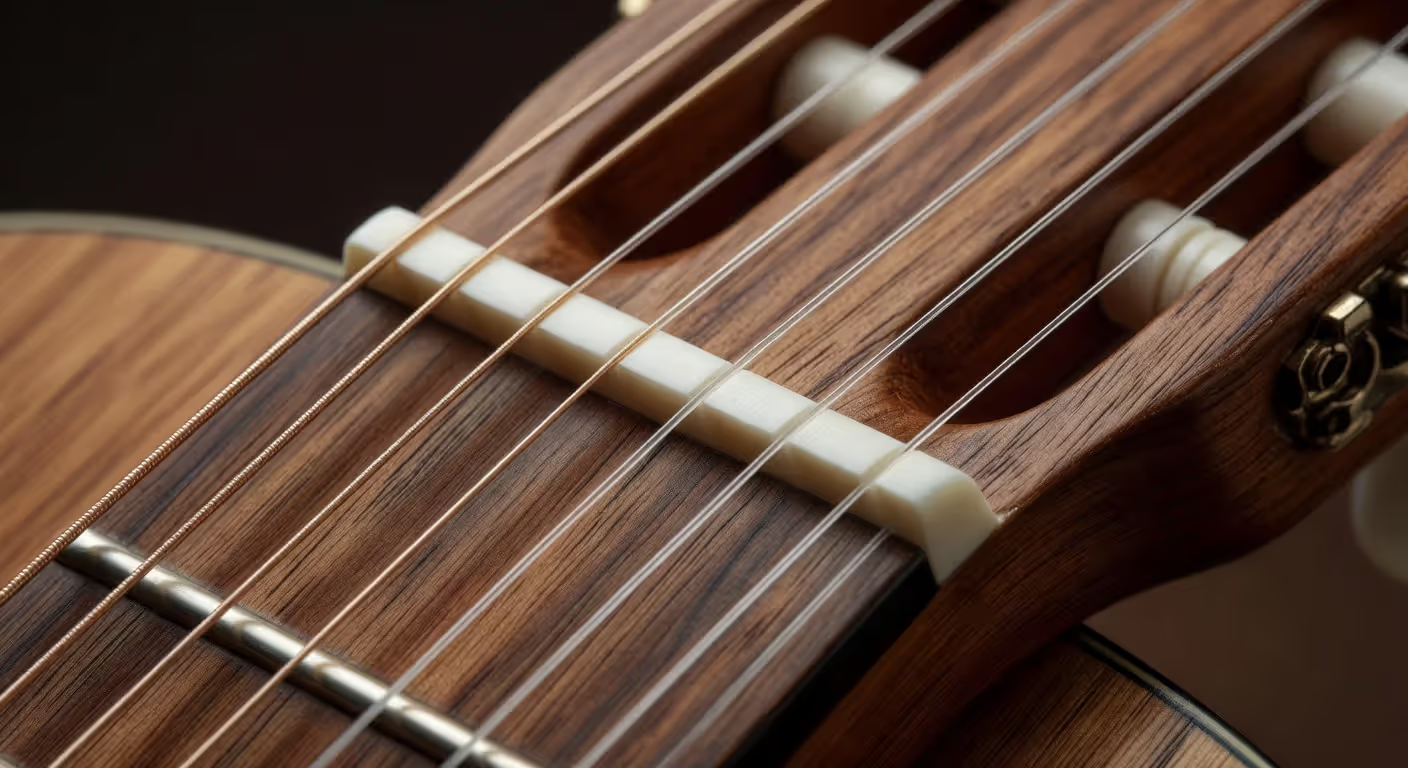
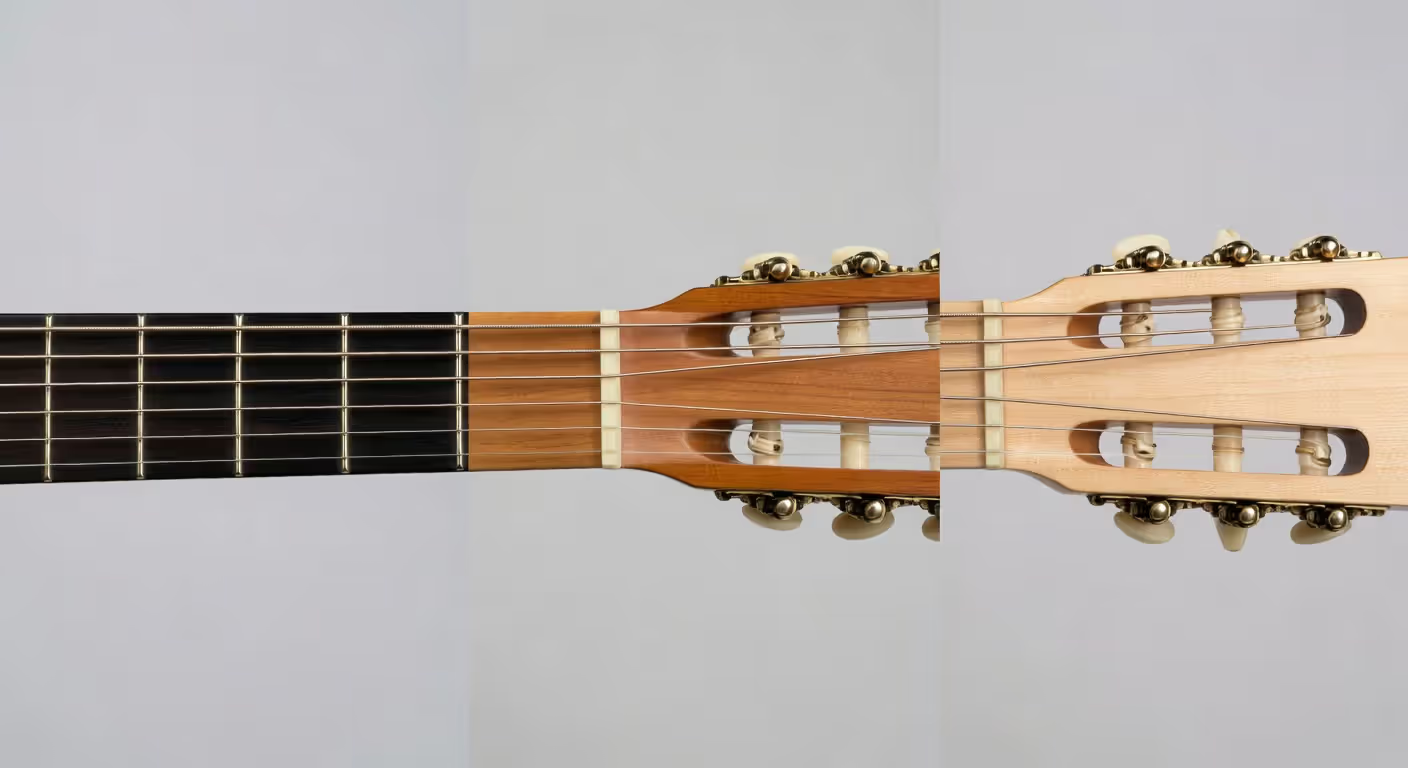
Nut width is the measurement across the top of the nut—the small piece at the top of the fretboard where the strings pass through slots before continuing to the tuning machines. It's measured from the edge of the fretboard on the bass side to the edge on the treble side, typically in millimeters.
This single dimension determines string spacing at the nut. Wider nuts spread the strings farther apart. Narrower nuts bring them closer together.
Why does this matter so much for classical guitarists? Because classical technique demands precision. You're plucking individual strings with your right hand while forming complex chord shapes and running scales with your left. If the strings are too close together, your fingers collide. Too far apart, and stretches become uncomfortable or impossible.
String spacing at the nut directly affects how easily you can place your fretting fingers without muting adjacent strings. It influences whether you can fit your fingertip cleanly between two strings or whether you're constantly adjusting your hand angle to avoid buzzing.
The pattern I see most often is beginners choosing guitars based on price or brand without ever considering nut width. Then they struggle for months, thinking they just need more practice, when a different nut width would solve the problem immediately.
Author: Savannah Quillmere;
Source: lamat-records.com
How to Measure Guitar Nut Width
Measuring guitar nut width accurately takes about 30 seconds if you've got the right tool. You'll need a ruler or, better yet, a digital caliper. Calipers give you precision to the tenth of a millimeter, which matters when you're comparing 50mm versus 52mm.
Here's the process:
Position your measuring tool perpendicular to the fretboard, right at the nut. You're measuring the full width of the fretboard at this point—from the very edge on the sixth string side to the very edge on the first string side.
Don't measure from the center of the outer strings. That's a different measurement (string span) and it'll give you a smaller number. You want the full fretboard width at the nut.
If you're using a ruler, make sure it's metric. Nut widths are standardized in millimeters, and converting from inches introduces rounding errors. A caliper eliminates guesswork—just close the jaws gently against both edges and read the display.
Most classical guitars will show a measurement between 48mm and 54mm. Steel-string acoustic guitars typically run narrower, around 43–45mm, while electric guitars often sit at 42–43mm. This is one reason steel-string players sometimes find classical guitars feel "huge" when they first switch.
One common mistake: measuring at the wrong spot. Some people measure at the first fret instead of the nut. That'll give you a wider reading because the fretboard flares out as it moves toward the body. Always measure right at the nut itself.
Standard Classical Guitar Nut Width Dimensions
The classical guitar world has settled on a few standard measurements. The most common is 52mm, which you'll find on the majority of student and intermediate classical guitars. It's been the default for decades.
But you'll also see 50mm on some models, particularly those marketed as "slim neck" or designed for players transitioning from steel-string guitars. And at the wider end, 54mm appears on many professional-grade instruments and guitars built for players with larger hands.
Historically, classical guitars had even wider nuts—some vintage instruments from the early 20th century measured 55mm or more. As guitar design evolved and more players came from folk or rock backgrounds, manufacturers started offering narrower options. The 52mm standard emerged as a compromise that works for most players.
Flamenco guitars sometimes use slightly narrower nuts than classical guitars, typically 50–51mm. The faster, more percussive playing style of flamenco benefits from strings that are a bit closer together, allowing quicker movement between them.
Manufacturer variations exist even within the same brand. Yamaha's student models often use 52mm, while their professional series might offer 53mm. Cordoba provides both standard and "wide neck" versions of some models, with the wide neck measuring 52mm versus 50mm on the standard.
Comparison Table of Popular Classical Guitar Nut Widths
| Brand | Model | Nut Width (mm) | Category |
| Yamaha | C40 | 52 | Student |
| Cordoba | C5 | 52 | Intermediate |
| Cordoba | C7 | 52 | Intermediate |
| Alhambra | 1C | 52 | Student |
| Alhambra | 4P | 52 | Intermediate |
| Kremona | Soloist S65C | 52 | Professional |
| Ramirez | Studio 1 | 52 | Professional |
| Ramirez | 1A | 53 | Professional |
| Cordoba | GK Studio | 50 | Crossover |
| Yamaha | NCX3 | 48 | Crossover |
| Taylor | Academy 12e-N | 48 | Crossover |
| Altamira | N200 | 50 | Flamenco |
| Conde Hermanos | AF25 | 51 | Flamenco |
| Hauser | Concert Model | 54 | Professional |
This table shows how 52mm dominates the market, but crossover models (designed for steel-string players) go narrower, while some high-end concert guitars go wider.
Author: Savannah Quillmere;
Source: lamat-records.com
How Nut Width Affects Playability
Nut width and playability are inseparable. The spacing at the nut sets up everything that happens on the fretboard.
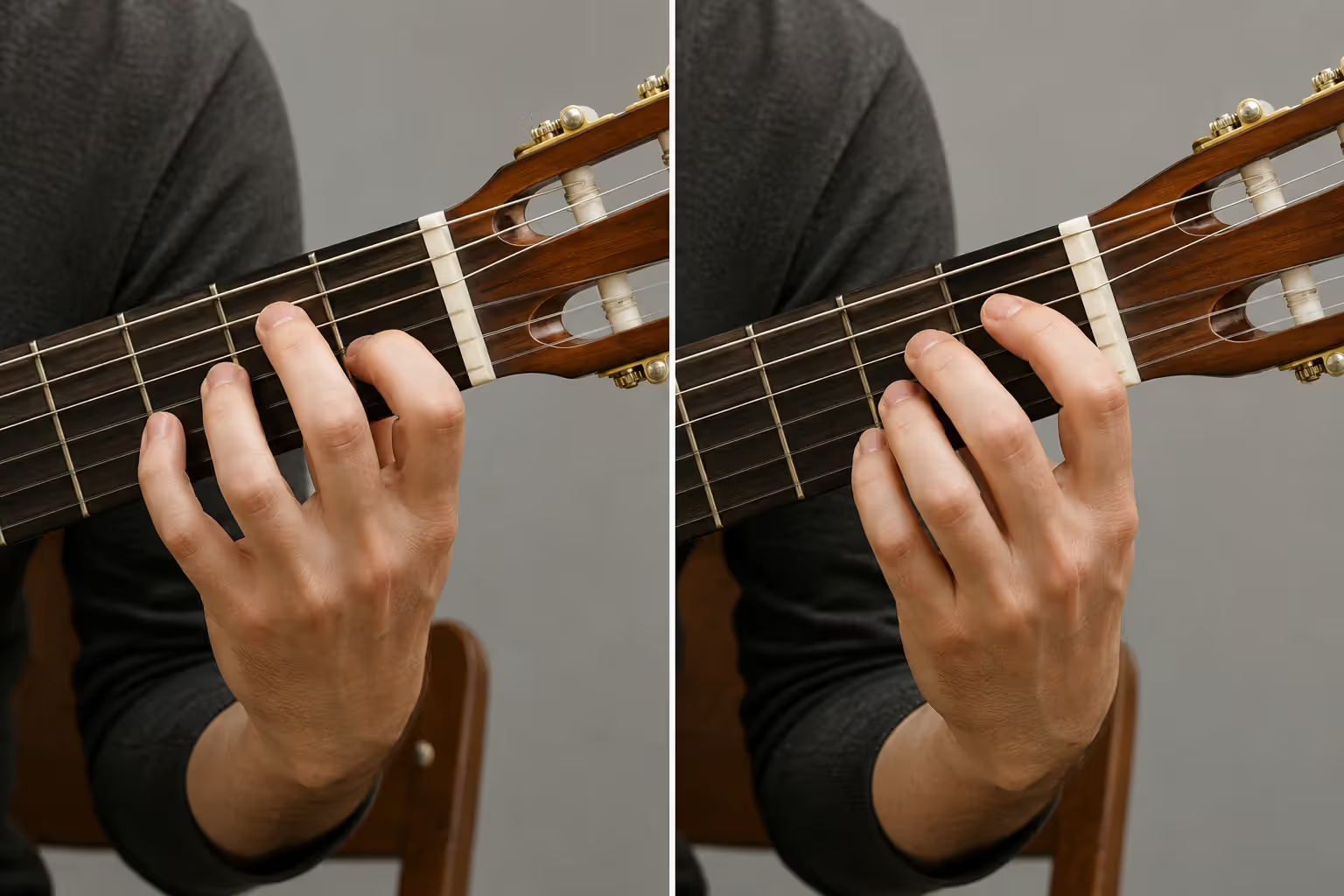
With a wider nut, your fretting fingers have more room to operate independently. This is huge for classical technique, where you're often holding down four strings simultaneously in different positions. A 54mm nut gives each finger its own territory, reducing the chance of accidentally muting a string you need to ring.
Fingerstyle playing benefits from wider nuts because your right-hand fingers are plucking strings that are spaced farther apart. Less chance of hitting the wrong string or catching two at once.
But wider isn't always better. Stretches become more demanding. A chord that requires your first and fourth fingers to span three frets gets harder when those strings are spaced wider. Players with smaller hands often find wide nuts force them into uncomfortable positions that lead to tension and fatigue.
Narrower nuts bring the strings closer together, making stretches easier. You can reach across more frets with less effort. This is why crossover guitars targeting steel-string players use 48mm nuts—it feels familiar and accessible.
The tradeoff? Precision suffers. Your fingers have less margin for error. Placing a fingertip cleanly without touching adjacent strings requires more careful positioning. Classical players who've spent years developing precise left-hand technique can handle this, but beginners often struggle.
String spacing at the nut also affects tone indirectly. When you're comfortable, you play better. You can focus on dynamics, articulation, and musicality instead of just hitting the right notes. An uncomfortable nut width creates tension that shows up in your sound.
Classical versus flamenco playing styles have different needs. Classical repertoire often involves complex polyphonic passages where multiple voices move independently—wider spacing helps. Flamenco emphasizes speed, percussive strumming, and rapid scale runs—slightly narrower spacing facilitates quick movement.
The nut width is not just about comfort—it shapes your entire technical approach. I've seen advanced students plateau for months because they were fighting their instrument's dimensions rather than working with them. When the nut width matches your hand size and playing style, technique develops naturally. When it doesn't, you compensate with tension, and that becomes a ceiling you can't break through.
— Rodriguez Manuel
Wide Versus Narrow Nut: Pros and Cons
Let's break down the direct comparison.
Wide nut (53–54mm) advantages:
You get generous string spacing that reduces accidental muting. Your fingers aren't fighting for space. This is particularly valuable for players with thicker fingers or those who've developed a classical technique that relies on precise, independent finger placement.
Complex chord voicings become easier to finger cleanly. When you're holding down the sixth string with your thumb while fretting notes on the first three strings, that extra millimeter or two prevents the crowding that causes buzzes and dead notes.
Professional classical guitarists often prefer wider nuts because their technique is refined enough to handle the increased stretch demands, and they benefit from the cleaner note separation.
Wide nut disadvantages:
Stretches are harder. Period. If you have small or medium-sized hands, reaching from the first to fourth fret across four strings can be a strain. This limits your repertoire or forces you into awkward positions.
Barring across all six strings requires more finger length. Players with shorter fingers sometimes can't get a clean barre on a 54mm nut without significant hand tension.
Speed can suffer. Moving laterally across the fretboard takes more time and effort when the strings are spaced farther apart.
Narrow nut (48–50mm) advantages:
Stretches become manageable. Chords that felt impossible on a wide neck suddenly open up. This is transformative for players with smaller hands.
Lateral movement across strings is faster. Your fingers don't have to travel as far, which helps with rapid scale passages and arpeggios.
Players transitioning from steel-string or electric guitars feel immediately comfortable. The learning curve is less steep.
Narrow nut disadvantages:
String spacing gets tight. You need more precise finger placement to avoid muting adjacent strings. Beginners often struggle with this.
Fingerstyle playing requires more careful right-hand technique. It's easier to catch the wrong string when they're close together.
Some classical repertoire becomes awkward. Pieces that rely on sustained bass notes while playing melody on the treble strings can be harder to execute cleanly.
The simpler option usually wins here: match the nut width to your physical dimensions and playing goals rather than trying to adapt to an "ideal" that doesn't fit you.
Author: Savannah Quillmere;
Source: lamat-records.com
Choosing Nut Width Based on Hand Size
Hand size isn't just about length—it's also about finger thickness, flexibility, and the distance you can comfortably span.
For small hands:
If your hand span (thumb tip to pinky tip when fully stretched) is less than 8 inches, or if you struggle to reach an octave on a piano, start with 50–52mm. A 50mm nut will make stretches significantly easier and reduce the tension that comes from overreaching.
Don't assume you need to "work up" to a wider nut. Many professional players with smaller hands use 50–51mm nuts throughout their careers. It's not a limitation—it's a match.
For medium hands:
Most players fall into this category. A hand span of 8–9 inches typically works well with the standard 52mm nut. You've got enough reach to handle the stretches without strain, and enough precision to keep adjacent strings from ringing when they shouldn't.
You can probably adapt to either 50mm or 54mm if you spend time with it, but 52mm will likely feel most natural from the start.
For large hands:
Hand span over 9 inches, thick fingers, or a background in bass guitar? Consider 53–54mm. You'll appreciate the extra room, and the increased stretch demands won't bother you.
One thing to watch: even with large hands, if you have shorter fingers relative to your palm size, a 54mm nut might still create stretch issues. Finger length matters more than palm width.
Testing recommendations:
Always try before you buy if possible. Play a few chords that involve stretches—a C major chord in first position, an F major barre chord, a G major with the pinky on the first string third fret. Do they feel comfortable or strained?
Try some scales up and down the neck. Does your hand feel relaxed or tense?
If you're buying online, check the return policy. Sometimes you won't know if a nut width works until you've played it for a few days.
Finger span tests can help. Spread your fingers on a ruler and measure the distance from your index finger tip to your pinky tip in a comfortable playing position (not maximum stretch). If that's less than 3.5 inches, lean toward narrower nuts. Over 4 inches, you can handle wider nuts comfortably.
Common Questions About Classical Guitar Nut Width
Choosing the right classical guitar nut width comes down to honest assessment of your hands and playing goals. Don't let tradition or assumptions override your comfort. A guitar that fits your dimensions will accelerate your progress and make playing more enjoyable. Measure carefully, test when possible, and remember that the "standard" 52mm is just an average—your ideal might be different.
Related Stories
Read more

Read more


The content on this website is provided for general informational and educational purposes only. It is intended to explain concepts related to music production, recording, mixing, mastering, music industry roles, and distribution.
All information on this website, including articles, guides, and examples, is presented for general educational purposes. Results and success in music production may vary depending on skill level, equipment, and effort.
This website does not provide professional music production services or guarantees of commercial success, and the information presented should not be used as a substitute for consultation with qualified music producers, audio engineers, or music industry professionals.
The website and its authors are not responsible for any errors or omissions, or for any outcomes resulting from decisions made based on the information provided on this website.