
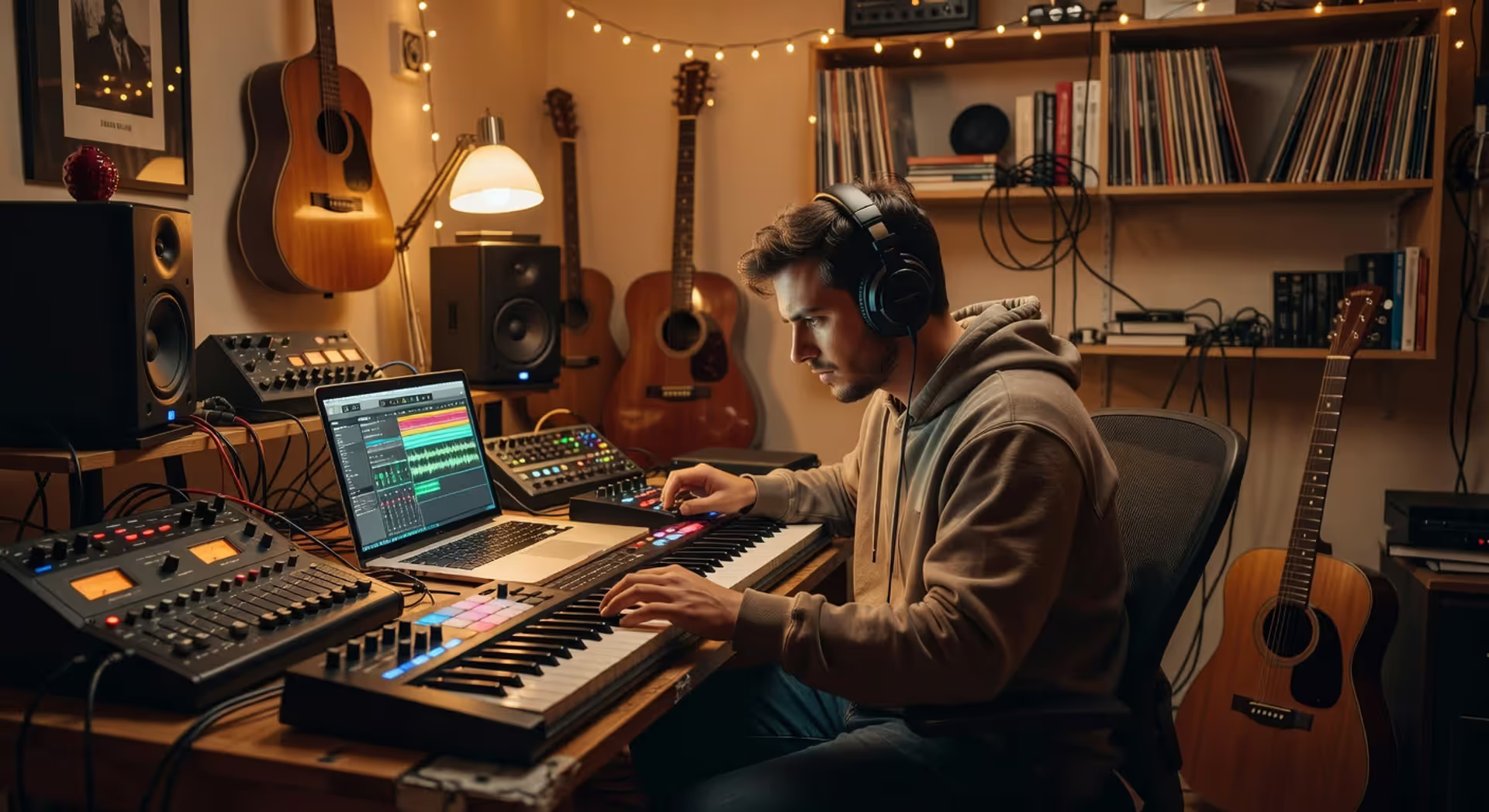
How to Be a Music Artist in 2026
How to Be a Music Artist in 2026?
So you want to learn how to be a music artist. Not just someone who makes music in their bedroom, but a real artist with fans, releases, and a growing career. The good news? It's more accessible now than ever before. The challenging part? You're competing with millions of others who have the same access. The difference between artists who build momentum and those who stall out usually comes down to a handful of strategic decisions made early on. This guide walks you through the practical steps, from developing your sound to making your first dollar from your art.
What Does It Mean to Be a Music Artist Today?
Being a music artist in 2026 isn't just about making great songs. That's table stakes.
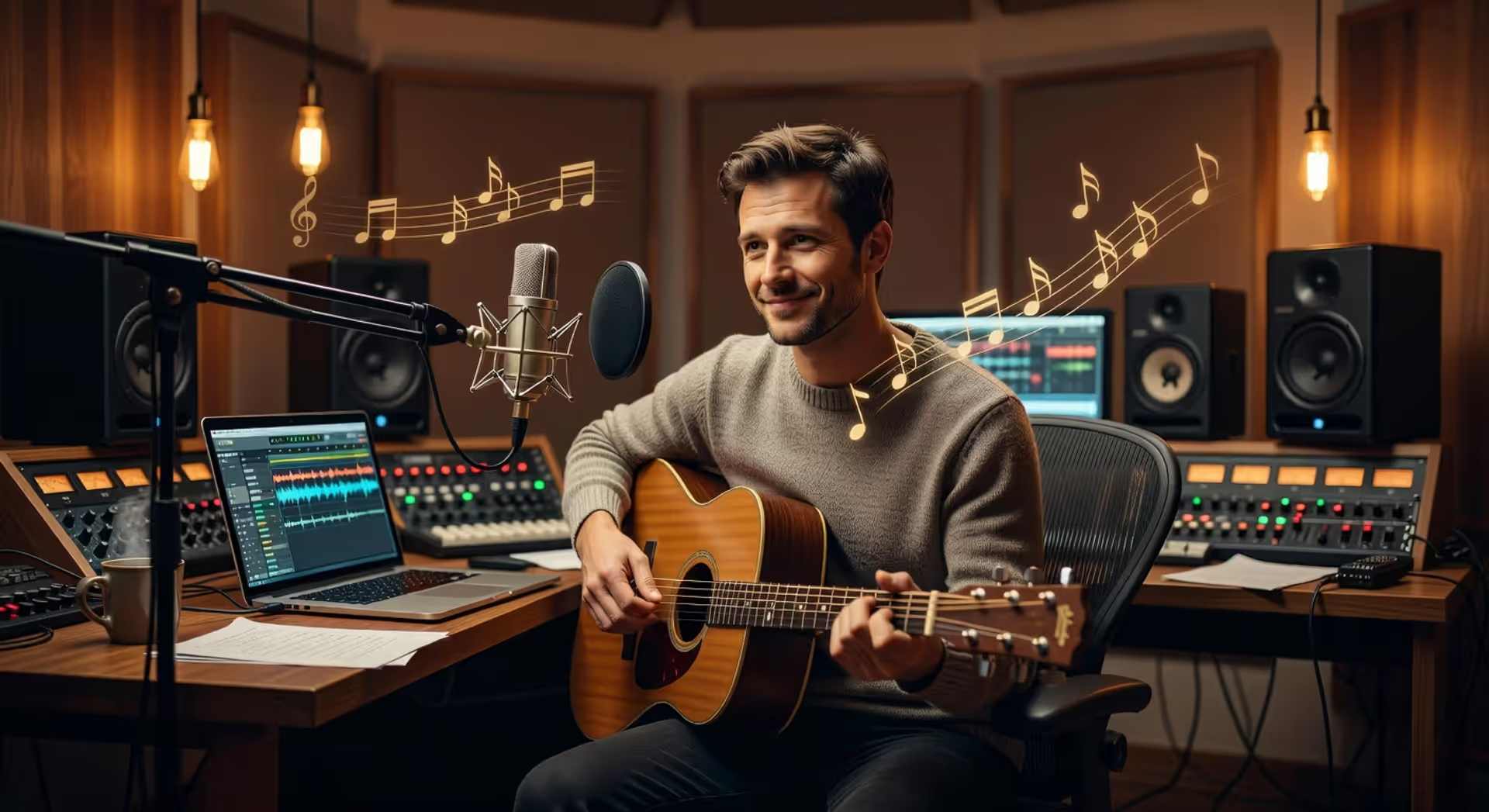
A modern music artist is part musician, part brand manager, part content creator, and part entrepreneur. You're building a recognizable identity that people connect with emotionally. You're managing your own distribution, marketing, and often your own recording. You're engaging directly with fans on multiple platforms, sometimes daily.
The role has expanded dramatically. Where artists once focused solely on their craft while labels handled everything else, establishing yourself as an artist now means wearing multiple hats. You'll make creative decisions one hour and analyze streaming data the next.
This isn't necessarily harder—it's different. You have control. You keep ownership. You can test ideas and pivot quickly without asking permission from a boardroom.
But it requires a shift in mindset. You're not just "a musician who posts sometimes." You're building a sustainable creative business around your art.
Developing Your Musical Skills and Style
Your musical ability is still the foundation. Everything else amplifies it, but if the music isn't there, nothing else matters.
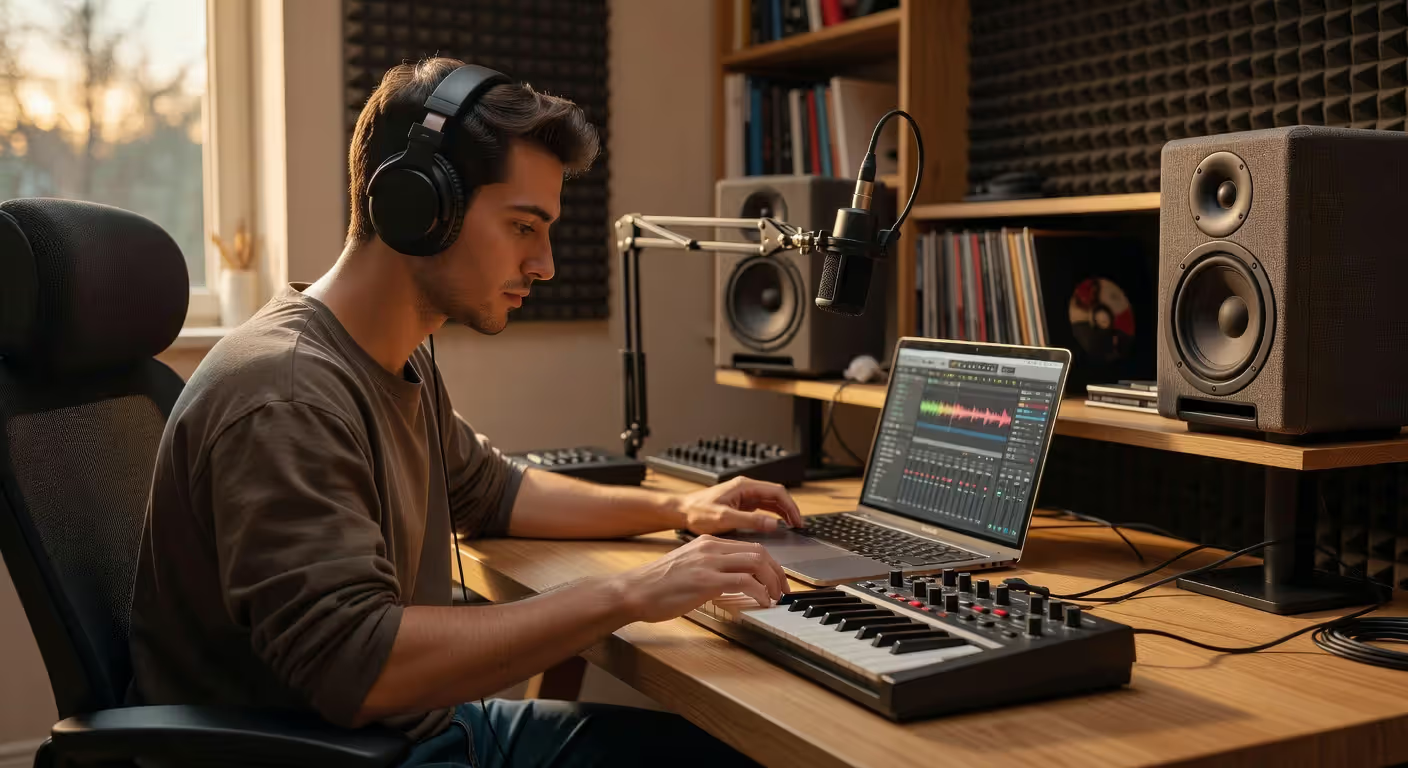
Start with consistent practice. Not sporadic bursts of inspiration—actual scheduled time with your instrument or DAW. Most developing musicians underestimate how much repetition it takes to move from competent to distinctive. Three focused hours per week beats seven hours of distracted noodling.
Finding your sound takes experimentation. Don't lock into a genre too early because you think it's marketable. Try combinations. Blend influences. The artists who stand out usually sit at the intersection of two or three styles, not dead center in one.
Record yourself constantly, even rough ideas. Your phone is fine. Listen back critically. The gap between what you think you sound like and what you actually sound like is where growth happens.
Author: Miles Arbordale;
Source: lamat-records.com
Study music you admire, but also music you don't fully understand. Break down arrangements. What makes that chorus hit? Why does that verse feel spacious? Reverse-engineering other people's work teaches you techniques you can adapt.
One mistake I see often: developing as a musician while ignoring performance skills. If you only practice alone, you'll struggle in front of people. Play for friends. Record videos of yourself performing. Get comfortable with the discomfort.
Technical skill matters, but so does emotional delivery. A perfectly executed but lifeless performance loses to a slightly rough but deeply felt one every time.
Building Your Artist Identity and Brand
This is where many talented musicians stumble. They can write and perform, but they haven't figured out who they are as an artist.
Your artist identity is the personality and aesthetic that people associate with your music. It includes your name, your visual style, your messaging, your story, and the vibe you consistently project.
Start with your artist name. It should be memorable, easy to spell, and available across platforms. Search it thoroughly—social handles, domain names, existing artists. Changing it later is possible but painful.
Building an artist identity means making deliberate choices about how you present yourself. What colors appear in your artwork? What themes run through your lyrics? What's your origin story, and how do you tell it in two sentences?
Your brand is what people say about you when you're not in the room. For artists, that means every song, every post, every show should reinforce the same core identity.
— Rubin Rick
Consistency matters more than perfection. An artist with a clear, slightly rough aesthetic beats a polished but generic one. People connect with specificity.
Your social media presence is part of your brand, not separate from it. Pick 2–3 platforms where your potential fans actually spend time. For most genres in 2026, that's Instagram, TikTok, and YouTube. Don't spread yourself across eight platforms—you'll burn out and all of them will suffer.
Post regularly, but don't treat social media as a promotional megaphone. Share your process. Show your personality. Give people a reason to follow you beyond "new song out Friday."
Artist development basics include understanding that your brand evolves. What you project in year one will shift by year three. That's fine. Just make sure each phase feels intentional, not random.
Recording and Releasing Your First Music
You don't need a professional studio to start. You need decent recordings that represent your sound well enough to attract listeners.
Many successful artists began with home recordings. A basic audio interface, a decent microphone, and free or affordable DAW software can produce release-quality tracks if you learn the fundamentals. Invest time in learning mixing basics—there are countless free tutorials.
The counterpoint: if you're not technical and don't enjoy the production process, paying for studio time or hiring a producer can be worth it. Struggling through a mediocre home recording for six months while hating every minute doesn't make you more authentic—it just delays your progress.
Becoming a recording artist means understanding distribution. Platforms like DistroKid, TuneCore, and CD Baby put your music on Spotify, Apple Music, and everywhere else for a small annual fee. You keep most of the royalties. There's no barrier here anymore.
Release strategy matters. A single every 6–8 weeks keeps you in algorithmic rotation and gives you regular content to promote. An EP (4–6 tracks) works well for establishing a cohesive sound. A full album is a bigger statement but requires more momentum to land effectively.
Start with singles. Test what resonates. Build from there.
One common mistake: waiting until everything is perfect. Your first release won't be your best work. That's the point. You learn by doing, by seeing what connects, by iterating. Ship it.
Growing Your Audience and Music Career
This is the long game. Growing a music career isn't about one viral moment—it's about consistent, strategic effort over months and years.
Social media strategies for musicians in 2026 center on short-form video and authenticity. TikTok remains powerful for music discovery. Instagram Reels and YouTube Shorts follow similar logic. Create content that's entertaining or valuable independent of your music, then weave your music in naturally.
Behind-the-scenes content performs well. Song breakdowns, lyric explanations, studio mishaps, practice sessions. People want to see the human behind the artist.

Author: Miles Arbordale;
Source: lamat-records.com
Live performances matter even in a digital-first era. Start small—open mics, local venues, house shows. Each performance teaches you stage presence and connects you with local fans who become your core supporters.
Network intentionally. Connect with other artists at your level or slightly above. Collaborate. Share audiences. The music community is more collaborative than competitive at the grassroots level.
Email lists are underrated. Social platforms can disappear or change algorithms overnight. An email list is yours. Offer something valuable (a free track, early access to releases) in exchange for signups. Email your list monthly with updates, stories, and exclusive content.
Pay attention to analytics. Spotify for Artists, YouTube Studio, and Instagram Insights tell you what's working. Which songs get saved? Where do listeners drop off? What content drives profile visits? Data removes guesswork.
Mistakes That Stall Artist Growth
Posting only when you have a release. Your audience needs consistent touchpoints. If you disappear for three months between singles, you're rebuilding momentum each time instead of compounding it.
Ignoring audience feedback. If people consistently ask about a certain song or style, that's signal. You don't have to follow every suggestion, but patterns matter.
Trying to please everyone. Generic, middle-of-the-road music rarely builds passionate fanbases. Polarizing (within reason) beats forgettable.
When to Consider a Manager or Team
When administrative tasks consume more time than creating. When opportunities arise that you don't have expertise to evaluate. When you need someone to advocate for you in negotiations.
Not in year one. Maybe not in year two. Build enough momentum that a manager sees potential for growth. Steps to becoming an artist include learning to do everything yourself first—then you'll know what to delegate and how to evaluate whether someone's doing it well.
Making Money as an Independent Music Artist
Let's be direct: most artists don't make significant income in their first year or two. Building revenue takes time. But understanding your options helps you make strategic choices.
Here's how different revenue streams compare:
| Revenue Source | Startup Cost | Income Potential | Time Investment | Best For |
| Streaming royalties | Low (distribution fee) | Low initially, scales with catalog | Low per release | Long-term passive income |
| Live performances | Medium (equipment, travel) | Medium to high | High (practice, travel, promotion) | Artists who enjoy performing |
| Merchandise | Medium (inventory, design) | Medium | Medium (design, fulfillment) | Artists with visual brand identity |
| Music licensing | Low (just music) | Medium to high per placement | High (pitching, networking) | Versatile producers and composers |
| Teaching/coaching | Low (just expertise) | Medium | High (lesson prep, student time) | Experienced musicians with teaching skills |
| Crowdfunding/Patreon | Low (platform fees) | Low to medium, recurring | Medium (content creation) | Artists with engaged core fanbase |
Streaming won't pay your rent early on. At roughly $0.003–0.004 per stream on Spotify, you need hundreds of thousands of plays monthly to generate meaningful income. But it's still worth pursuing because it builds your catalog and discoverability.
Live shows can generate real money faster. A local gig might pay $100–500. As you build a following, that grows. Touring is where many independent artists make the bulk of their income, though it's also the most physically and logistically demanding.
Author: Miles Arbordale;
Source: lamat-records.com
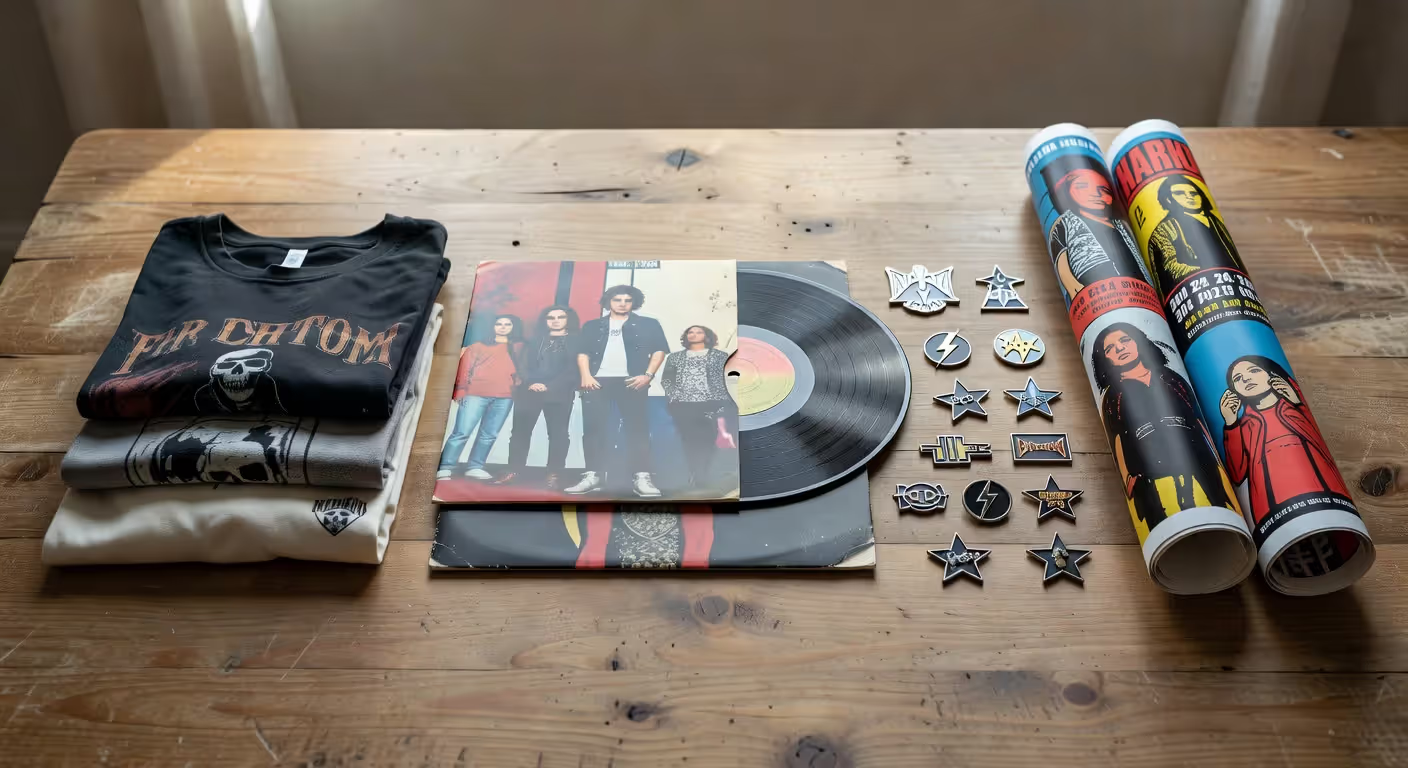
Merchandise works best when your visual identity is strong. Fans buy merch to signal their affiliation with you. Start simple—shirts and stickers. Expand if demand warrants it.
Licensing—getting your music in TV shows, films, ads, or video games—can pay well. A single placement might earn $500 to $50,000+ depending on usage. It requires instrumental versions of your tracks, persistent pitching, and often working with a licensing agency or library.
Teaching is underrated. If you're skilled at your instrument or production, offering lessons (in-person or online) provides steady income while you build your artist career. It's not glamorous, but it pays bills and keeps you immersed in music.
Patreon and similar platforms let superfans support you directly. Offer exclusive content, early releases, or personal interactions. Even 20 patrons at $10/month is $200 of predictable income.
The pattern most successful independent artists follow: diversify. Don't rely on one stream. Combine streaming, occasional gigs, some merch, maybe teaching. Multiple small streams add up and provide stability when one dips.
FAQ: Music Artist Career Questions Answered
Building a career as a music artist is a marathon with no finish line. You'll face discouragement, slow periods, and moments where you question whether it's worth it. The artists who make it aren't necessarily the most talented—they're the ones who keep showing up, keep improving, and keep connecting with their audience even when growth feels slow. Start where you are, use what you have, and take the next step. That's how every music career begins.
Related Stories

Read more
Read more

The content on this website is provided for general informational and educational purposes only. It is intended to explain concepts related to music production, recording, mixing, mastering, music industry roles, and distribution.
All information on this website, including articles, guides, and examples, is presented for general educational purposes. Results and success in music production may vary depending on skill level, equipment, and effort.
This website does not provide professional music production services or guarantees of commercial success, and the information presented should not be used as a substitute for consultation with qualified music producers, audio engineers, or music industry professionals.
The website and its authors are not responsible for any errors or omissions, or for any outcomes resulting from decisions made based on the information provided on this website.