

How to Get Into the Music Industry as a Singer
How to Get Into the Music Industry as a Singer?

Breaking into the music industry as a singer isn't what it used to be. The old model—get discovered at a coffee shop, sign with a major label, become famous—rarely happens anymore. Today's path requires hustle, strategy, and a willingness to treat your voice like a business product.
You don't need permission to start. That's the good news. The challenge? Standing out when millions of other vocalists are uploading tracks every day. This guide walks you through the practical steps, from training your instrument to getting in front of the right people.
What It Takes to Start a Career as a Vocalist
First, let's get real about what entering the music field actually demands. Raw talent matters, but it's just the entry ticket. The singers who build sustainable careers combine vocal ability with business sense, marketing skills, and relentless consistency.
Vocal training isn't optional. Even naturally gifted singers need technique to avoid damage and expand their range. You're building an athletic skill—your vocal cords are muscles that require conditioning. Most professionals work with coaches throughout their entire careers, not just at the beginning.
The industry has fragmented dramatically. Streaming changed everything. In 2026, independent artists capture nearly 40% of music industry revenue, up from less than 10% two decades ago. What this means for you: there are more paths to success, but also more competition and more responsibility to handle your own career management.
Genre matters more than you might think. Pop and hip-hop dominate streaming numbers, but niche genres often have more loyal fanbases and less saturation. Country singers have Nashville, jazz vocalists have specific club circuits, and electronic music collaborations open different doors entirely. Choose based on authentic interest, not just what seems popular.
Realistic expectations keep you sane. Most singers don't earn meaningful income for their first 2-3 years. Many successful artists I've observed spent 5-7 years building before reaching financial stability. Plan accordingly—keep a day job, save money, and don't quit everything the moment you get 10,000 streams.

Author: Lena Corwyn;
Source: lamat-records.com
Building Your Skills and Stage Presence
Starting a career as a vocalist means developing both your voice and your persona. They're equally important. A mediocre singer with compelling stage presence often outperforms a technically perfect vocalist who bores the audience.
Performance practice separates amateurs from pros. Recording in your bedroom feels safe, but live performance teaches you breath control under pressure, how to recover from mistakes, and how to connect with people who aren't already fans. Start small—open mics, local showcases, friends' parties. Anywhere you can get reps.
Your brand identity should emerge naturally from who you actually are. Don't manufacture a persona that feels fake. Audiences spot inauthenticity instantly. Instead, amplify the most interesting parts of your real personality. Are you funny? Vulnerable? Rebellious? Sophisticated? Let that come through in your song choices, social media presence, and visual aesthetic.
Stage presence includes physical awareness. How you move, where you look, what you do with your hands—it all communicates. Watch videos of yourself performing. It's uncomfortable but necessary. You'll spot nervous habits and missed opportunities to connect.
Finding the Right Vocal Coach or Training Program
A good vocal coach does more than teach scales. They identify your unique vocal characteristics, help you avoid strain, and push you past comfortable limits safely. Expect to pay $60-150 per hour in most US markets; major cities skew higher.
Look for coaches who've worked with singers in your genre. A classical voice teacher might give you excellent technique but won't understand the stylistic choices that make a great R&B vocalist. Ask for trial lessons with multiple coaches before committing.
Red flags: any coach who promises quick results, discourages you from performing while training, or makes you sound exactly like every other student. Green flags: they ask about your goals, explain the "why" behind exercises, and give you homework between sessions.
Online programs work if you're self-motivated. Platforms like 30 Day Singer or Singing Success offer structured curricula at lower costs than private coaching. The tradeoff: no personalized feedback on your specific bad habits.
Creating Your First Demo Recording
Your demo doesn't need to be perfect. It needs to be good enough to showcase your voice and give people a reason to want more. Three songs is the sweet spot—enough to show range, not so many that busy industry folks won't listen.
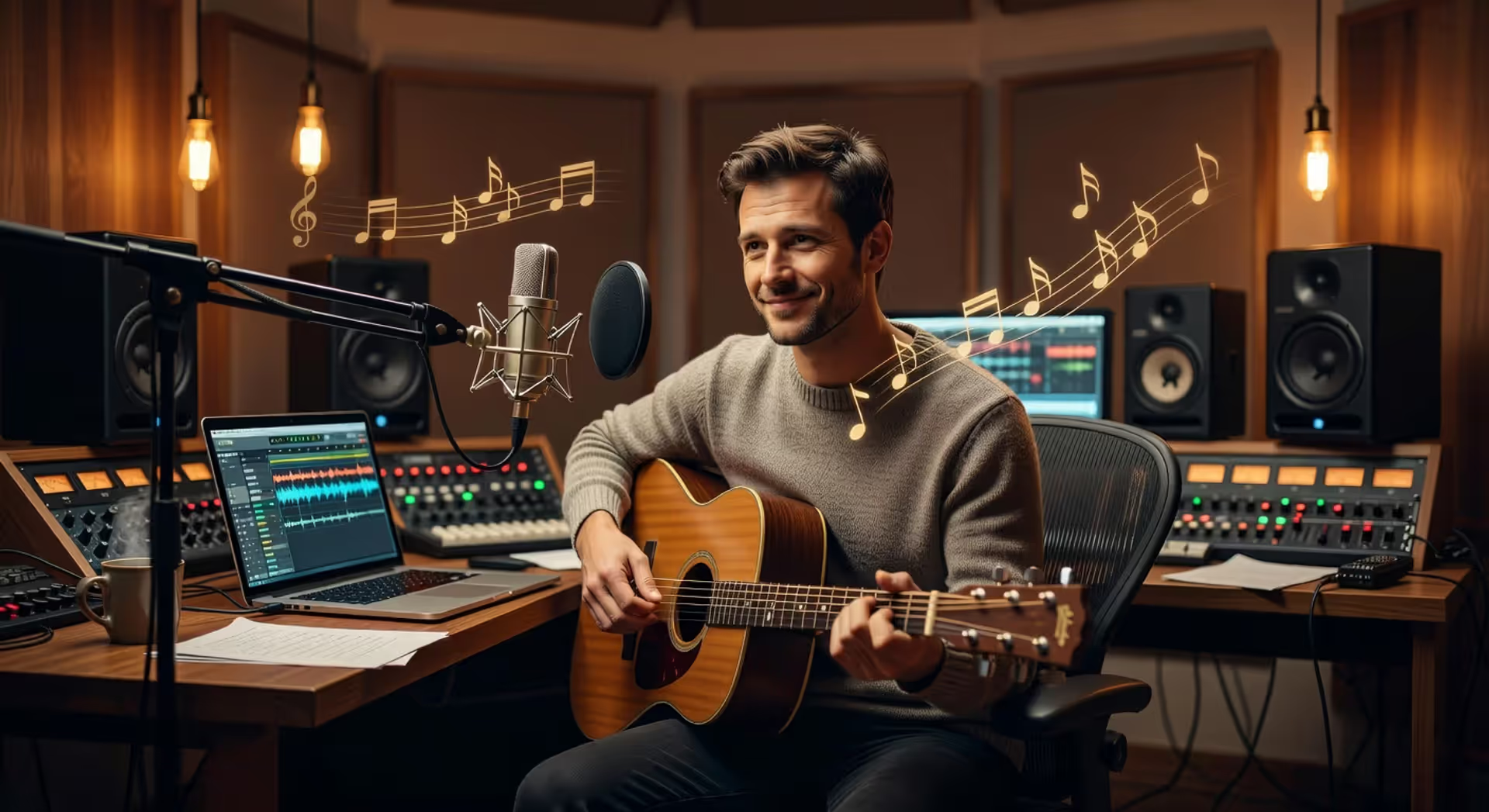
Home recording quality has improved dramatically. A $200 USB microphone (Audio-Technica AT2020 or similar), free software like GarageBand or Audacity, and a quiet room can produce surprisingly professional results. Invest in learning basic mixing or hire a freelance engineer on SoundBetter for $100-300 per song.
Song choice matters more than production quality at this stage. Pick material that highlights your strengths and fits your brand. Covers can work if you add something unique—a different arrangement, genre shift, or emotional interpretation. Originals are better if you have them and they're genuinely strong.
Common mistake: over-producing your demo to hide vocal weaknesses. Industry professionals listen through production. They want to hear your voice clearly. Keep arrangements simple enough that your vocals remain the focus.

Author: Lena Corwyn;
Source: lamat-records.com
Getting Noticed as a Singer Through Online Platforms
Building a singing career in 2026 requires digital presence. Not optional. Not secondary. It's where most discovery happens now, even for artists who eventually sign traditional deals.
TikTok remains the fastest path to visibility. The algorithm doesn't care if you have zero followers—it tests every video with a small audience and promotes what gets engagement. Singers regularly go from unknown to millions of views overnight. Post consistently (4-5 times per week minimum), use trending sounds creatively, and show personality between singing clips.
Instagram works differently—it's about building deeper connections with people who already know you exist. Use Stories for behind-the-scenes content, Reels for performance clips, and posts for polished announcements. The pattern I see most often is artists breaking on TikTok, then converting that audience to Instagram where engagement rates are higher.
YouTube serves as your permanent catalog. Upload full performances, cover songs, original releases, and vlogs about your journey. Optimize titles and descriptions with relevant keywords (yes, SEO matters for singers too). A modest but engaged YouTube following proves you can hold attention for longer than 15 seconds.
Spotify and SoundCloud are distribution platforms, not discovery engines. You need to drive traffic there from social media. Release singles regularly—every 4-6 weeks keeps you in algorithmic consideration. Playlisting matters: pitch to independent curators, use SubmitHub, and focus on smaller playlists (5K-50K followers) where you have better acceptance odds.
Content consistency beats perfection. Posting one video per month with high production value loses to posting four decent videos. The algorithm rewards frequency, and audiences forget you exist if you disappear for weeks.
Engagement isn't just about numbers. Reply to comments. Ask questions in captions. Do duets with other singers. The artists who build real careers treat social media as conversation, not broadcast.
Networking and Breaking Into the Music Business
Talent gets you in the room. Relationships keep you there. The music industry runs on personal connections more than almost any other field. Who you know doesn't replace what you can do, but it determines who hears what you can do.
Attend industry events strategically. Conferences like SXSW, A3C, or regional music festivals aren't just for fans—they're networking goldmines. But don't just show up. Research who's attending, prepare a 30-second introduction about yourself, and follow up afterward. Most artists waste these opportunities by being too shy or too aggressive.
Local music scenes matter more than you'd think. The producer working out of a home studio in your city might connect with a manager in LA next year. The sound engineer at your local venue might move to a major label. Building genuine relationships with people at your current level creates a network that rises together.
Collaboration accelerates everything. Work with producers, songwriters, other vocalists, videographers, and photographers. Every collaboration exposes you to their audience and teaches you something. The singers who stay isolated progress slower than those who constantly create with others.
Music industry professionals—A&R reps, managers, booking agents—are more accessible than you think. They're on LinkedIn, they attend local shows, and many respond to thoughtful DMs. The key word: thoughtful. Don't pitch immediately. Comment on their work, ask intelligent questions, provide value before asking for anything.
Musician communities, both online and local, provide support and information. Facebook groups, Discord servers, and subreddits for independent artists share opportunities, give feedback, and warn about scams. You'll learn faster by engaging with people a few steps ahead of you.
One mistake kills networking opportunities: being transactional. If you only contact people when you need something, they'll ghost you. Build real relationships by being genuinely interested in others' work and offering help when you can.
Steps to Getting Discovered as a Singer
Getting discovered as a singer isn't a single moment—it's a series of small breakthroughs. Each one expands your reach and credibility until eventually, the right opportunity finds you ready.
Submitting to labels still works, but it's a numbers game. Research labels that sign artists in your genre and at your career stage. Major labels rarely sign completely unknown artists anymore; they want proof of concept. Independent labels and imprints are more accessible and often provide better artist development.
Your submission package should include: a brief bio (3-4 sentences), links to your best 2-3 songs, streaming/social media stats, and any notable achievements (playlist adds, show history, press coverage). Keep it concise. A&R reps review hundreds of submissions monthly.
Independent A&R scouts and talent finders operate between artists and labels. They discover talent early and connect them with opportunities. Some charge fees (be cautious), others work on commission or for labels. Research their track record before engaging.
Competitions and showcases provide exposure and credibility. Winning or placing in events like NPR's Tiny Desk Contest, local Battle of the Bands, or genre-specific competitions gets you noticed and gives you something to promote. Even participating builds your performance skills.
The manager question: You need one eventually, but not immediately. Early-stage singers often can't afford good management and end up with inexperienced or exploitative managers. Wait until you have enough momentum that a quality manager sees potential for return on their time investment. That typically means consistent streaming numbers (50K+ monthly listeners), regular show bookings, and growing social media.
Going independent versus pursuing a label deal is the biggest strategic decision you'll make. Neither path is inherently better—it depends on your goals, skills, and resources.

Author: Lena Corwyn;
Source: lamat-records.com
Independent vs. Label-Signed Singer: Pros and Cons
| Factor | Independent Route | Record Label Deal |
| Creative control | Complete—you decide everything from sound to artwork | Limited—label has input/approval on major decisions |
| Upfront costs | You pay for recording, marketing, distribution ($5K-50K+) | Label funds production and marketing (recoupable) |
| Marketing support | DIY or hire freelancers; relies on your hustle | Professional team with industry connections and budget |
| Revenue split | Keep 85-100% after distribution fees | Typically keep 15-25% after recoupment and splits |
| Timeline to release | Release whenever you're ready (weeks to months) | Label schedules around strategy (often 6-12 months) |
The independent route gives you freedom and higher per-stream revenue, but requires you to fund and manage everything. You're the CEO, marketer, and accountant. This works well if you're entrepreneurial, have some capital, and want to build slowly while maintaining control.
Label deals provide resources, connections, and credibility. A good label opens doors you couldn't access alone—major playlists, radio play, tour support, sync licensing opportunities. The tradeoff: you give up significant revenue and creative control. Bad deals can lock you into unfavorable terms for years.
The simpler option usually wins here: start independent, build proof of concept, then decide if a label partnership makes sense. You'll negotiate better terms with leverage than as an unknown hoping for a break.
The artists who make it aren't necessarily the most talented—they're the most persistent and adaptable. Talent gets you started, but treating your music like a business keeps you going when the initial excitement fades.
— Burgh Leah
Common Mistakes When Launching a Vocal Career
Even talented singers sabotage their own careers with predictable mistakes. Avoiding these puts you ahead of most competition.
Neglecting business skills is the number one career killer. You need to understand contracts, copyright, royalty splits, and basic accounting. Ignorance doesn't protect you—it makes you vulnerable to bad deals and financial mismanagement. Take a music business course, read books like "All You Need to Know About the Music Industry" by Donald Passman, or find a mentor.
Poor branding confuses potential fans. If your Instagram looks country, your TikTok seems pop, and your music sounds R&B, nobody knows what you actually do. Consistency across platforms and releases helps people understand and remember you. You can evolve over time, but confusing people early stalls growth.
Scams target desperate artists. Pay-to-play showcases that promise "industry executives" but deliver empty rooms. Fake playlist promoters who use bots. Contracts that lock you in for years with no real support. If someone asks for money upfront with vague promises, walk away. Legitimate opportunities may require investment, but they come with clear deliverables and verifiable track records.
Unrealistic timelines create burnout. Expecting to quit your day job after six months, go viral with your first single, or get signed immediately sets you up for disappointment. Most overnight successes took 5-10 years of work nobody saw. Plan for the long game.
Ignoring contracts is financial suicide. Never sign anything without reading every word and having an entertainment lawyer review it. Yes, lawyers cost money ($300-500 per hour typically), but they save you from deals that would cost you tens of thousands later. If you can't afford a lawyer, at least use resources like the Volunteer Lawyers for the Arts or law school clinics.
Failing to diversify income streams leaves you vulnerable. Streaming pays poorly—even 100K monthly listeners might generate only $300-400. Successful singers combine multiple revenue sources: live shows, merchandise, teaching/coaching, sync licensing, crowdfunding (Patreon), and session work. Don't depend on one income stream.
FAQ: Music Industry Career Questions Answered
The path into the music industry as a singer has never been more accessible or more competitive. You don't need permission, but you do need strategy, persistence, and willingness to learn skills beyond singing. Start where you are, use what you have, and treat every small step as progress. The singers who make it aren't always the most talented—they're the ones who refuse to quit and adapt as the industry evolves.
Related Stories

Read more
Read more

The content on this website is provided for general informational and educational purposes only. It is intended to explain concepts related to music production, recording, mixing, mastering, music industry roles, and distribution.
All information on this website, including articles, guides, and examples, is presented for general educational purposes. Results and success in music production may vary depending on skill level, equipment, and effort.
This website does not provide professional music production services or guarantees of commercial success, and the information presented should not be used as a substitute for consultation with qualified music producers, audio engineers, or music industry professionals.
The website and its authors are not responsible for any errors or omissions, or for any outcomes resulting from decisions made based on the information provided on this website.