
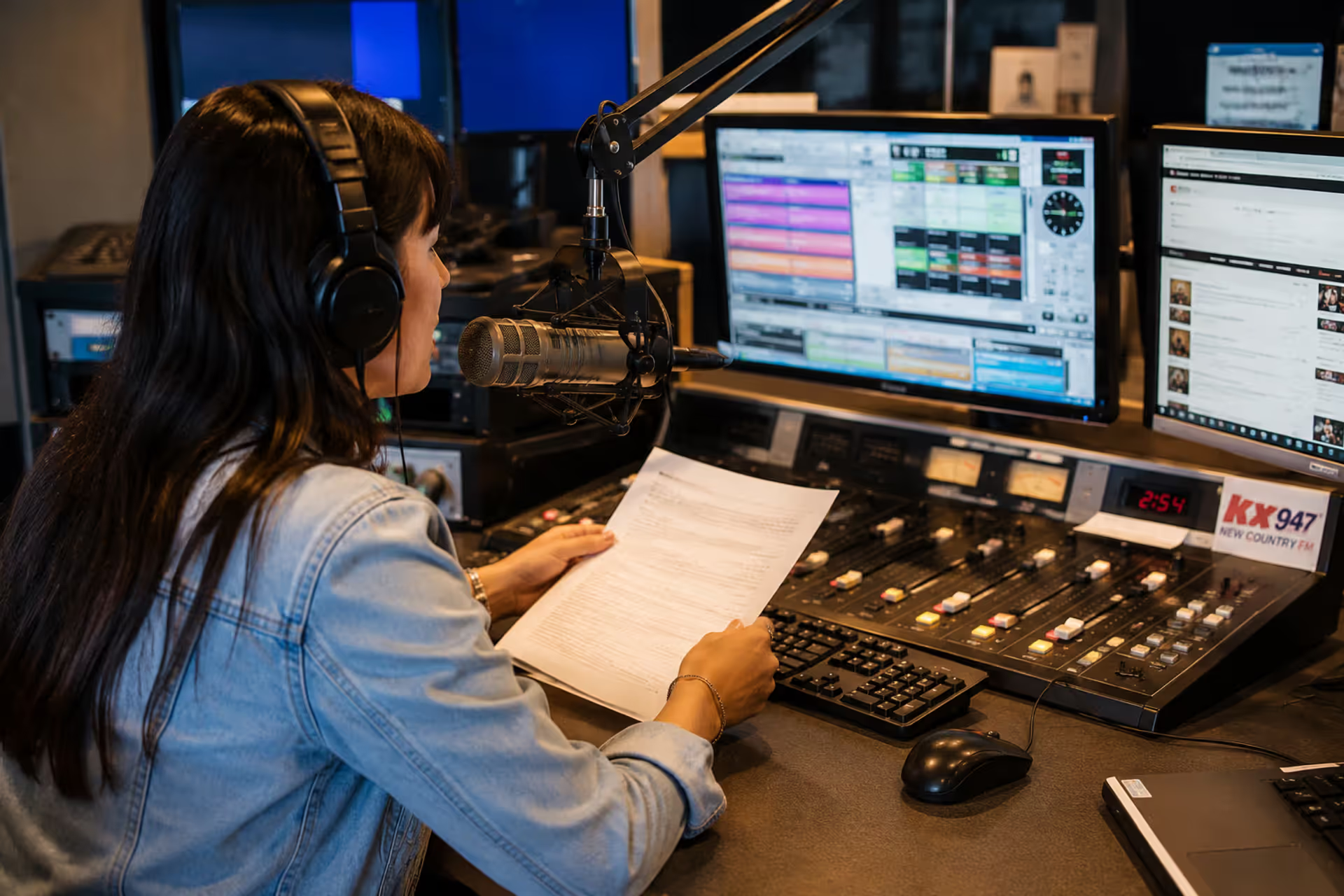
How to Get Your Music on the Radio
How to Get Your Music on the Radio?

Content
Content
Getting your song on the radio isn't as mysterious as it used to be. But it's also not as simple as emailing an MP3 and hoping for the best. Radio airplay still opens doors for independent musicians—exposure, credibility, and yes, actual income. The process demands strategy, patience, and a solid understanding of how radio stations actually work. You'll need the right materials, the right contacts, and the right approach. This guide walks you through every step of how to get my music on the radio, from preparing your submission to building relationships with the people who control the airwaves.
Why Radio Airplay Still Matters for Independent Musicians
Radio hasn't disappeared. It's evolved.
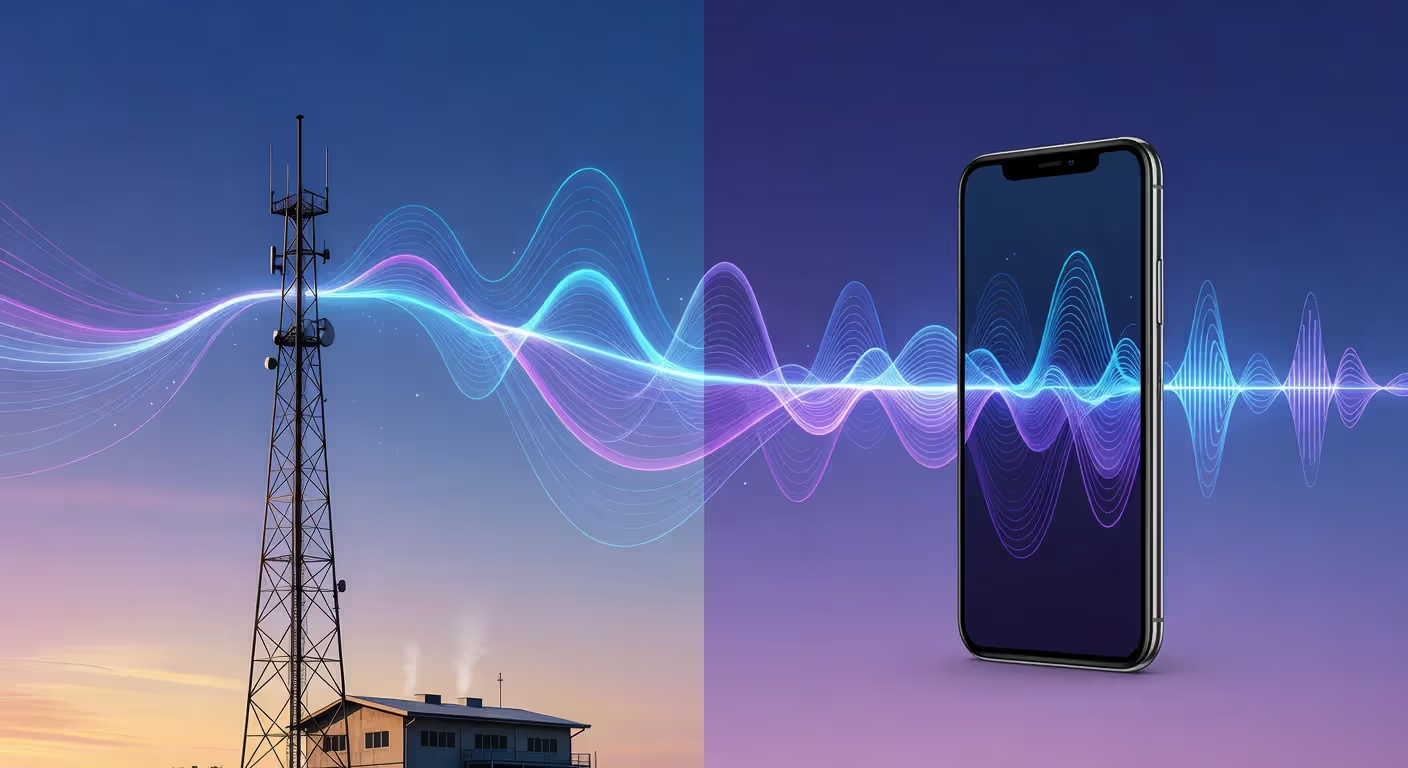
Terrestrial radio still reaches over 80% of Americans weekly. That's more than any streaming platform. When a station plays your track, you're reaching listeners who aren't actively searching for new music—they're discovering you passively, which builds a different kind of fan base.
Beyond numbers, securing radio play signals legitimacy. Booking agents, festival promoters, and venue owners still check radio charts. A track with documented airplay carries weight in negotiations and press kits.
Not all radio is created equal. Commercial stations (the big FM names) have strict playlists controlled by corporate programming. They're the hardest to crack but offer the widest reach. College radio stations operate on campuses with smaller audiences but far more flexibility—music directors can add tracks based purely on taste. Community radio stations serve local areas and often prioritize regional artists. Internet radio has exploded, with genre-specific stations streaming globally, no FCC restrictions, and submission processes that range from open portals to curated selections.
Each type serves a different purpose in your promotional strategy. College stations build buzz. Community stations create local momentum. Internet radio targets niche audiences. Commercial stations deliver mass exposure.
Author: Lena Corwyn;
Source: lamat-records.com
What Radio Programmers Look for in New Music
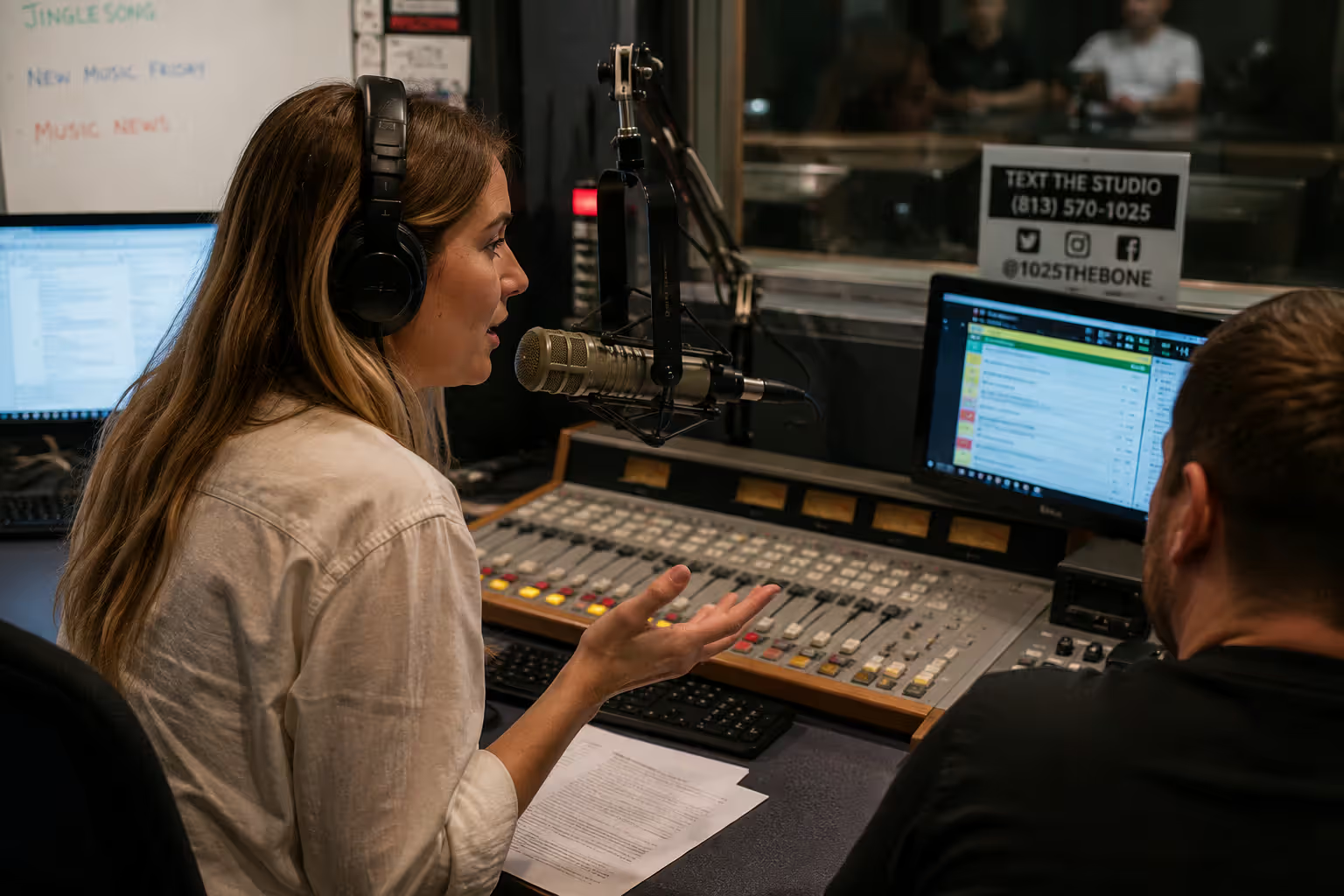
Music directors receive hundreds of submissions weekly. Most get deleted within 30 seconds.
They're not being cruel. They're being efficient. Your track needs to pass several filters instantly.
First: production quality. Your song must sound as polished as everything else in rotation. Home recordings can work if they're mixed and mastered professionally. Muddy vocals, clipping drums, or unbalanced frequencies kill your chances immediately. Radio compressors amplify every flaw.
Second: format fit. A metal track sent to a jazz station wastes everyone's time. Research the station's actual playlist. Listen for an hour. If your song wouldn't fit naturally between what they're already playing, move on.
Third: your story. Programmers want artists who can answer interview questions, engage audiences, and generate interest beyond the song itself. A compelling bio matters. So does evidence that people care about your music—social media engagement, streaming numbers, upcoming shows, press coverage.
Reaching radio programmers means understanding their priorities. They need content that serves their audience. They need artists who won't embarrass them in interviews. They need tracks that won't trigger listener complaints or format violations.
The pattern I see most often is artists focusing entirely on the song quality while ignoring everything else. Your track might be brilliant, but if your online presence is dormant and your bio reads like a grocery list, programmers assume you can't help promote the airplay. They'll pass.
Preparing Your Radio Submission Package
Essential Materials You Need
Start with your audio file. WAV or high-bitrate MP3 (320kbps minimum). Label it clearly: ArtistName_SongTitle_RadioEdit.wav. If your album version has a long intro or explicit lyrics, create a radio edit. Stations won't do it for you.
Your one-sheet is a single-page PDF with everything a programmer needs at a glance: artist name, song title, genre, release date, a short (3–4 sentences) description of the track, your story in two brief paragraphs, contact information, and links to streaming profiles. Include a professional artist photo—high resolution, not a blurry phone selfie.
Press quotes help if you have them. "Featured in {Publication}" or "Compared to {Established Artist} by {Reviewer}" adds third-party validation. Don't fabricate these. Programmers verify claims.
Links matter more than attachments. Spotify, Apple Music, Instagram, YouTube—make it easy for them to explore your catalog and see your audience size. A private SoundCloud link works for unreleased tracks, but public streaming profiles demonstrate you're a real artist with distribution.
Writing an Effective Pitch Email
Your subject line should be direct: "Radio Submission: {Artist Name} – {Song Title} ({Genre})". No clickbait. No mystery.
Open with one sentence about why you're contacting this specific station. Reference a recent playlist addition or show segment. This proves you've done research and aren't mass-blasting.
Second paragraph: introduce your song in 2–3 sentences. What's it about? What does it sound like? Why would their listeners care?
Third paragraph: your credentials. Recent achievements, upcoming releases, tour dates in their market, press mentions. Keep it factual and brief.
Close with a clear call to action: "I've included a download link below. Would this fit your {show name/format}?" Thank them for their time. Signature with all contact details.
Attach nothing. Put the download link and streaming links in the email body. Many stations auto-delete emails with attachments for security reasons.
Radio submission tips that actually work: personalize every email, keep it under 200 words, and send on Tuesday or Wednesday mornings—avoid Mondays (catching up from the weekend) and Fridays (planning for the weekend).
Author: Lena Corwyn;
Source: lamat-records.com
Finding the Right Radio Stations for Your Genre
Pitching music to radio starts with targeting. Sending your indie folk track to a hip-hop station guarantees failure.
Begin with stations in your geographic area. Local community and college stations are more likely to support regional artists. Search "{your city} radio stations" and "{your city} college radio." Visit their websites and find their playlists or recent airplay charts.
Expand by genre. Use databases like Radio-Locator.com or the College Music Journal (CMJ) directory to filter stations by format. If you're a rock artist, search for alternative, active rock, or AAA (Adult Album Alternative) formats.
Listen before you pitch. Stream the station online for at least 30 minutes. Note which artists they play, how they introduce songs, and whether they mention taking submissions. Many stations list submission guidelines directly on their websites.
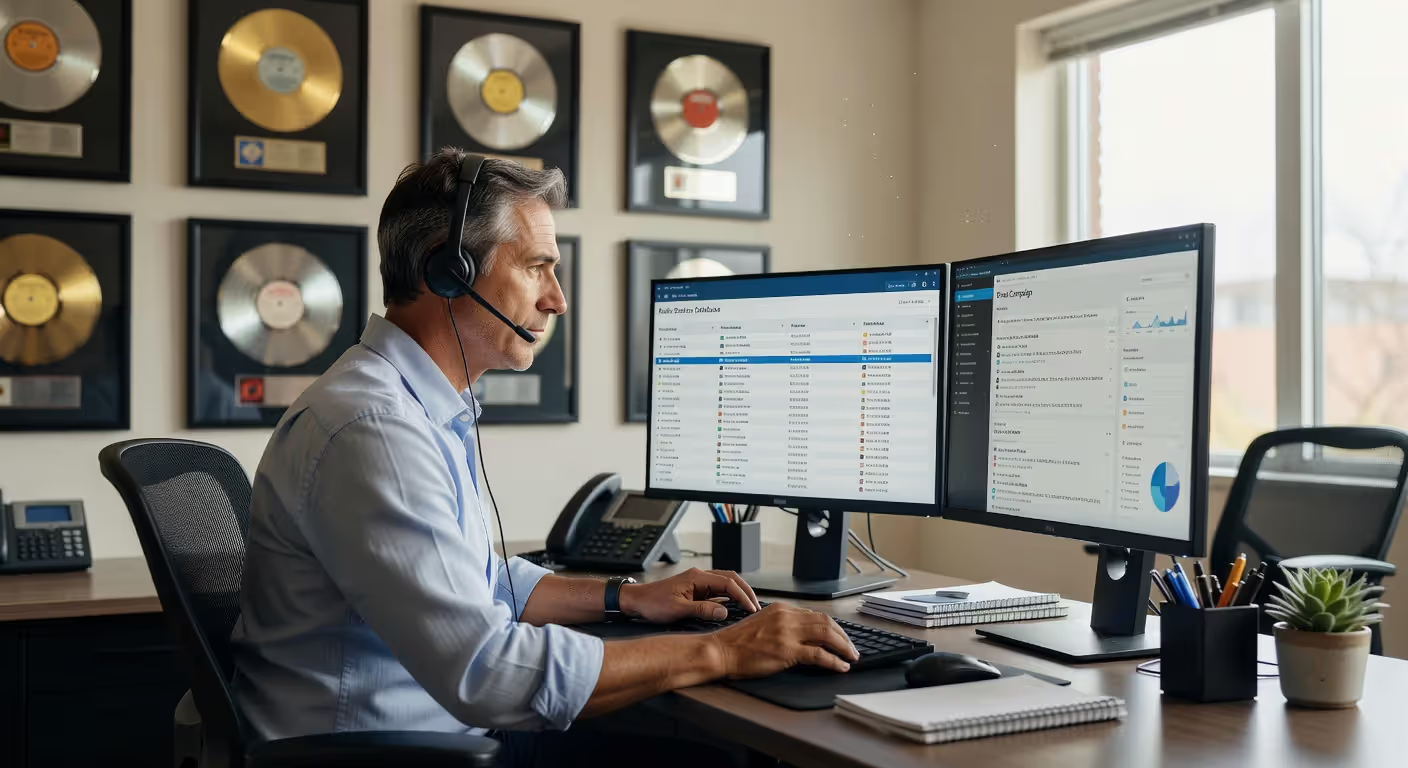
Build a spreadsheet: station name, location, format, music director's name and email, submission method (email, online portal, physical mail), and notes about their sound. Aim for 30–50 stations initially. Quality over quantity.
Tools like Indie on the Move and SubmitHub streamline this process for internet and college radio, though they charge submission fees. The trade-off is guaranteed listens and faster feedback.
Types of Radio Stations and Submission Requirements
| Station Type | Typical Audience Size | Submission Process | Cost | Best For | Response Time |
| Commercial Radio | 50,000–500,000+ | Through promoter or label contacts | $5,000–$20,000+ for campaign | Established artists with budgets and momentum | 2–6 weeks (if accepted) |
| College Radio | 500–10,000 | Direct email to music director or online portal | Free–$5 per submission | Emerging artists building buzz and chart positions | 1–4 weeks |
| Community Radio | 1,000–20,000 | Direct email or physical mail | Free | Local artists, niche genres, community connection | 2–6 weeks |
| Internet Radio | 100–50,000+ | Online submission forms or email | Free–$10 per submission | Genre-specific targeting, global reach, playlist inclusion | 1–3 weeks |
How to Pitch Your Music to Radio Programmers
You've got two paths: DIY or hiring a professional. Most independent artists start with the first.
Direct email outreach works for college, community, and internet stations. Find the music director's email (it's usually on the station website under "Contact" or "About"). Send your personalized pitch with the materials outlined earlier.
Timing matters. Don't send submissions during major holidays or semester breaks for college stations. Avoid the last week of any month when programmers finalize playlists.
Follow up once. If you haven't heard back in two weeks, send a brief, polite email: "Hi {Name}, following up on my submission of {Song Title} from {Date}. Any feedback would be appreciated. Thanks for your time." If they don't respond after that, move on. Persistence becomes pestering quickly.
Building relationships beats one-off submissions. Engage with the station on social media. Attend their events if they're local. Thank them publicly when they play your track. Music directors remember artists who treat them like humans, not gatekeepers.
Getting airplay for your songs often depends more on relationships than song quality. A music director who recognizes your name and knows you respect their work will give your next submission a fairer listen.
The simpler option usually wins here: start with 10 stations you genuinely like and build real connections, rather than blasting 100 stations with generic emails.
Working with Radio Promoters and Pluggers
Radio promoters have established relationships with programmers. They pitch your music professionally, follow up persistently, and track results. For commercial radio, they're often necessary—major stations rarely accept unsolicited submissions.
Costs vary wildly. A regional college radio campaign might run $1,500–$3,000 for 6–8 weeks. A national commercial campaign starts around $10,000 and can exceed $50,000 for top-tier promoters and formats. You're paying for their network, time, and credibility.
When should you hire help? When you've exhausted DIY options, when you have budget, and when you have other promotional momentum (press, touring, strong streaming numbers). Promoters can't make a song successful in a vacuum. They amplify existing traction.
Vetting promoters: ask for references from past clients, request specific station lists they'll target, clarify what "adds" and "spins" they guarantee (if any), and get everything in writing. Avoid anyone promising specific chart positions or requiring payment upfront without a clear contract.
The trade-off is simple. DIY is free but time-intensive with limited reach. Professional promotion costs money but saves time and accesses stations you can't reach alone. Getting songs played on air through a promoter is faster and more likely on commercial stations, but college and internet radio remain accessible to DIY artists with persistence.
Author: Lena Corwyn;
Source: lamat-records.com
Common Mistakes That Kill Your Radio Chances
Mass emails are death. If your pitch starts with "Dear Music Director" and you've BCC'd 200 stations, programmers can tell. They delete immediately.
Format mismatches waste everyone's time. A country song sent to an electronic music station signals you haven't done basic research. Programmers question whether you'll embarrass them in other ways.
Poor audio quality is unforgivable. If your track sounds worse than everything else on the station, it won't get played. Period. Budget for professional mixing and mastering before you pitch anywhere.
Ignoring submission guidelines shows disrespect. If a station says "no attachments," don't attach files. If they want physical CDs mailed to a specific address, email submissions get ignored. Follow instructions exactly.
Not following up is a missed opportunity. Programmers are busy. A polite follow-up reminds them you exist and shows you're serious. But following up three times crosses into spam territory.
Failing to build relationships limits your long-term success. Promoting songs to stations isn't a one-time transaction. Musicians who engage authentically—thanking programmers, sharing station content, supporting their events—get prioritized when they submit new music.
One counterintuitive mistake: pitching your best song first. Sometimes your most radio-friendly track isn't your favorite or your "best." Music directors care about format fit and listenability more than artistic merit. Save your experimental masterpiece for album cuts and lead with the song that sounds like it already belongs on the station.
The submissions that stand out are the ones where the artist clearly listened to our station first. When someone says, 'I noticed you added that new Alvvays track last week, and I think our sound would fit alongside that,' I'm already more interested. It shows they're not just blasting every station in the country—they're actually paying attention to what we do.
— Henderson Mike
Frequently Asked Questions About Getting Radio Play
Getting your music on the radio takes preparation, research, and persistence. Start with the stations most likely to support you—local college and community radio, genre-specific internet stations—and build from there. Prepare professional materials, personalize your outreach, and focus on relationships rather than one-time submissions. Whether you go the DIY route or eventually hire a promoter, the foundation remains the same: great music, professional presentation, and genuine engagement with the people who program the airwaves. Radio airplay won't happen overnight, but with the right approach, it's absolutely achievable for independent artists in 2026.
Related Stories
Read more

Read more

The content on this website is provided for general informational and educational purposes only. It is intended to explain concepts related to music production, recording, mixing, mastering, music industry roles, and distribution.
All information on this website, including articles, guides, and examples, is presented for general educational purposes. Results and success in music production may vary depending on skill level, equipment, and effort.
This website does not provide professional music production services or guarantees of commercial success, and the information presented should not be used as a substitute for consultation with qualified music producers, audio engineers, or music industry professionals.
The website and its authors are not responsible for any errors or omissions, or for any outcomes resulting from decisions made based on the information provided on this website.