
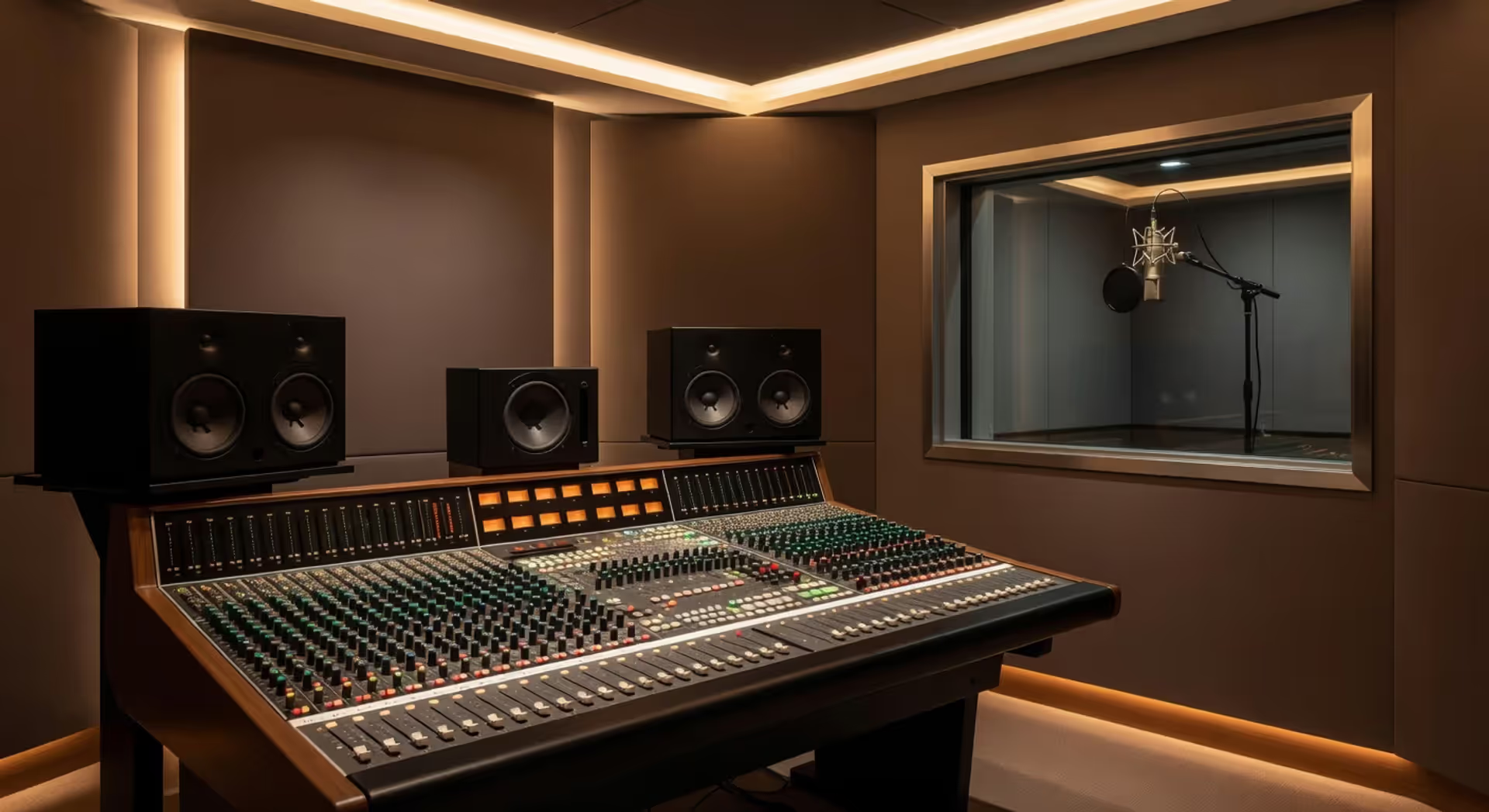
How to Make a Music Album from Start to Finish
How to Make a Music Album?
Making an album is one of the most rewarding experiences for any musician. But it's also complex, time-consuming, and full of decisions that can make or break your final product. Whether you're working in a bedroom studio or booking time at a professional facility, understanding the full process—from planning through final sequencing—will save you time, money, and frustration. This guide walks you through every stage of how to make a music album, with practical steps you can apply to your own project right now.
Planning Your Album Before You Record
Planning a music album isn't glamorous, but it's where successful projects are built. Before you hit record, you need answers to several key questions.
First: how many tracks? A full-length album typically contains 8–12 songs, though this varies by genre. Hip-hop albums often run longer; punk records shorter. Your budget and stamina matter here too. Recording ten polished tracks is better than rushing through fifteen mediocre ones.
Next, consider your album's theme or concept. You don't need a rock opera narrative, but your songs should feel like they belong together. Think about lyrical themes, sonic palette, or emotional journey. Albums with a clear identity stick with listeners longer.
Budget estimation comes next. Studio time, mixing, mastering, musicians, and production all cost money. A bare-bones home recording might run a few hundred dollars in software and gear. A professional studio album can easily hit $10,000–$50,000 or more. Be honest about what you can afford and build your plan around that number.
Timeline matters too. Most albums take 3–12 months from pre-production to mastered files. Rushing creates stress and compromises quality. Build in buffer time for unexpected problems—because something always goes wrong.
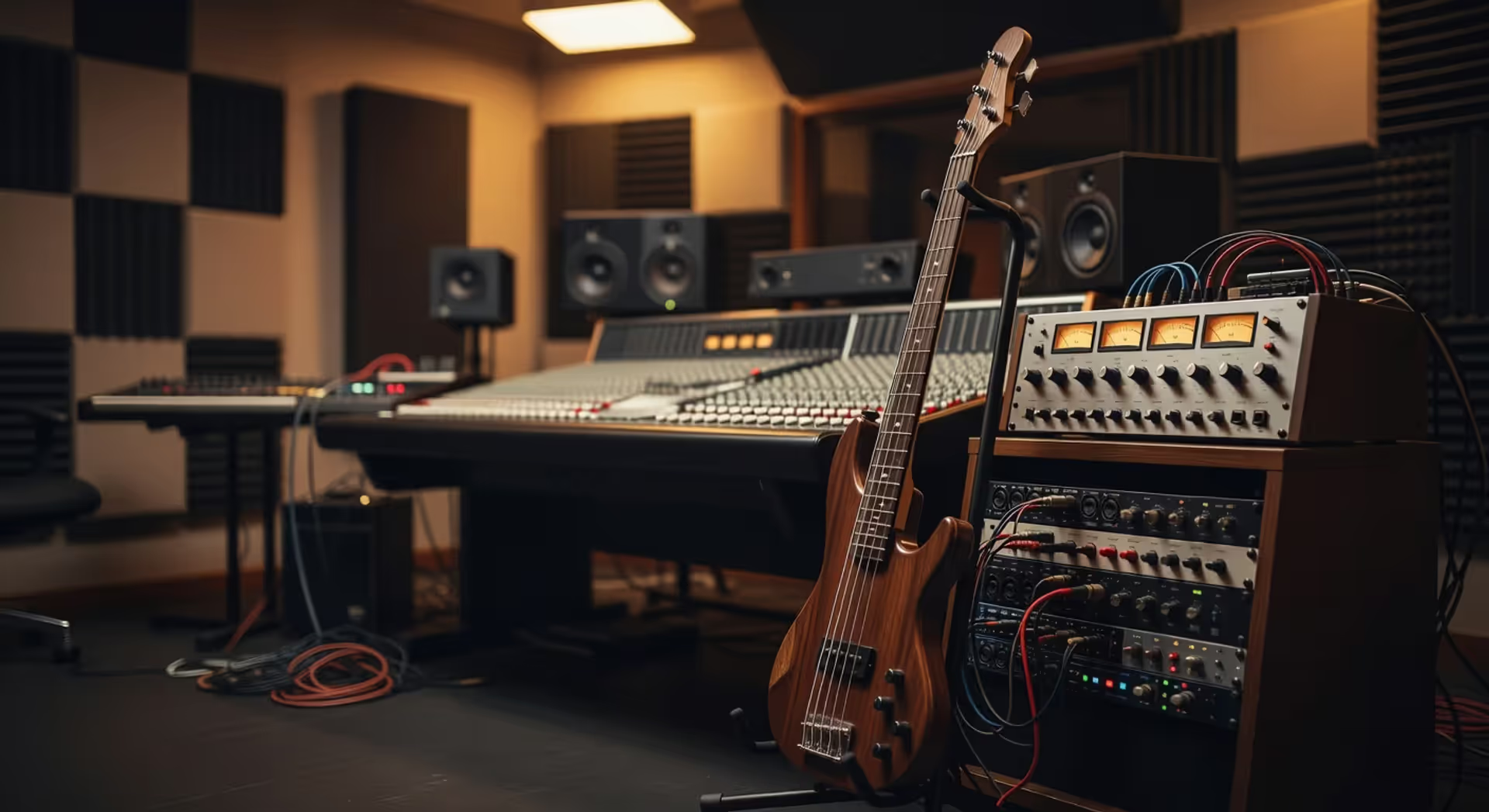
The home studio versus professional studio decision shapes everything else. Here's a detailed comparison:
| Factor | Home Studio | Professional Studio |
| Cost | $500–$3,000 (equipment + software) | $50–$300/hour or $500–$2,000/day |
| Equipment Quality | Varies widely; decent with investment | High-end mics, preamps, monitors, acoustics |
| Expertise Available | Self-taught or online resources | Experienced engineers and producers on-site |
| Time Flexibility | Unlimited; work at your own pace | Booked sessions; pressure to work efficiently |
| Final Sound Quality | Good to great with skill and gear | Consistently professional; harder to mess up |
Home studios offer freedom and budget-friendliness. Professional studios deliver polish and expertise. Many artists split the difference: track basics at home, then mix and master professionally.
Preparing and Arranging Your Songs
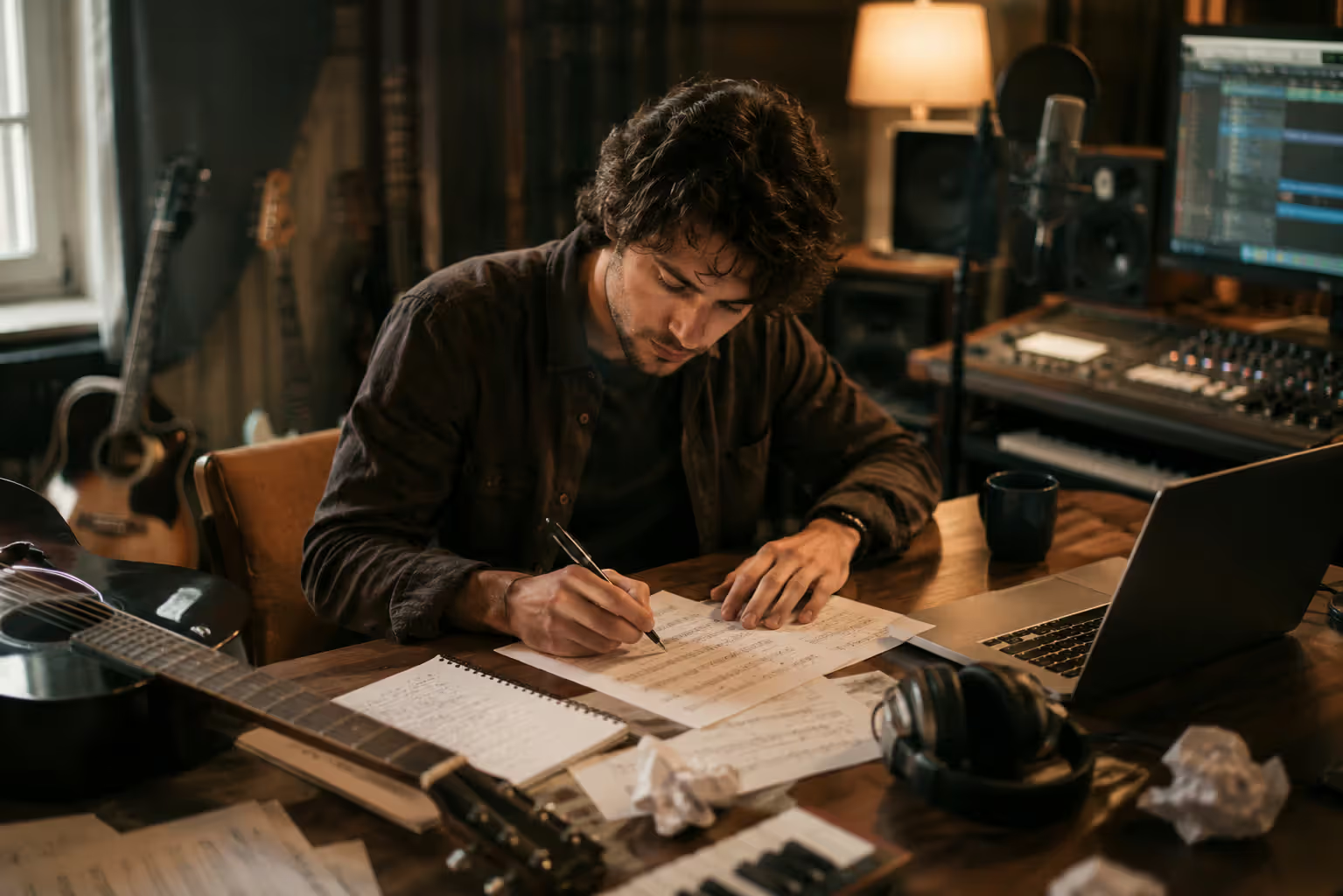
Preparing songs for an album means more than just knowing the chords. You're finalizing every detail before the expensive recording clock starts ticking.
Start with lyrics. Are they finished? Really finished? Half-written verses or placeholder lines waste studio time. Lock down every word before tracking begins.
Arrangements need the same scrutiny. How many verses? Does that bridge work? Should the guitar solo be eight bars or sixteen? Demo recordings help enormously here—rough iPhone recordings or basic home demos let you test arrangements and spot problems.
Instrumentation decisions shape your sound. Will you use live drums or programmed beats? Real strings or synthesized? Hiring session musicians costs money but adds professionalism. The pattern I see most often is artists underestimating how much instrumentation affects the final vibe.
Author: Lena Corwyn;
Source: lamat-records.com
Your songs also need to work as a cohesive collection. Play them back-to-back. Do they feel like parts of the same artistic statement? If one track sounds like it's from a completely different band, you might have a problem.
How to Choose Which Songs Make the Cut
You've probably written more songs than you'll record. Good. That means you can be selective.
Start by recording rough demos of everything. Then live with them for a week or two. The songs you keep returning to? Those are your keepers. The ones you skip? Cut them.
Ask trusted friends or fellow musicians for honest feedback. Not your mom—she'll love everything. You need people who'll tell you when a song isn't working.
Consider variety within cohesion. You want different tempos, moods, and dynamics, but everything should still sound like it belongs on the same record. Three mid-tempo ballads in a row will bore listeners, no matter how beautiful each one is.
Rehearsing and Refining Before Recording
Rehearsal is where good songs become great recordings. You're building muscle memory, tightening timing, and discovering what actually works.
If you're recording with a band, rehearse together until everyone can play the songs in their sleep. Sloppy timing in rehearsal becomes unusable takes in the studio. Session musicians typically need fewer rehearsals—they're pros—but they still need clear charts and reference recordings.
Solo artists should rehearse too. Practice your vocal performances, nail your guitar parts, and program your beats until they groove perfectly. The album recording workflow moves much faster when you're not figuring out parts on the fly.
Record your rehearsals. You'll catch timing issues, arrangement problems, and performance quirks you can't hear while playing. Fix them now, not in the studio.
Recording Your Album Step by Step
Recording an album step by step follows a logical sequence, though the exact order varies by genre and approach.
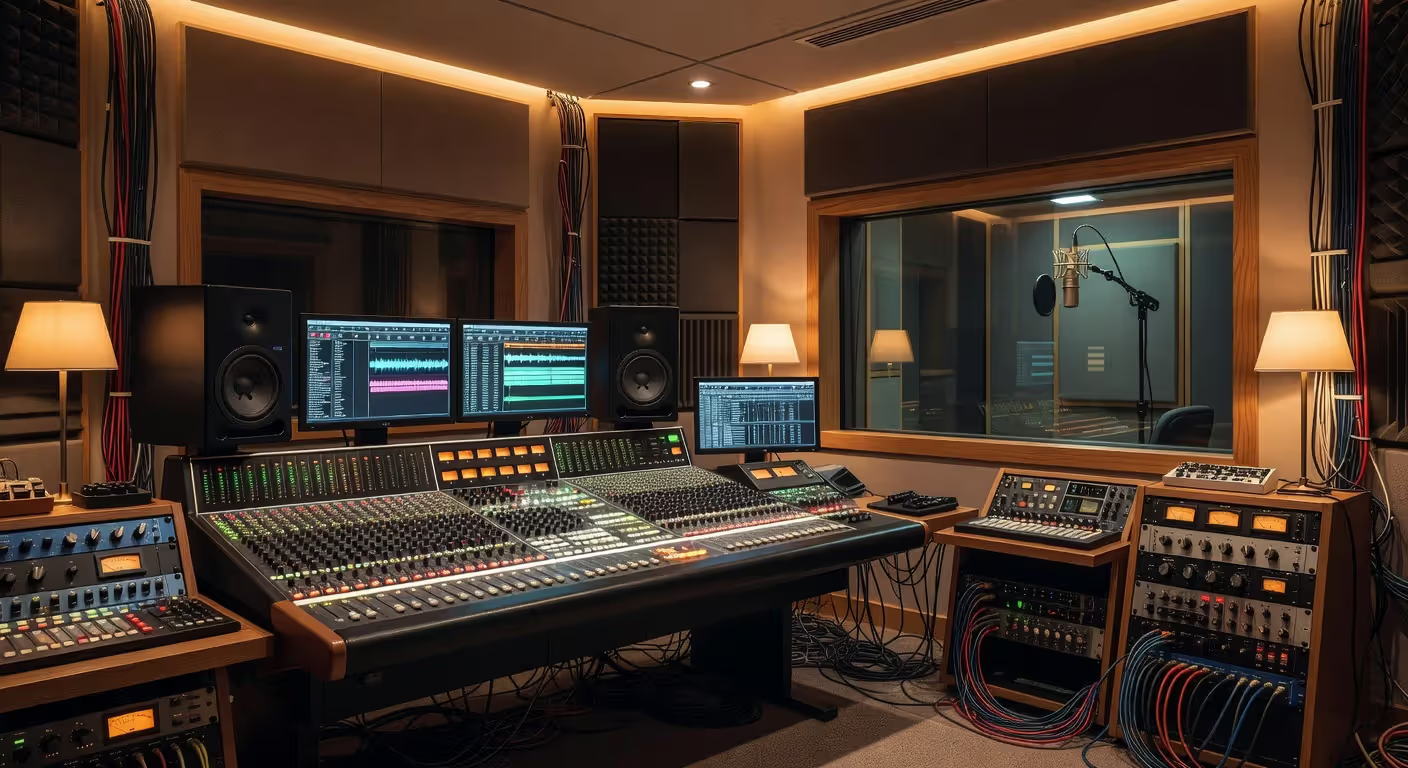
Most projects start with rhythm section tracking: drums and bass. These form your foundation. In a professional studio, the drummer typically records first, often with a scratch guitar or keys for reference. Bass comes next, locked tight to the drums.
Some engineers record drums and bass simultaneously for better groove. Others prefer isolation for easier editing. Both work—it depends on your genre and the players' skill level.
Once your rhythm section is solid, you add harmonic instruments: guitars, keyboards, synths. These fill out the arrangement and establish the song's character. Multiple guitar layers, keyboard pads, and textural elements get recorded as overdubs—additional passes layered on top of the basic tracks.
Vocals usually come last. Why? Because you want to sing to a nearly complete track. That helps you find the right performance and delivery. Lead vocals first, then harmonies and doubles.
Author: Lena Corwyn;
Source: lamat-records.com
Punch-ins handle small mistakes. Instead of re-recording an entire take, you "punch in" to record just the problem section. Good engineers make this seamless.
Working with engineers and producers changes your workflow. Engineers handle technical aspects: mic placement, gain staging, recording quality. Producers guide creative decisions: arrangement choices, performance direction, sonic vision. You don't necessarily need both, but having at least one experienced person in the room helps immensely.
Session workflow matters. Take breaks every 60–90 minutes. Ear fatigue is real, and tired ears make bad decisions. Stay hydrated. Keep the vibe positive—tension kills creativity.
Budget your time wisely. Drums often take the longest to track and get right. Vocals can be surprisingly fast or painfully slow depending on the singer. Plan accordingly.
The Album Production Process After Tracking
The album production process doesn't end when recording stops. You're only halfway done.
Editing comes first. This means comping vocal takes (choosing the best parts of multiple performances), tightening timing, removing unwanted noises, and arranging your tracks for mixing. Modern digital audio workstations make editing powerful but also dangerous—over-editing strips the humanity from performances.
Mixing is where your album comes to life. Each track gets balanced, EQ'd, compressed, and placed in the stereo field. Effects like reverb and delay add space and dimension. A good mix makes every element clear and impactful while serving the song's emotional intent.
Mixing takes time. Budget at least a day per song, often more for complex arrangements. Many artists hire professional mixing engineers because mixing requires both technical skill and fresh ears. If you've been living with these tracks for months, you can't hear them objectively anymore.
Mastering comes last. This is the final polish that makes your album sound cohesive and competitive with commercial releases. A mastering engineer adjusts overall tonal balance, maximizes loudness without destroying dynamics, and ensures consistent volume across all tracks.
The goal is to make a record that sounds like your band, not like the engineer's record collection. Pre-production and planning determine whether you achieve that or waste everyone's time chasing something that was never clearly defined.
— Albini Steve
Mastering also prepares your files for distribution. You'll typically receive a mastered stereo file for each song, plus potentially different versions for streaming, CD, and vinyl. File formats matter: WAV or AIFF for archival masters, MP3 or AAC for streaming platforms.
Creating a full length record means thinking about the technical specs too. Most streaming services want 16-bit/44.1kHz files, though some accept higher resolution. Your mastering engineer will guide you here.
Sequencing Your Album Tracks for Maximum Impact
Sequencing album tracks is an art form. The same ten songs in different orders create completely different listening experiences.
Start with a strong opener. This song sets expectations and hooks listeners immediately. It doesn't have to be your catchiest or best song, but it needs energy and confidence.
Track order strategy involves pacing and flow. You're building an emotional arc across 35–50 minutes. Most successful albums alternate energy levels—don't put all your slow songs together or all your bangers back-to-back.
Think about key and tempo transitions. Jarring shifts can work for artistic effect, but usually you want some musical connection between adjacent tracks. A song ending in E minor flowing into one starting in G major feels natural. A sudden jump from 70 BPM to 160 BPM feels abrupt.
The middle of your album is where attention wanes. Place something interesting here—a fan favorite, an unexpected turn, or your most experimental track. Don't bury your best material, but don't blow your load in the first four songs either.
Your closer matters enormously. This is the last impression, the emotional resolution. Some albums end with a bang; others fade out quietly. Both work if they match your album's narrative.
Try multiple sequences. Live with each one for a few days. You'll discover that certain orders just feel right while others create weird energy.
Intro and outro placement can frame your album beautifully. A short intro track (30–60 seconds) sets the mood. An outro or hidden track provides closure. But don't force these if they don't serve the album.
Common Mistakes When Recording Your First Album
First-time album makers stumble over the same pitfalls. Avoid these and you're already ahead.
Rushing pre-production is the biggest mistake. You think you're ready to record, but your songs aren't finished, arrangements aren't tight, and you haven't really decided what you're making. This wastes studio time and money while producing mediocre results. Spend twice as long in pre-production as you think you need.
Poor budgeting kills projects. You book studio time without accounting for mixing and mastering costs. Or you spend your entire budget on recording, leaving nothing for promotion. Build a complete budget before you start, and add 20% for unexpected expenses.
Neglecting breaks during sessions destroys your ears and judgment. After four hours of recording without rest, you can't tell good takes from bad ones. Professional engineers take regular breaks because they know ear fatigue is real.
Over-producing is tempting with modern tools. You add seventeen guitar layers, twelve vocal harmonies, and every synth sound you own. More isn't better. The best albums have space and restraint. Know when to stop.
Ignoring sequencing until the last minute means you miss the opportunity to shape the listening experience. Sequencing isn't just dragging files into order—it's storytelling. Give it the attention it deserves.
Another common mistake: not testing your mixes on different playback systems. Your mix might sound great on studio monitors but terrible in a car or on earbuds. Check your mixes everywhere before finalizing them.
What to Do After Your Album Is Finished
Author: Lena Corwyn;
Source: lamat-records.com
Your album is mastered and sequenced. Now what?
Distribution options have expanded dramatically. Digital distributors like DistroKid, CD Baby, and TuneCore get your music on Spotify, Apple Music, and other streaming platforms for a small annual fee. Physical distribution for CDs or vinyl requires more planning and upfront cost, but many fans still value physical media.
Your release strategy matters. Dropping all ten songs at once is one approach. Releasing singles over several months builds anticipation differently. Most independent artists now release 2–3 singles before the full album drops, spacing them 4–6 weeks apart.
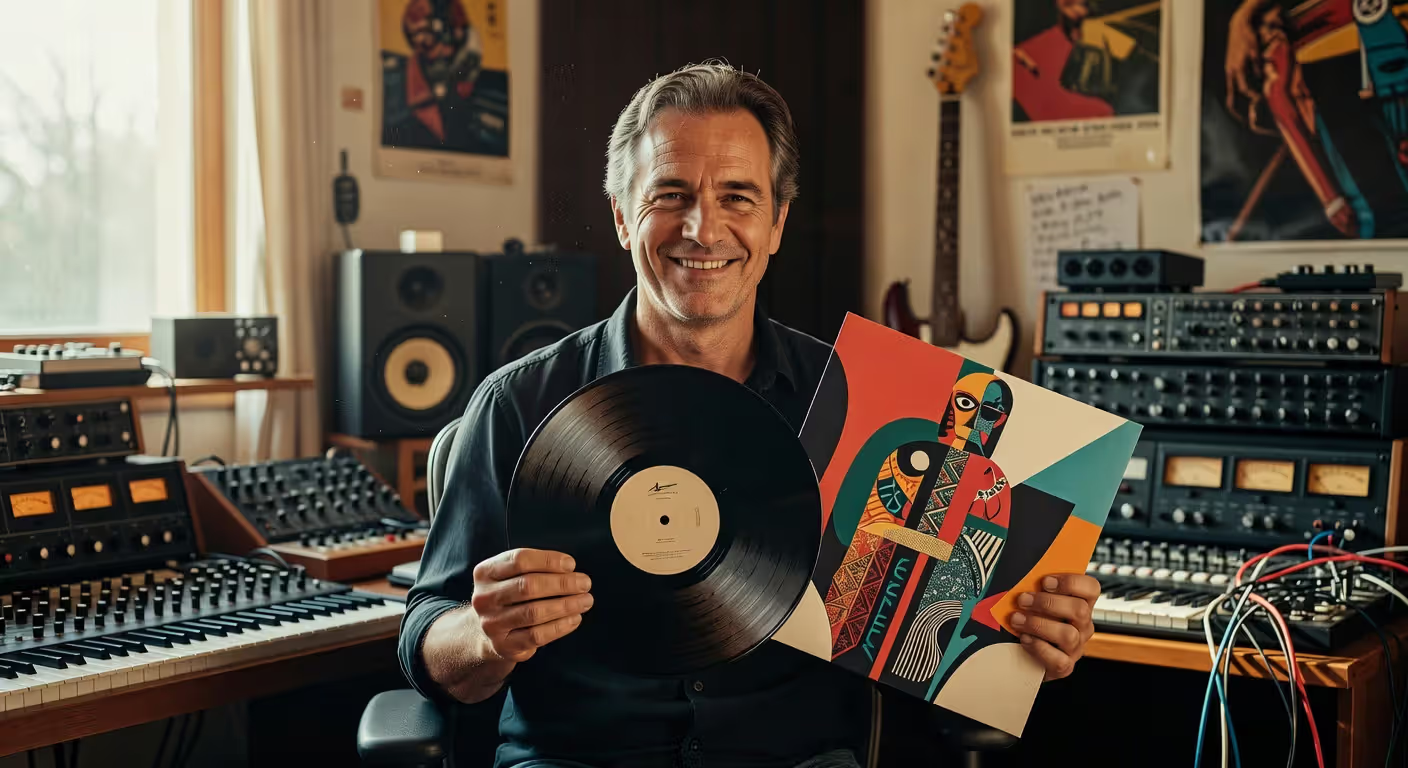
Artwork and metadata seem boring but they're crucial. Your album cover is often the first impression. Metadata (song titles, artist name, genre tags, ISRC codes) ensures you get paid when your music is streamed. Don't rush these details.
Promotion basics: you need a plan. Social media posts, email list announcements, playlist pitching, press releases, and live shows all play a role. Creating a full length record means nothing if nobody hears it. Budget time and money for marketing—at least as much as you spent on production.
Consider hiring a publicist or radio promoter if your budget allows. They have relationships and expertise you probably don't. But even DIY promotion can work if you're strategic and persistent.
Plan your release date carefully. Avoid major holidays and competing releases from big artists in your genre. Give yourself at least 6–8 weeks lead time to pitch to blogs, playlists, and press.
| Factor | Home Studio | Professional Studio |
| Cost | $500–$3,000 (equipment + software) | $50–$300/hour or $500–$2,000/day |
| Equipment Quality | Varies widely; decent with investment | High-end mics, preamps, monitors, acoustics |
| Expertise Available | Self-taught or online resources | Experienced engineers and producers on-site |
| Time Flexibility | Unlimited; work at your own pace | Booked sessions; pressure to work efficiently |
| Final Sound Quality | Good to great with skill and gear | Consistently professional; harder to mess up |
FAQ: Music Album Recording Questions Answered
Making an album is a marathon, not a sprint. The artists who finish strong are the ones who plan carefully, stay organized, and remember why they started in the first place. Your album represents months of work and creative vision—treat every stage with the care it deserves, and you'll create something you're proud of for years to come.
Related Stories
Read more
Read more

The content on this website is provided for general informational and educational purposes only. It is intended to explain concepts related to music production, recording, mixing, mastering, music industry roles, and distribution.
All information on this website, including articles, guides, and examples, is presented for general educational purposes. Results and success in music production may vary depending on skill level, equipment, and effort.
This website does not provide professional music production services or guarantees of commercial success, and the information presented should not be used as a substitute for consultation with qualified music producers, audio engineers, or music industry professionals.
The website and its authors are not responsible for any errors or omissions, or for any outcomes resulting from decisions made based on the information provided on this website.