
How to Release an Album in 2026
How to Release an Album in 2026?

Content
Content
You've finished recording your album. Great. Now what? Most artists hit upload and wonder why nobody's listening. Here's the reality: getting your music onto streaming platforms is the easiest part of the equation. The challenge? Building enough momentum that anyone actually discovers it. Whether you're doing this completely solo or you've got label support, the difference between releases that flop and ones that genuinely move your career forward comes down to execution across dozens of small details. This guide breaks down the actual process—timelines, technical requirements, promotional tactics that work—so you can release music that finds an audience instead of disappearing into the void.
Planning Your Album Release Timeline
Want to know why most independent releases fail? Artists finish recording and immediately want everything live. That's backwards.
Give yourself 12–16 weeks minimum if you're independent. You need that runway for playlist pitching (which requires 4–6 weeks notice), building pre-release buzz, and coordinating all your promotional pieces. Artists working with labels typically start 6–9 months out, especially when manufacturing physical copies.
Work backwards from your release date. Let's say you're dropping on a Friday in April. Here's what your calendar should look like:
- Mid-February: Submit to Spotify's editorial team and other playlist curators
- Late January: Launch your pre-save campaign and release your first single
- Early January: Everything technical should be done—mastering finished, artwork finalized, metadata locked
The biggest mistake? Rushing the promotional window. I've watched countless artists spend months perfecting their recordings, then give themselves two weeks to promote. That's not enough time. Your press contacts need 6–8 weeks. Your social content needs time to build. Your email subscribers need multiple touchpoints, not one panicked announcement.
One more thing: check what else is dropping that week. Releasing your indie folk album the same day Taylor Swift drops hers? You're fighting for attention you won't win. Look at your genre's release calendar before committing to a date.
Preparing Your Music for Distribution
Technical specs aren't exciting, but mess them up and your release gets rejected.
Mastering comes first. Streaming services want your audio around -14 LUFS. Too loud? They'll turn it down automatically. Too quiet? People skip it. If you're mastering yourself, grab a loudness meter plugin and learn how to use it. Or hire someone who already knows—usually $100-500 per album depending on track count.
File format matters. You need WAV or FLAC files at 16-bit/44.1kHz. Some distributors accept 24-bit, but everything gets converted eventually anyway. Keep your high-res masters archived separately for future use.
Metadata is where things get tedious but critical:
- Track titles exactly as they should appear (including featured artists)
- Your artist name spelled identically everywhere
- Genre tags that actually match your music
- Release date
- Copyright info (usually © year + your name)
- Credits for songwriters, producers, featured artists
ISRC codes are unique identifiers for each track. Think of them like social security numbers for songs. Most distributors generate these automatically. Never reuse an ISRC, even for remasters or re-releases.
Your album artwork needs to be 3000×3000 pixels minimum. JPG or PNG under 10MB. No blurry images, no contact info, no streaming logos. Make sure any text is readable at thumbnail size—that's how 90% of people first see it.
Author: Miles Arbordale;
Source: lamat-records.com
Choosing Distribution and Streaming Platforms
You can't upload directly to Spotify or Apple Music as an independent artist. You need a middleman.
Digital distributors like DistroKid, CD Baby, and TuneCore handle this. They convert your files, send them to all the major platforms, and collect your royalties. Their pricing and features vary significantly.
| Distributor | Annual Cost | Your Cut | How Fast | Extra Features | Best For |
| DistroKid | $22.99/year unlimited uploads | Keep 100% | 1-2 days | Lyrics sync, HyperFollow pages, Store Max | Artists releasing frequently |
| CD Baby | $29.95 per album (one-time) | Keep 91% | 2-4 weeks | Sync licensing opportunities, publishing admin | Artists who want one payment and done |
| TuneCore | $14.99/year per album | Keep 100% | 1-2 weeks | Publishing collection, splits for collaborators | Established artists with consistent catalog income |
| Ditto Music | $29/year unlimited | Keep 100% | 1-2 weeks | Mastering services, artwork help | Artists wanting all-in-one packages |
DistroKid makes sense if you're prolific. Unlimited uploads for one annual fee means the math works better when you're dropping singles regularly. CD Baby charges per release but keeps your music up forever, even if you stop paying—appealing if you're releasing one major project then taking a break.
Geographic coverage isn't usually an issue. Most distributors hit 150+ countries automatically. But if you're specifically targeting certain markets or planning physical distribution, double-check coverage.
Keep it simple. Pick a distributor with transparent pricing, fast delivery times, and responsive customer support. You'll be dealing with them on every future release, so small annoyances compound quickly.
Building Your Album Rollout Strategy
Release singles first. That's the modern playbook.
Drop 2-4 singles over the 8-12 weeks before your full album arrives. Each one is a separate chance to pitch playlists, grab attention, and convert casual listeners into fans. Your first single should be your strongest hook—the track that makes people stop scrolling.
Space them 3-4 weeks apart. Closer than that and they cannibalize each other. Further apart and you lose momentum.
Start pre-save campaigns 4-6 weeks before launch. Platforms like Spotify and Apple Music let fans bookmark your album before it's available. Pre-saves boost your first-day numbers, which signals to algorithmic playlists that your release matters. Tools like Feature.fm or Linkfire create landing pages that track who's converting.
Successful artists don't just make great music—they build campaigns around it. Every post, every email, every playlist pitch works toward one goal: putting your album in front of people who'll actually care enough to listen all the way through.
— Martinez Elena
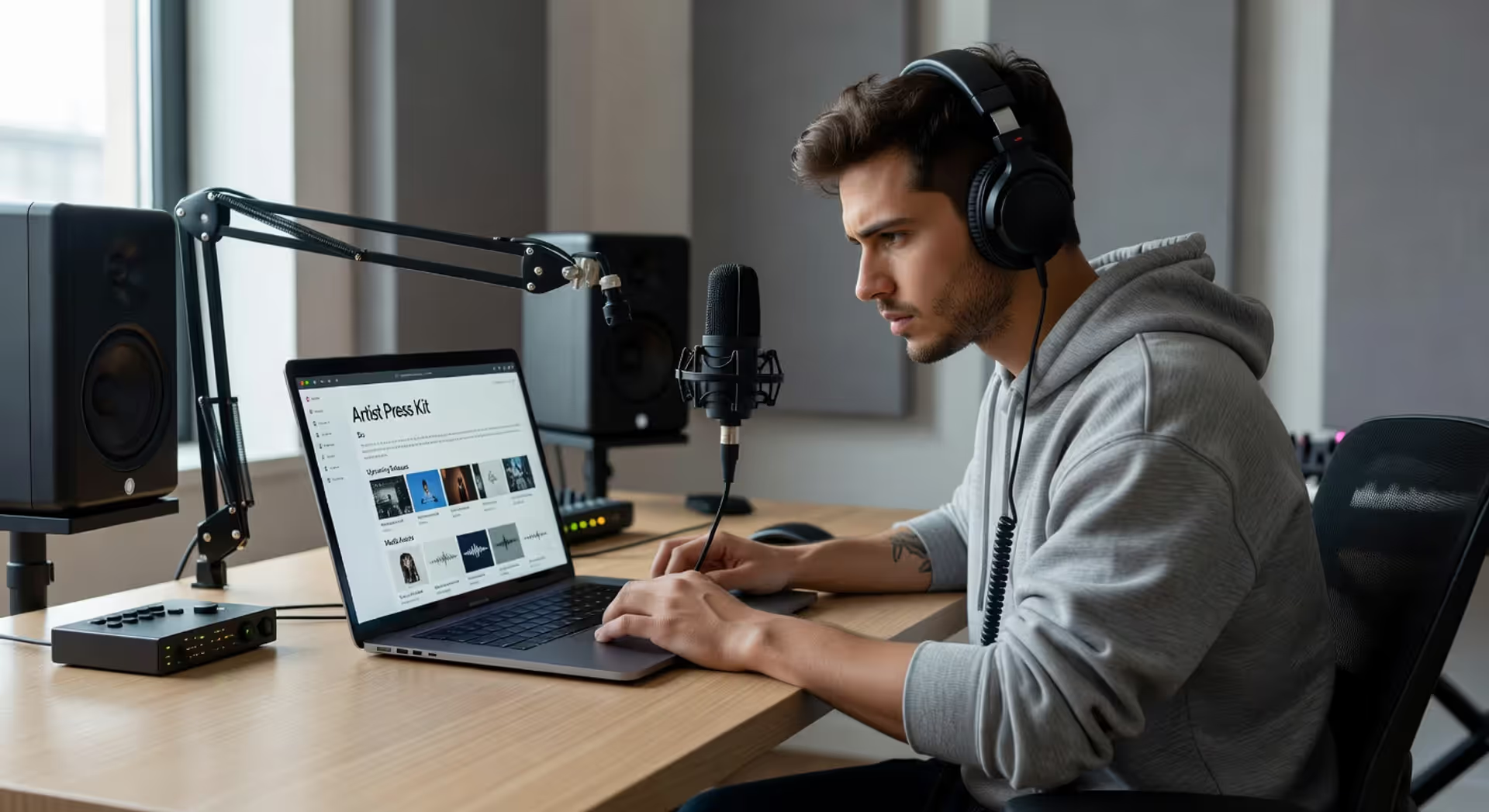
Your press kit needs to be ready before you start outreach. Include:
- High-res photos (300 DPI minimum)
- Album artwork
- One-sheet with your bio, release date, and key tracks
- Links to released singles
- Contact information
Submit to Spotify for Artists 4-6 weeks before release. Pitch your lead single with detailed genre tags and mood descriptors. Editorial playlist placements can generate serious streams, but acceptance rates are competitive. Don't put all your eggs in that basket.
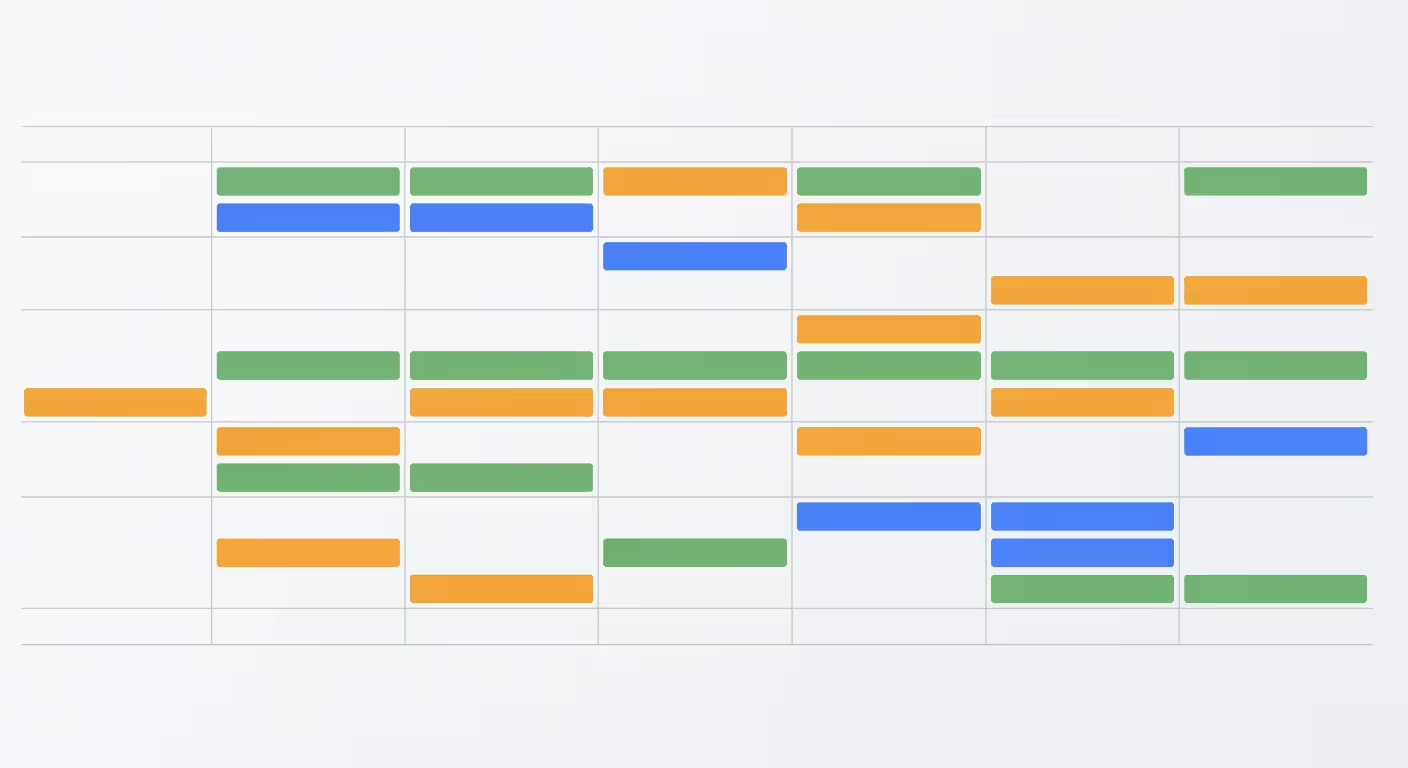
Create a content calendar. Map out social posts, email sends, video drops, and press outreach across the entire campaign. Consistency beats perfection. Three posts per week outperforms one perfect post per month.
Author: Miles Arbordale;
Source: lamat-records.com
Marketing and Promotion Tactics
Social media isn't optional anymore. But it doesn't have to consume your life.
Pick 1-2 platforms where your audience actually hangs out. For most genres, that's Instagram and TikTok. YouTube and Twitter still work for specific niches. Post behind-the-scenes clips, studio footage, and honest stories. People connect with humans, not brands.
Short-form video performs best right now. A 15-second clip explaining a lyric or showing your recording process often outperforms a polished music video. Authenticity beats production value.
Email lists convert better than social. Period. You own the list, and music newsletters typically see 20-30% open rates. Send updates every 2-3 weeks during your campaign. Give subscribers something exclusive—early access to singles, discount codes for merch, personal stories about the album.
Press outreach works when you start early. Music blogs, podcasts, and local press need 6-8 weeks lead time. Personalize every pitch. Generic templates get deleted instantly. Explain why your album fits their specific audience.
Music videos still drive discovery, but you don't need a Hollywood budget. A well-shot performance video or lyric video can be just as effective as a narrative production. Drop your first video 1-2 weeks after the album to keep momentum going.
Influencer partnerships are hit or miss. Micro-influencers (10K-50K followers) often deliver better ROI than big names. Look for creators who genuinely align with your sound. Forced partnerships feel inauthentic and waste money.
Advertising 101: start small. Facebook and Instagram ads let you target by music taste, location, and behavior. Set daily budgets of $10-20 and test different creative. Video ads outperform static images. Drive traffic to your pre-save page or lead single, not your entire catalog.
Common mistake: spreading your budget too thin across too many channels. Better to dominate one platform than have a mediocre presence on five.
Launch Day and Post-Release Actions
Release day is the starting line, not the finish.
Start early. Post everywhere. Tag everyone who contributed. Share the album link in your Instagram stories, Twitter, TikTok, and email. Make it impossible for your audience to miss.
Monitor your first-week numbers closely. Check Spotify for Artists, Apple Music for Artists, and your distributor's dashboard. Which tracks are getting skipped? Which are being added to playlists? This data tells you what's resonating.
Engage with every comment, message, and mention. Fans who get acknowledged become evangelists. Thank playlist curators. Appreciate bloggers who covered you. Repost fan content to your stories.
Sustaining momentum is harder than launching. Plan content for weeks 2-4. Drop another music video. Share acoustic versions or remixes. Pitch to curators who didn't respond pre-release—some prefer hearing the full album.
Analyze what worked. Look at:
- Streams by platform and geography
- Playlist adds (editorial vs. algorithmic)
- Social engagement rates
- Email open and click rates
- Website traffic sources
Don't obsess over vanity metrics. 10,000 streams from engaged fans beats 100,000 passive listens. Watch for saves, playlist adds, and follower growth—those predict long-term success better than raw stream counts.
Getting music onto Spotify is easy now—literally anyone can do it. The challenge is making people care enough to actually listen. That requires strategy starting months before release day and continuing long after most artists have moved on.
— Chen David
Common Album Release Mistakes to Avoid
Rushing the timeline kills more releases than bad music. Artists finish recording and want it out immediately. This eliminates time for playlist pitching, press outreach, and building anticipation. Give yourself 12 weeks minimum.
Bad metadata creates permanent problems. Misspelled artist names, wrong genre tags, missing credits—these errors hurt discoverability and mess up royalty payments. Triple-check everything before uploading.
Missing promotional windows happens when you don't work backwards from your release date. Spotify's editorial team needs 4-6 weeks notice. Publications need 6-8 weeks. Pitching two weeks before launch means you've already missed the boat.
Inadequate budget planning is brutal. Many artists spend everything on recording and have nothing left for promotion. Set aside at least 20-30% of your total budget for marketing. Even grassroots marketing costs money—ads, professional photos, website hosting, email platform fees.
Ignoring analytics prevents growth. Check your numbers weekly. Which songs perform best? Where are your listeners? What age groups respond? Use this intel to refine future releases, target the right playlists, and book shows in the right cities.
Another mistake: treating the album like a one-time event. Your album should generate value for years. Keep pitching to new playlists. Use tracks in social content. Pursue sync licensing opportunities. Releases don't end after week one.
Remember: an album release is a marathon, not a sprint. Artists building sustainable careers learn from each release and compound their strategies over time.

Author: Miles Arbordale;
Source: lamat-records.com
Comparing Popular Music Distributors
Before we hit the FAQs, here's a comparison of major distribution platforms for independent artists:
| Platform | What It Costs | Revenue Share | Upload Speed | Bonus Tools | Who It's For |
| DistroKid | $22.99 yearly, unlimited releases | Artists keep everything | 1-2 days | Lyrics integration, HyperFollow, Store Max | Prolific independent creators |
| CD Baby | $29.95 one-time per album | Artists keep 91% | 2-4 weeks | Sync licensing, publishing admin | Artists who prefer single payments |
| TuneCore | $14.99 per year per album | Artists keep everything | 1-2 weeks | Publishing tools, revenue splitting | Professional musicians with steady income |
| Ditto Music | $29 yearly, unlimited releases | Artists keep everything | 1-2 weeks | Mastering help, artwork creation | Musicians wanting bundled solutions |
FAQ: Album Release Questions Answered
Releasing an album successfully comes down to preparation and consistent execution. Start planning well ahead, treat each element as part of a larger strategy, and keep your expectations realistic about timelines. Artists who build lasting careers learn from every release, refine their approach continuously, and stay engaged with their audience. Your album deserves that level of commitment and strategic thinking.
Related Stories
Read more
Read more

The content on this website is provided for general informational and educational purposes only. It is intended to explain concepts related to music production, recording, mixing, mastering, music industry roles, and distribution.
All information on this website, including articles, guides, and examples, is presented for general educational purposes. Results and success in music production may vary depending on skill level, equipment, and effort.
This website does not provide professional music production services or guarantees of commercial success, and the information presented should not be used as a substitute for consultation with qualified music producers, audio engineers, or music industry professionals.
The website and its authors are not responsible for any errors or omissions, or for any outcomes resulting from decisions made based on the information provided on this website.