
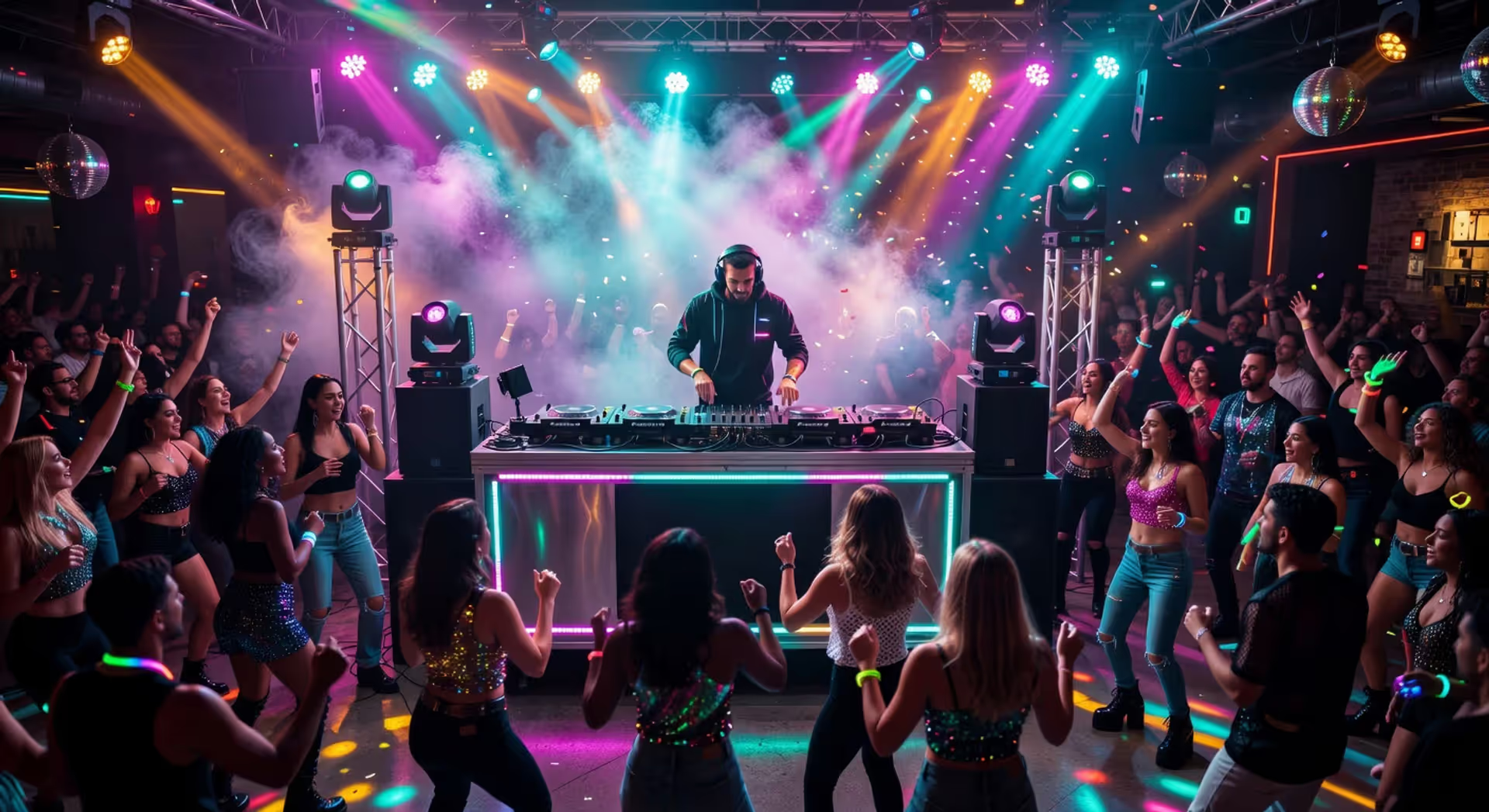
How to Start Being a DJ
How to Start Being a DJ?
Content
Content
So you want to know how to start being a DJ? Good news: it's more accessible now than ever before. You don't need a massive budget or years of training to get behind the decks and start mixing. But you do need the right equipment, a solid grasp of the basics, and a plan for building your skills and landing gigs. This guide walks you through everything from choosing your first controller to playing your first party, with real-world advice that skips the fluff and gets straight to what works.
What You Need to Know Before You Start DJing
Let's set realistic expectations right from the start. Learning to DJ isn't something you'll master in a weekend, but you also don't need a decade of practice before you can play a decent set. Most beginners can mix basic tracks competently within 2–3 months of regular practice. Getting truly good? That takes longer—usually 1–2 years of consistent work.
The time commitment varies. If you practice 30–60 minutes daily, you'll progress much faster than someone who only touches their equipment on weekends. The pattern I see most often is people underestimating how much time they need to spend just listening to music and organizing their library. Mixing technique matters, but knowing your tracks inside-out matters more.
Genre selection is one of your first big decisions. House, techno, hip-hop, drum and bass, open format—each has different technical demands and different scenes. Starting with one genre helps you build focused skills and connect with a specific community. You can always branch out later. Open format (mixing multiple genres) is popular for weddings and private events, but it's actually harder for beginners because you need a broader music knowledge.
Do you need formal training? Not really. Plenty of successful DJs are entirely self-taught. Online tutorials, practice, and feedback from other DJs can get you where you need to go. That said, a few lessons or a short course can accelerate your learning by fixing bad habits early. If you're the type who learns better with structure, it's worth the investment.
Author: Lena Corwyn;
Source: lamat-records.com
Essential Equipment for New DJs
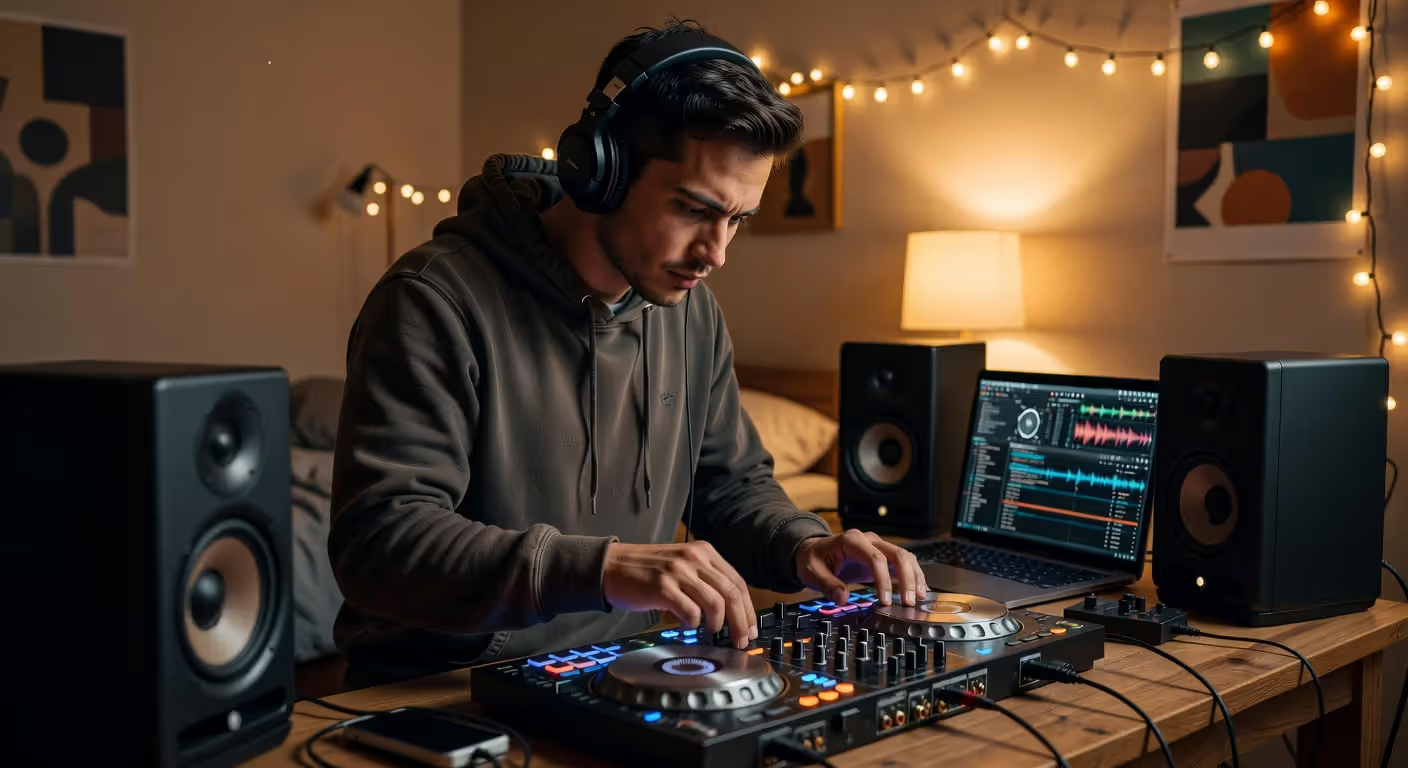
Here's what you actually need to get started. A DJ controller is the most common choice for beginners—it's an all-in-one unit that connects to your laptop and gives you jog wheels, faders, EQ knobs, and pads for triggering samples. Controllers typically cost $200–$1,200 depending on features and build quality.
The alternative is traditional turntables and a mixer. This setup costs more upfront and has a steeper learning curve, but it's the standard in vinyl-focused scenes and some club environments. If you're passionate about vinyl culture or want to play techno and house in traditional venues, turntables might be your path. For most beginners, though, a controller makes more sense.
You'll also need:
Headphones: Closed-back DJ headphones with good isolation. Budget options start around $60; professional models run $150–$300. The key features are comfort (you'll wear these for hours), swiveling ear cups, and a replaceable cable.
Laptop: Any modern laptop with at least 8GB RAM and a decent processor will work. Macs are popular in the DJ world but not required. Your laptop runs your DJ software and stores your music library.
Speakers: For practice at home, decent monitor speakers or even quality computer speakers work fine. You're learning to mix, not throwing a party. Budget $100–$300 for practice speakers. You won't need a PA system until you're playing actual gigs.
Software: Most controllers come bundled with DJ software like Serato DJ Lite, Traktor, or rekordbox. These are powerful enough for most beginners. The paid versions ($129–$329) unlock extra features, but start with the free version.
Budget Setup vs. Professional Setup
Here's how different price points compare:
| Setup Level | Price Range | What You Get | Pros | Cons | Best For |
| Entry Budget | $250–$400 | Basic 2-channel controller (Pioneer DDJ-200, Numark Party Mix), budget headphones, free software | Affordable, easy to learn, portable | Limited features, plastic build, may outgrow quickly | Testing if DJing is for you, casual bedroom mixing |
| Solid Beginner | $500–$800 | Mid-range 2-channel controller (Pioneer DDJ-400, Traktor S2), quality headphones, software included | Good build quality, club-standard layout, room to grow | Still lacks some pro features | Serious beginners planning to gig within a year |
| Intermediate | $1,000–$1,500 | 4-channel controller (Pioneer DDJ-800, Denon MC7000), pro headphones, monitor speakers | Professional features, multiple inputs, better sound quality | Higher investment, more complex | DJs actively gigging or planning professional work |
| Pro/Club Standard | $2,500+ | CDJ setup (2x CDJ-3000s + DJM mixer) or high-end controller, premium monitors | Industry standard, club-ready, best sound and build | Expensive, overkill for beginners | Established DJs, club residents, those with budget to invest long-term |
The simpler option usually wins here for most beginners. A $600 setup will serve you well for your first year or two. You can always upgrade once you know exactly what features you need.
Learning the Technical Basics
Now for the skills that separate someone who owns equipment from someone who can actually DJ. These are your core techniques, and you'll need to practice all of them regularly.
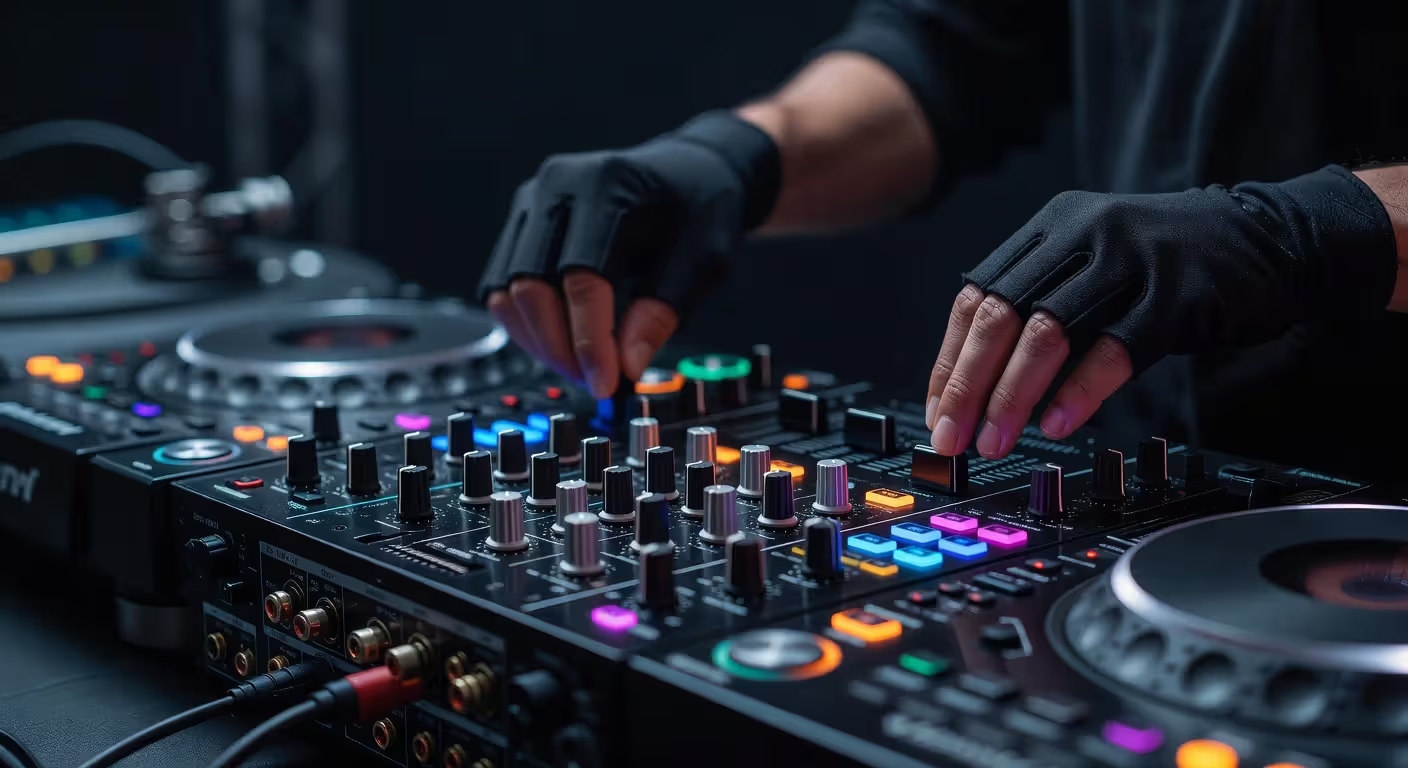
Beatmatching is the foundation. It's the process of aligning the tempo and beats of two tracks so they play in sync. Modern software has a "sync" button that does this automatically, but you should learn to beatmatch by ear first. Why? Because it trains your ear to hear timing differences and makes you a better DJ overall. Practice by playing a track, cueing up a second track in your headphones, and adjusting the pitch fader until the beats align. Then release the second track on beat.
Phrasing means mixing tracks at musical boundaries—typically every 16 or 32 beats. Most electronic music is structured in 4, 8, 16, and 32-beat phrases. Mixing at these points sounds natural; mixing mid-phrase sounds jarring. Count beats while you listen to tracks. You'll start hearing the structure.
EQ mixing uses the equalizer knobs (low, mid, high) to blend tracks smoothly. A common technique: as you bring in a new track, cut its bass until the previous track's bassline ends, then swap the bass frequencies. This prevents muddy, clashing low end. Similarly, you might cut the highs on the outgoing track to let the new track's melody shine through.
Transitions are how you move from one track to another. Simple cuts work for high-energy moments. Long blends (30–60 seconds of both tracks playing) work for building tension. Echo-outs, filter sweeps, and backspin effects add variety. Start simple—master a clean 16-beat blend before you try fancy effects.
Author: Lena Corwyn;
Source: lamat-records.com
Cue points and loops let you mark important moments in tracks and repeat sections. Set cue points at the start of drops, vocals, or breakdowns. Use loops to extend a section while you prepare the next track. These tools buy you time and creative options.
Tempo control is about knowing when to speed up or slow down the energy. Playing the same tempo for an hour gets boring. Gradually increasing BPM builds excitement; dropping it down gives people a breather. Track your set's energy arc.
Where do you learn all this? YouTube has thousands of free tutorials—channels like Crossfader, DJ Carlo Atendido, and Club Ready DJ School are solid starting points. Paid platforms like DJ Courses Online or Scratch DJ Academy offer structured curriculums if you want a more guided approach. But honestly, most of your learning happens through practice. Aim for 30 minutes daily, focusing on one technique at a time.
The most important thing for any DJ starting out is to know your music. Technology will come and go, but if you know your music inside out, you'll always be able to move a dance floor.
— Cox Carl
Building Your Music Library and Developing Your Sound
Your music library is your toolbox. A plumber with rusty tools can't do good work, and a DJ with a weak library can't play a good set. So where do you get tracks?
Legal music sources include Beatport, Traxsource, Bandcamp, and Apple Music (which now allows DJs to access tracks through some DJ software). Streaming integration with services like Tidal and SoundCloud is available in software like Serato and rekordbox, but you don't own those tracks—if your internet drops, so does your music. For serious work, download and own your tracks.
Record pools are subscription services ($20–$40/month) that give you access to thousands of tracks across multiple genres. They're popular with mobile and club DJs who need a constantly updated library. Examples include BPM Supreme, DJcity, and Zipdj.
Expect to spend $50–$100 monthly on music once you're actively building your library. That might sound like a lot, but it's part of the job. Start with 100–200 tracks in your chosen genre. That's enough for a few hours of mixing and gives you options for different moods and energy levels.
Organization matters more than you think. Create playlists by genre, energy level, and BPM range. Tag tracks with descriptive labels: "opener," "peak time," "cool down," "vocal," "instrumental." When you're in the middle of a set, you need to find the right track in seconds. A messy library kills your flow.
Developing your sound is about finding what makes your sets distinctive. Do you favor deep, hypnotic grooves or high-energy bangers? Are you into classic tracks, cutting-edge releases, or obscure edits? Your sound evolves over time, but you can accelerate it by:
- Listening actively to DJ mixes in your genre and noting what resonates
- Digging deeper than the Beatport Top 10—explore back catalogs and smaller labels
- Creating signature edits or mashups (once you have the skills)
- Paying attention to what moves the crowd when you play out
Don't try to please everyone. A focused, distinctive sound attracts the right opportunities.
Getting Your First DJ Gigs
You've practiced for months. You can mix smoothly. Your library is solid. Now what?
Your first gigs won't be glamorous. That's fine. Everyone starts somewhere. Here's the realistic path most DJs take:
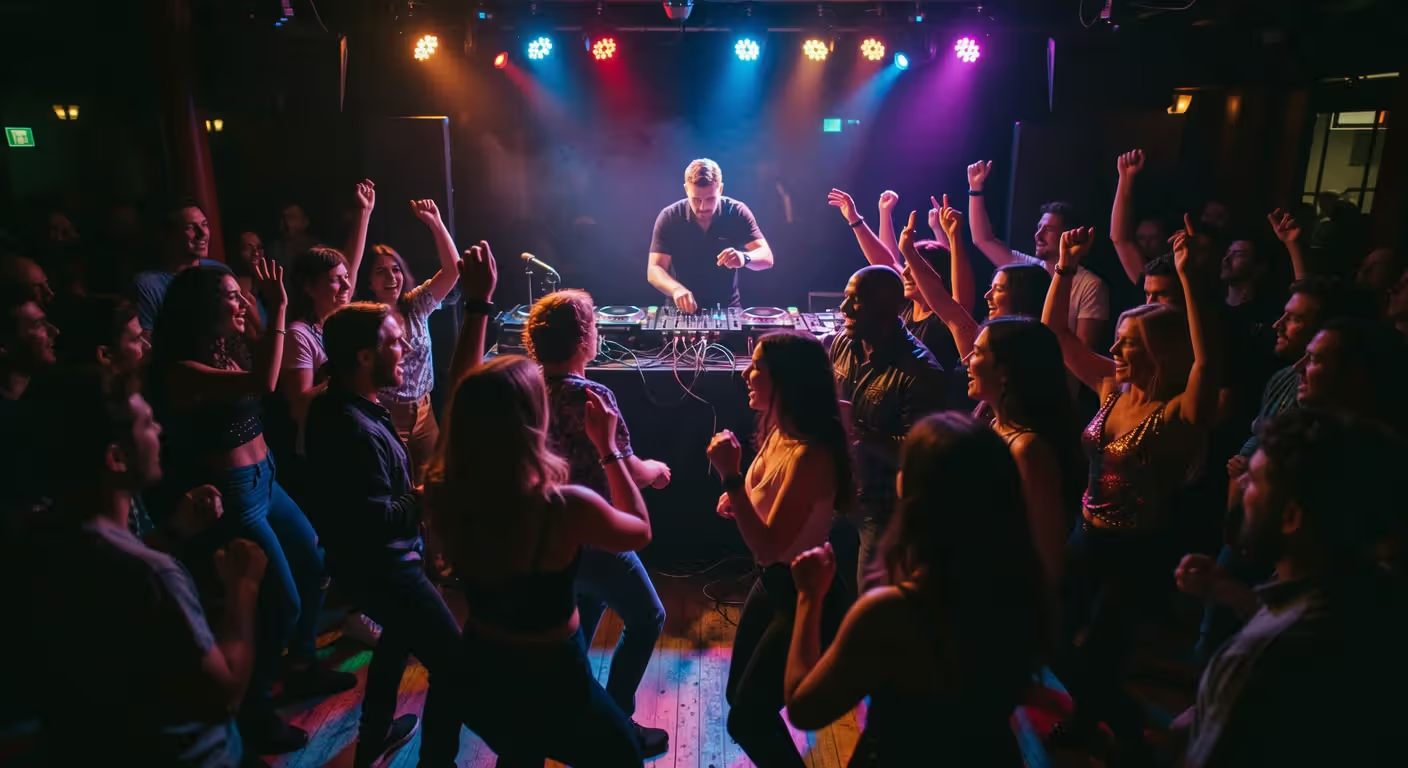
House parties and friend gatherings are the easiest first step. Offer to DJ a birthday party, a backyard BBQ, or a small get-together. You'll practice reading a crowd (even a small one), managing requests, and dealing with real-world pressure. Plus, you'll get comfortable with your equipment in a live setting.
Open decks nights exist in many cities—events where the venue lets anyone sign up for a 30–60 minute slot. The crowd is usually other DJs and music heads, which can be intimidating, but it's a low-stakes way to get stage time. Search for "open decks [your city]" or ask in local DJ Facebook groups.
Networking with promoters and other DJs is how you move from free gigs to paid ones. Go to events in your genre. Introduce yourself. Don't immediately ask for a gig—build relationships first. Offer value: help promote an event, bring friends, support other DJs. When you've established yourself as part of the community, opportunities appear.
Your demo mix is your resume. Record a 30–60 minute mix that showcases your technical skills and track selection. Make sure the levels are clean, the transitions are smooth, and the energy arc makes sense. Upload it to SoundCloud or Mixcloud with a tracklist. Send it to promoters when opportunities arise, but don't spam—target it to people who book your style of music.
Author: Lena Corwyn;
Source: lamat-records.com
Social media showcasing helps you build a following and demonstrate your skills. Post short mix clips on Instagram. Go live on Twitch or YouTube while you practice. Share new music discoveries. Engage with other DJs and music pages. Consistency matters more than production value—a weekly mix series on SoundCloud does more for your career than one perfectly produced mix every six months.
Your first paid gig might pay $50–$100. That's normal. As you build a reputation, rates increase. Mobile DJ work (weddings, corporate events) pays better but requires a broader music knowledge and more equipment. Club residencies pay less per night but offer regular exposure.
Common Mistakes New DJs Make
Let's talk about what trips people up. Avoid these and you'll progress faster.
Over-relying on sync is the big one. Yes, the sync button works. But if you never learn to beatmatch manually, you won't develop the ear training that makes you a better selector and mixer. Use sync as a tool, not a crutch. Practice without it regularly.
Neglecting music knowledge means you can mix technically but your sets are boring. Knowing when a track was released, who produced it, what label it's on, and what other tracks sound similar makes you a curator, not just a button-pusher. Spend as much time listening and researching as you do practicing.
Poor track selection kills more sets than bad mixing. Playing tracks that don't fit the vibe, don't flow together, or don't match the crowd's energy shows you're not paying attention. Every track should have a reason for being in your set. If you can't explain why you played it, you probably shouldn't have.
Not reading the crowd is a related mistake. The dance floor tells you everything you need to know. Are people dancing or standing around? Are they moving toward the floor or leaving? Adjust your track selection and energy based on what you see. A technically perfect set that clears the floor is a failure.
Skipping practice seems obvious, but it's easy to get lazy once you can mix competently. The DJs who progress keep practicing, keep learning new techniques, and keep pushing their skills. Stagnation is the enemy.
One more: playing too much, too fast. New DJs often rush transitions, trying to fit as many tracks as possible into a set. Let tracks breathe. A 60-minute set might have 15–20 tracks, not 40. Give each track space to develop and connect with the crowd.
DJ Equipment Options for Beginners
| Controller Model | Price Range | Key Features | Pros | Cons | Best Use Case |
| Pioneer DDJ-FLX4 | $249 | 2-channel, Rekordbox/Serato compatible, smart mixing features | Affordable, works with multiple software platforms, beginner-friendly layout | Limited build quality, basic features | First-time buyers, bedroom DJs on a budget |
| Numark Mixtrack Platinum FX | $299 | 2-channel, 4-deck control, jog wheel displays, built-in effects | Good value, informative displays help learning, solid feature set | Plastic construction, less industry-standard than Pioneer | Budget-conscious beginners who want extra features |
| Pioneer DDJ-400 | $449 | 2-channel, Rekordbox DJ compatible, club-style layout | Mirrors CDJ/DJM layout, excellent for learning club-standard setup, solid build | Only works with Rekordbox (not Serato), 2-channel limits advanced mixing | Beginners serious about club DJing, especially house/techno |
| Traktor Kontrol S2 MK3 | $499 | 2-channel, Traktor Pro 3 included, haptic jog wheels, mixer FX | High build quality, innovative features, great software included | Traktor less common in clubs than Rekordbox/Serato | Electronic music producers, DJs who value creative control |
FAQ: Starting Your DJ Career Questions Answered
Starting your DJ journey takes commitment, but it's one of the most rewarding creative paths you can pursue. Focus on building solid fundamentals, curating a strong music library, and getting as much practice time as possible—both alone and in front of crowds. Your first gigs won't be perfect, and that's completely normal. Every DJ you admire started exactly where you are now, making mistakes and learning from them. Keep practicing, stay connected to your local scene, and remember that your unique taste and perspective are what will ultimately set you apart behind the decks.
Related Stories
Read more
Read more

The content on this website is provided for general informational and educational purposes only. It is intended to explain concepts related to music production, recording, mixing, mastering, music industry roles, and distribution.
All information on this website, including articles, guides, and examples, is presented for general educational purposes. Results and success in music production may vary depending on skill level, equipment, and effort.
This website does not provide professional music production services or guarantees of commercial success, and the information presented should not be used as a substitute for consultation with qualified music producers, audio engineers, or music industry professionals.
The website and its authors are not responsible for any errors or omissions, or for any outcomes resulting from decisions made based on the information provided on this website.