

How to Submit Demo to Record Label Successfully
How to Submit Demo to Record Label Successfully?

Getting your music in front of record labels can feel like throwing a message in a bottle into the ocean. But it doesn't have to be that way. Labels receive thousands of demos every year, and most get ignored within the first 30 seconds. The difference between a demo that lands a deal and one that gets deleted? It's rarely about raw talent alone. How you prepare, who you target, and how you present your work matters just as much as the music itself. If you're serious about pitching a demo to labels, you need to understand what they're actually looking for and how to stand out in a crowded inbox.
What Record Labels Look for in a Demo
Record labels aren't looking for perfect musicians. They're looking for profitable artists.
That distinction changes everything about what labels look for in a demo. Production quality matters, but a perfectly polished track with no personality won't get you signed. Labels evaluate five core elements when they listen to your submission.
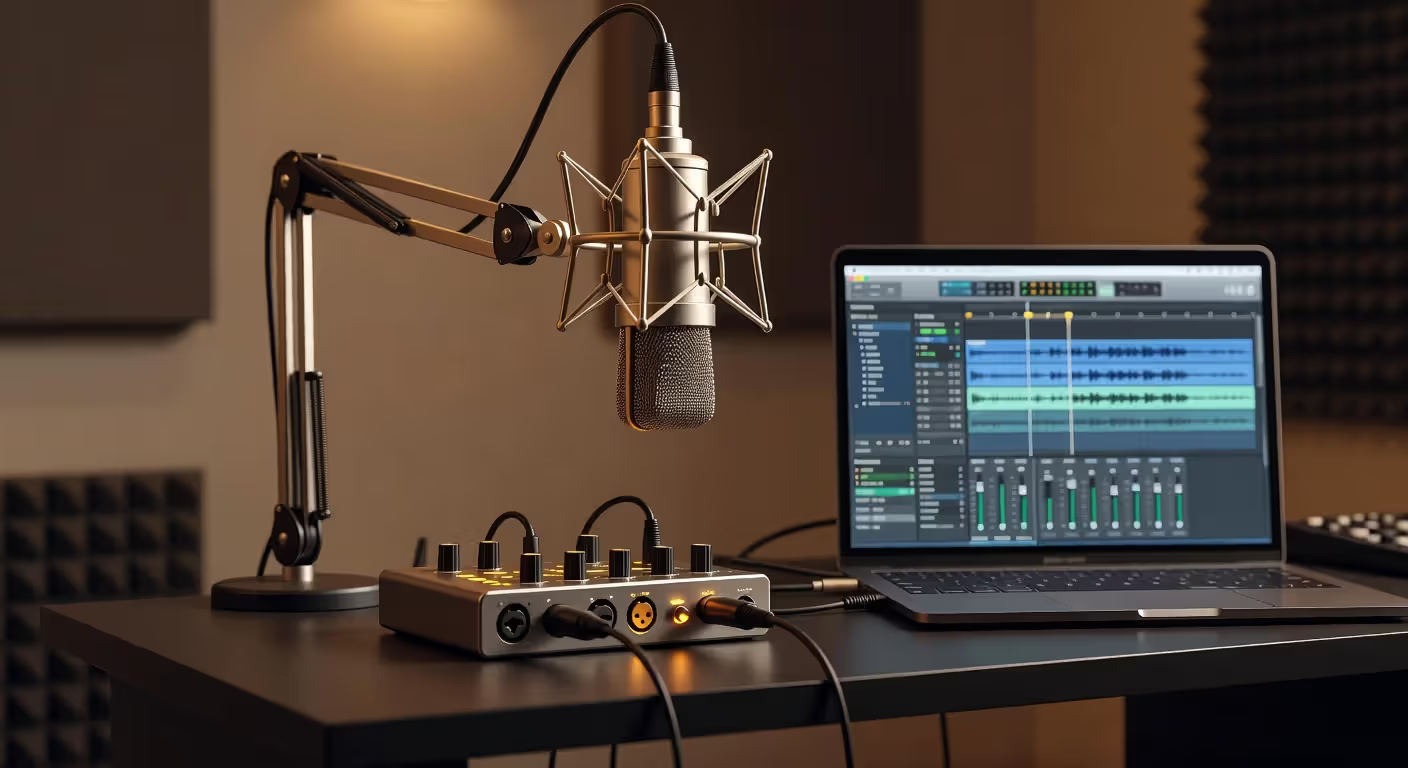
Production quality comes first because it signals professionalism. Your demo doesn't need a $50,000 studio budget, but it does need clean vocals, balanced mixing, and no amateur mistakes like clipping or muddy bass. Home recordings can absolutely work if you know what you're doing.
Originality is the hardest box to tick. Labels want artists who sound fresh but not so experimental that they're unmarketable. You need a recognizable sound that fits within a genre while bringing something new. Think about what makes your voice or style immediately identifiable.
Commercial potential means your music has to work in the real world. Can people imagine hearing this on playlists? Does it have hooks? Would it work at a live show? Labels are businesses, and they're asking whether they can make money with you.
Artist image and branding tells labels whether you understand who you are as an artist. Your visual identity, social media presence, and overall aesthetic need to be coherent. Labels want artists who already think like brands.
Completeness of materials separates serious artists from hobbyists. When you submit just a SoundCloud link with no context, you're telling the label you're not ready. Getting a demo heard requires presenting a full package that makes their job easier.
The pattern I see most often is artists obsessing over the music while ignoring everything else. But A&R reps are evaluating the whole picture.
Preparing Your Demo Before Submission
You don't get a second chance to make a first impression. Before you even think about sending recordings to record labels, your materials need to be bulletproof.
Recording and Production Standards
Your demo should showcase your three to four strongest tracks. Not your entire catalog. Labels don't have time to dig through twelve songs hoping to find something good.
Each track should be professionally mixed and mastered. If you can't afford a professional engineer, at least have someone with experience review your mixes. Common problems to avoid: vocals buried in the mix, excessive reverb, harsh sibilance, and inconsistent volume levels between tracks.
Technical specifications matter more than you'd think. Export your final tracks as high-quality WAV or FLAC files (24-bit, 44.1kHz minimum). Keep MP3s at 320kbps if file size is an issue. Poor audio quality screams amateur hour.
Record in a treated space or at least a quiet room with minimal echo. You'd be surprised how many demos get rejected because of background noise or room reverb that makes vocals sound like they were recorded in a bathroom.
Essential Materials to Include with Your Demo
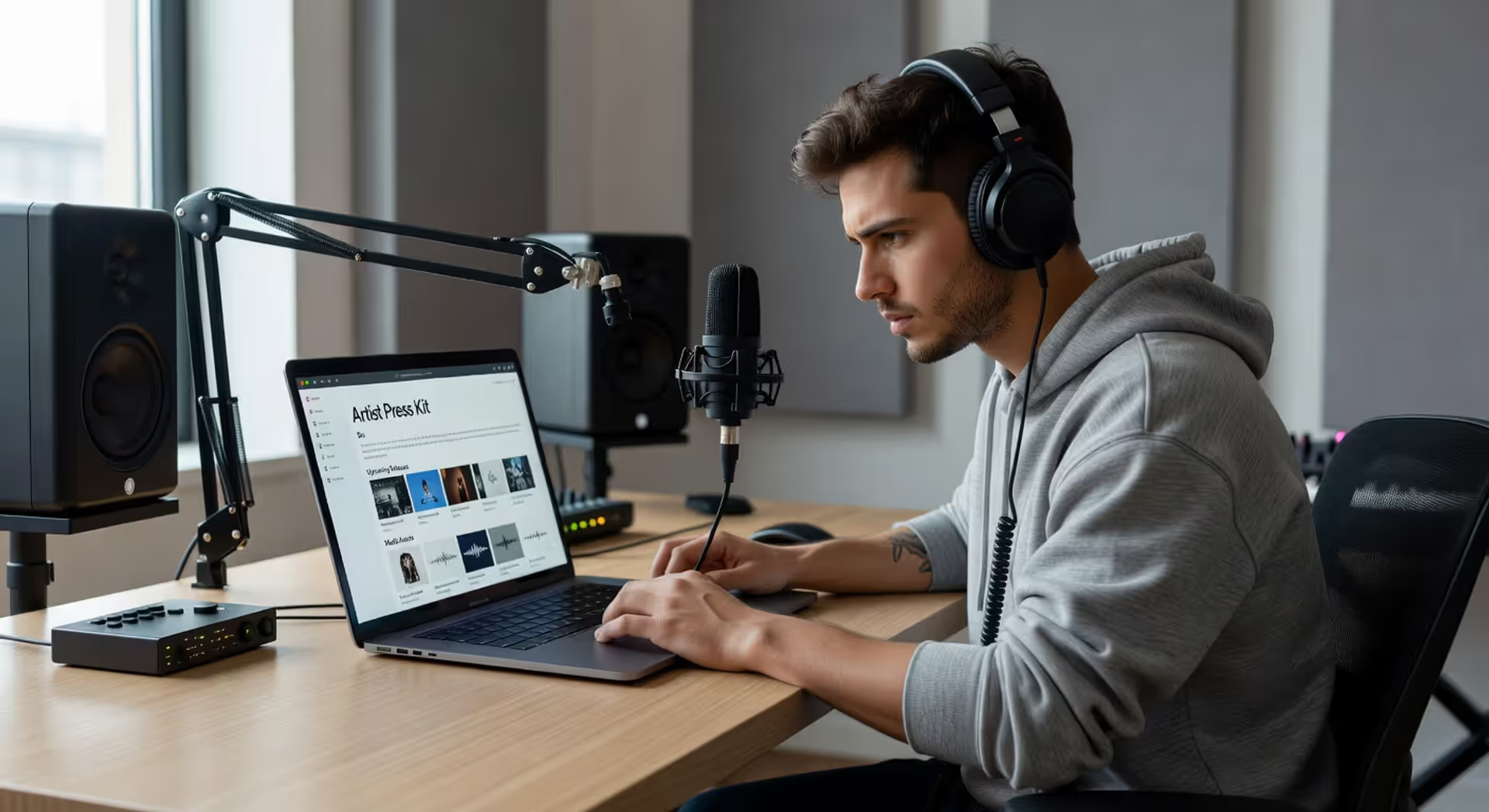
Preparing a demo for labels means assembling a complete press kit. Here's what you need:
Artist bio: A one-page document (300-500 words) that tells your story, highlights any achievements, describes your sound, and mentions notable performances or releases. Skip the childhood stories unless they're genuinely relevant. Focus on what makes you marketable.
Press photos: At least three high-resolution professional photos (300 DPI minimum). These should reflect your brand and be usable for promotional materials. Smartphone selfies don't count.
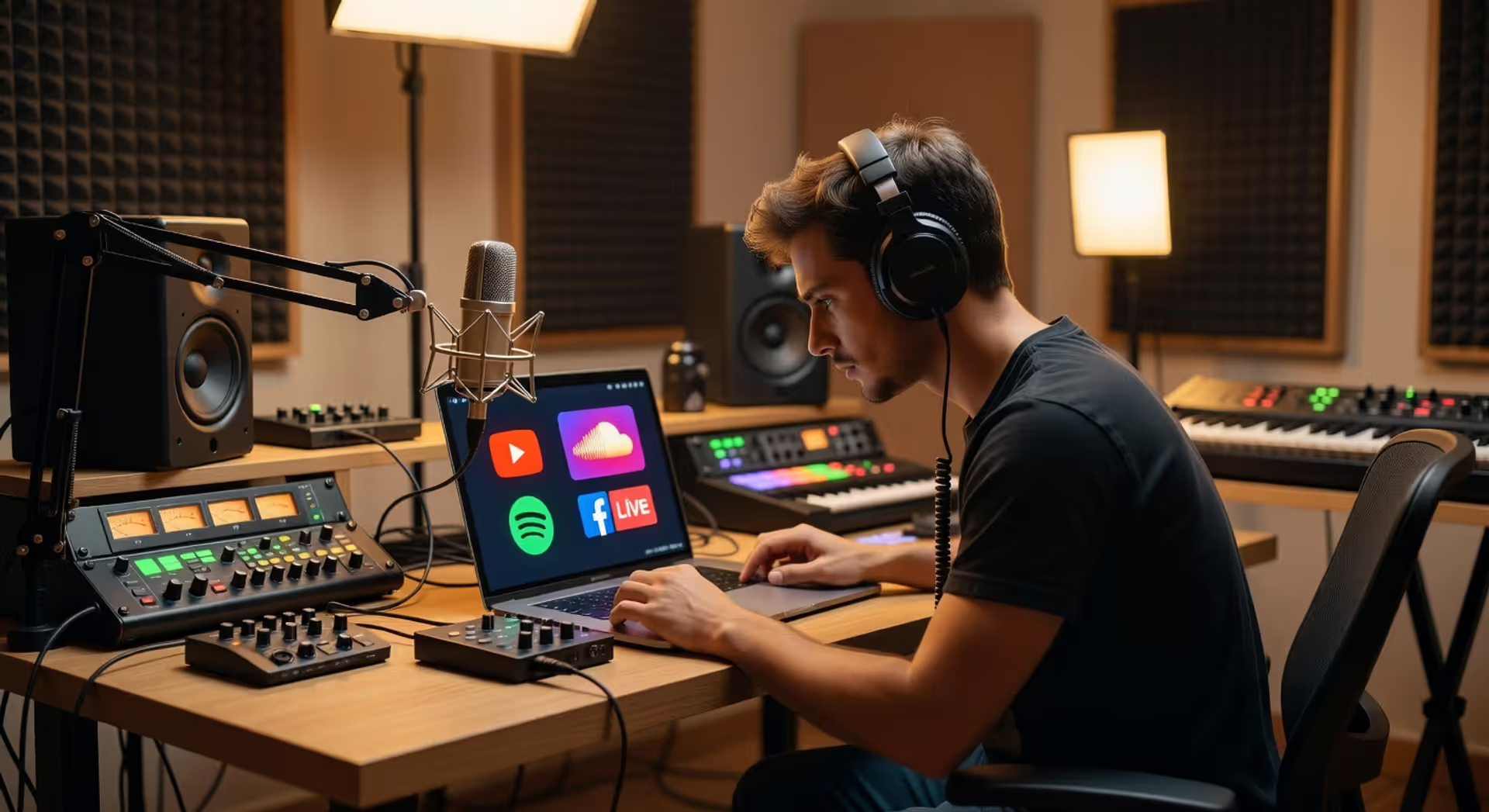
Streaming links: Active links to your music on Spotify, Apple Music, YouTube, or SoundCloud. Make sure your profiles are complete with proper artwork and bios.
Social media metrics: Current follower counts and engagement rates. If you have 50,000 TikTok followers with strong engagement, that matters. If you have 300 Instagram followers, maybe leave that out.
Performance history: A list of notable venues, festivals, or tours. Opening for established acts carries weight.
Metadata: Every audio file should be properly tagged with song title, artist name, genre, and year. Seems basic, but you'd be amazed how many submissions arrive as "Track01.wav."
Author: Declan Wrenford;
Source: lamat-records.com
How to Research and Target the Right Labels
Sending your demo to every label you can find is a waste of everyone's time. Smart targeting is half the battle when approaching record labels.
Start with genre fit. If you make indie folk music, sending your demo to a label that exclusively releases hip-hop is pointless. Research labels that sign artists who sound similar to you. Not identical, but in the same sonic neighborhood.
Analyze label rosters by listening to recent releases. Check out the last 10-15 artists a label has signed. Do you fit stylistically? Are they signing new artists or only working with established names? Some labels haven't taken on new talent in years.
Submission policies vary wildly between labels. Some accept unsolicited demos through online portals. Others only accept submissions through managers or attorneys. Many major labels don't accept unsolicited material at all. Check the label's official website for their submission guidelines and follow them exactly.
Finding A&R contacts takes detective work. LinkedIn, label websites, and music industry directories like the A&R Registry can help. But here's the thing: cold emailing an A&R rep you found online rarely works. Warm introductions through mutual contacts are exponentially more effective.
Avoiding scams is critical. Legitimate labels never ask you to pay submission fees, recording costs, or marketing expenses upfront. If a "label" wants money from you, it's probably a scam. Real labels invest in artists, not the other way around.
Create a target list of 10-15 labels that genuinely make sense for your music. Quality over quantity wins here.
Demo Submission Methods That Work
There's no single magic channel for getting your demo heard. Different approaches work for different situations.
| Submission Channel | Cost | Typical Response Rate | Professionalism Level | Best Use Case |
| Email Submission | Free | 2-5% | Medium | Independent labels with open submission policies |
| Label Online Portals | Free | 5-10% | High | Labels that actively seek new talent through official channels |
| Industry Showcases | $100-$500 | 15-25% | High | Artists with strong live performance skills |
| Music Attorneys/Managers | 15-20% commission | 30-50% | Very High | Artists with existing traction and professional representation |
Direct Submissions vs. Industry Referrals
Direct submissions work best with independent labels that actively seek new talent. When you submit demo to record label directly, you're competing with thousands of other artists. Your materials need to be exceptional and your email needs to be perfect.
Industry referrals are a completely different game. When a manager, attorney, or established artist introduces you to an A&R rep, your demo actually gets heard. Response rates jump from single digits to 30-50%. This is why networking matters so much in the music industry.
Email protocols for direct submission: Use a clear subject line like "Demo Submission: {Your Artist Name} – {Genre}." Keep your email under 200 words. Include streaming links, not attachments. Attachments get ignored or caught in spam filters. Personalize each email by mentioning why you're a good fit for that specific label.
Online portals offered by labels like AWAL, Secretly Group, and others provide structured submission processes. These are usually your best bet for direct submissions because someone actually reviews what comes through.

Author: Declan Wrenford;
Source: lamat-records.com
Physical mail is basically dead in 2026. Unless a label specifically requests physical demos (extremely rare), don't bother. CDs and USB drives go straight to the trash.
Networking events like music conferences, industry showcases, and local music meetups create opportunities for face-to-face connections. A 30-second conversation at the right event can open more doors than 100 cold emails.
Using aggregators and platforms like SubmitHub or Groover can help you reach curators and some smaller labels, but they're not typically how major label deals happen. They're better for building buzz and getting playlist placements.
The demos that catch my attention aren't always the most polished. What matters is whether I can hear a clear artistic identity and imagine building a career around it. Too many artists send technically perfect recordings with zero personality. I'd rather hear something a little rough that makes me feel something than a flawless demo that sounds like everything else.
— Thompson Sarah
Common Demo Submission Mistakes to Avoid
Even great artists sabotage themselves with preventable mistakes. Here are the biggest ones I've seen derail promising submissions.
Mass submissions with generic emails kill your credibility instantly. When an A&R rep receives an email clearly sent to 200 labels, it goes straight to trash. Personalization isn't optional.
Poor timing matters more than you'd think. Sending demos during major industry events when A&R reps are traveling, or during December holidays when offices are closed, means your submission gets buried. Mid-week mornings (Tuesday-Thursday, 9-11 AM) typically see better open rates.
Unprofessional materials include low-quality recordings, missing information, broken links, or sloppy presentation. Your email has typos? Deleted. Your SoundCloud link is dead? Deleted. Your artist photo is a blurry group shot? You get the idea.
Following up too aggressively is the kiss of death. Sending a follow-up email three days after your initial submission makes you look desperate. If you haven't heard back in 4-6 weeks, one polite follow-up is acceptable. After that, move on.
Ignoring submission guidelines is shockingly common. If a label says "no attachments," don't send attachments. If they say "submit through our portal only," don't email the A&R rep directly. Following instructions is the easiest way to stand out because so few people do it.
Submitting before you're ready wastes your one shot with a label. If your social media is dormant, you have no live performance experience, and you've never released music before, you're probably not ready to approach labels yet. Build your foundation first.
Overselling yourself backfires. Claiming you're "the next Drake" or "about to blow up" without evidence makes you look delusional. Let your music and metrics speak for themselves.
What Happens After You Send Your Demo
Managing expectations is critical when sending recordings to record labels. The reality is harsh but important to understand.

Author: Declan Wrenford;
Source: lamat-records.com
Realistic timelines: Most labels take 4-8 weeks to review submissions, if they respond at all. Major labels often take longer. Some never respond to unsolicited demos. Radio silence is the most common outcome, and it doesn't necessarily mean your music is bad.
Response rates for unsolicited demos hover around 2-5% for direct submissions. That means 95-98% of demos sent directly to labels receive no response. Those odds improve dramatically with referrals, strong existing momentum, or submissions through official channels.
How to follow up professionally: If you haven't heard back in 6 weeks, one brief follow-up email is acceptable. Keep it short: "Hi {Name}, I submitted my demo on {date} and wanted to check if you've had a chance to review it. Here's the link again if needed: {link}. Thanks for your time." That's it. If you still don't hear back, move on.
If you get a response: Even a "not right for us" rejection is valuable. Some A&R reps provide brief feedback or suggest other labels that might be a better fit. Thank them professionally and ask if you can stay in touch for future projects.
Next steps if there's interest: Labels interested in your demo will usually request a meeting, ask for more songs, or want to see you perform live. This is where having a manager or attorney becomes valuable to help negotiate terms.
Next steps if rejected: Rejection is part of the process. Every successful artist has been rejected dozens or hundreds of times. Use rejection as motivation to improve your craft, build your fanbase, and try again when you're stronger. The label that rejected you today might sign you in two years when you've built more momentum.
Building momentum independently: The best leverage you can have when approaching labels is not needing them. Focus on building your streaming numbers, social media following, and live performance draw. Labels are much more interested in artists who've already proven they can attract an audience.
One counterintuitive truth: sometimes the best outcome is not getting signed right away. Artists who build their careers independently first often negotiate better deals and maintain more creative control when labels eventually come calling.
| Demo Submission Channels Compared | Email Submission | Label Online Portals | Industry Showcases | Music Attorneys/Managers |
| Cost | Free | Free | $100-$500 | 15-20% commission |
| Response Rate | 2-5% | 5-10% | 15-25% | 30-50% |
| Professionalism Level | Medium | High | High | Very High |
| Best Use Case | Independent labels with open policies | Labels actively seeking new talent | Artists with strong live performance | Artists with existing traction |
FAQ: Demo Submission Questions Answered
Submitting your demo to record labels isn't about luck. It's about preparation, targeting, and professionalism. Most artists fail because they skip the fundamentals: they submit before they're ready, target the wrong labels, or present their work unprofessionally. If you take the time to research appropriate labels, prepare professional materials, and follow submission guidelines precisely, you'll already be ahead of 90% of submissions. Build your fanbase independently while you're pitching, because labels are most interested in artists who've already proven they can attract an audience. Keep creating, keep improving, and keep submitting. Persistence and quality eventually win.
Related Stories
Read more

Read more


The content on this website is provided for general informational and educational purposes only. It is intended to explain concepts related to music production, recording, mixing, mastering, music industry roles, and distribution.
All information on this website, including articles, guides, and examples, is presented for general educational purposes. Results and success in music production may vary depending on skill level, equipment, and effort.
This website does not provide professional music production services or guarantees of commercial success, and the information presented should not be used as a substitute for consultation with qualified music producers, audio engineers, or music industry professionals.
The website and its authors are not responsible for any errors or omissions, or for any outcomes resulting from decisions made based on the information provided on this website.