

How to Submit Music to Playlists That Actually Get Results
How to Submit Music to Playlists?

Getting your music heard in today's streaming world often comes down to one thing: playlists. They're the new radio, the new gatekeepers, and for many independent artists, the difference between obscurity and real momentum. But submitting music to playlists isn't just about hitting "send" and hoping for the best. There's a process, a strategy, and plenty of ways to waste your time if you don't know what you're doing. Let's break down how to actually get your songs in front of the right ears.
Why Playlist Placement Matters for Independent Artists
Streaming platforms have fundamentally changed how listeners discover music. Most people don't browse artist profiles or dig through new releases anymore. They press play on a playlist and let it run.
The numbers tell the story. Playlist streams account for roughly 67% of total listening time on major platforms. When a song lands on a popular playlist, it can rack up thousands of streams in days—sometimes tens of thousands if the playlist is large enough. That translates to algorithmic momentum, more followers, and actual revenue.
Getting playlisted does more than boost your stream count. It signals to the platform's algorithm that your track resonates with listeners. The algorithm then starts recommending your music through personalized playlists and radio features. This creates a compounding effect: playlist placement feeds algorithmic placement, which feeds more playlist opportunities.
For independent artists without label support or marketing budgets, getting songs on playlists is often the most cost-effective way to reach new listeners. It's not a magic bullet, but it's one of the few discovery mechanisms that still works at scale.
Types of Playlists You Can Target
Not all playlists are created equal. Understanding the differences will save you time and help you set realistic expectations.
Editorial Playlists
These are the big ones—curated by the streaming platforms themselves. Think Spotify's "New Music Friday," Apple Music's "Breaking Pop," or Amazon Music's genre-specific collections. They have massive followings, sometimes millions of listeners.
Editorial playlist placement is competitive. Platform curators review thousands of submissions weekly and select only a small percentage. They prioritize music that fits their current programming needs, shows strong early engagement, and comes from artists with growing audiences.
The approval process is centralized. You submit through official tools (more on that shortly), and curators make decisions based on the track's quality, metadata, and timing. There's no direct contact with curators, and decisions are final.
Algorithmic Playlists
These are generated by the platform's recommendation engine based on listening behavior. "Discover Weekly," "Release Radar," and "Daily Mix" playlists fall into this category.
You can't directly submit to algorithmic playlists. Instead, you earn placement by building engagement signals: saves, adds to personal playlists, completion rates, and shares. The algorithm notices when listeners actively choose your music and rewards it with more exposure.
Algorithmic playlists often follow editorial or user-generated playlist success. If your track performs well elsewhere, the algorithm takes notice.
User-Generated and Influencer Playlists
These are created by individual users, music bloggers, or playlist curators who've built substantial followings. Some have a few hundred followers; others have hundreds of thousands.
The approval process varies wildly. Some curators accept submissions through forms or social media. Others only add music they discover organically. Many charge fees (which you should approach carefully).
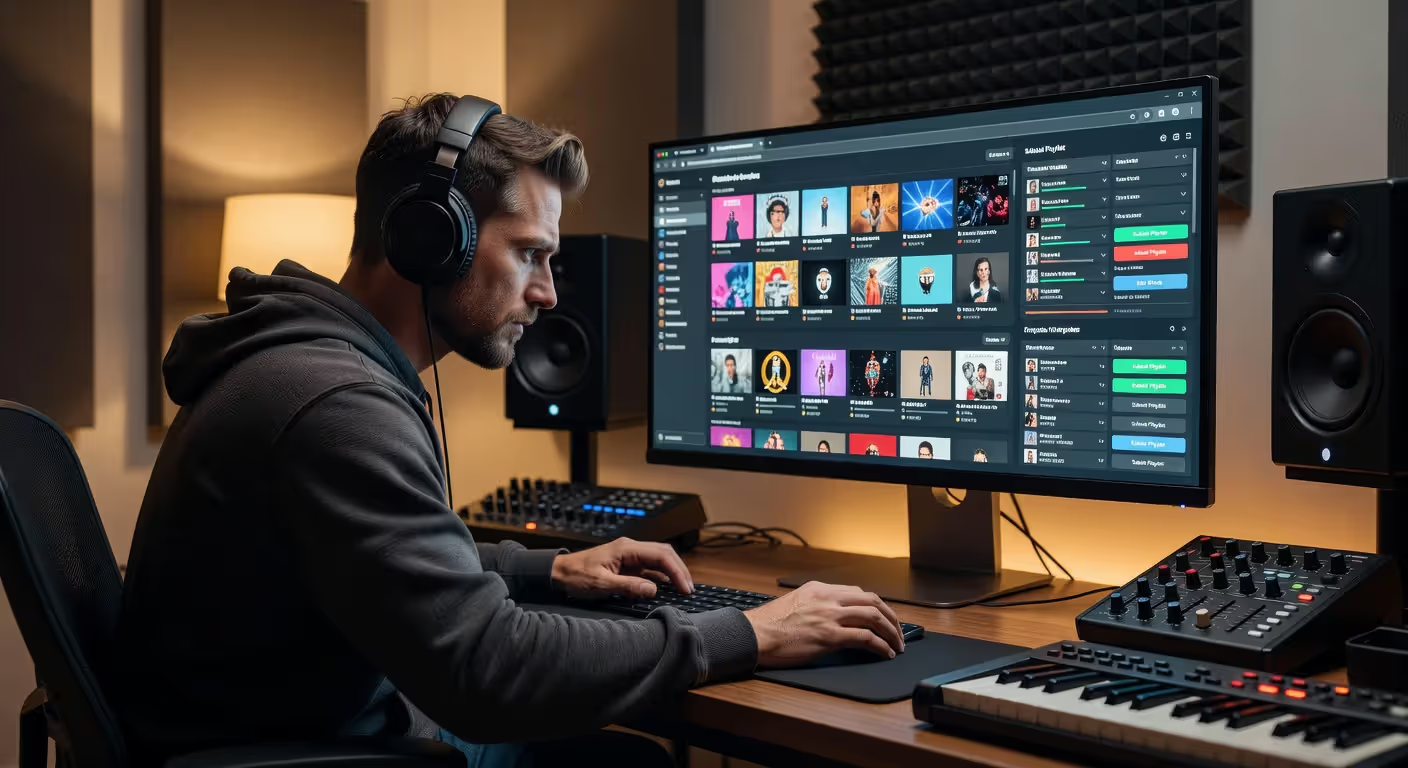
User-generated playlists can be a good starting point, especially for niche genres. They're more accessible than editorial playlists and can still deliver meaningful streams if the curator has an engaged audience.
Author: Miles Arbordale;
Source: lamat-records.com
How to Pitch Your Music to Editorial Playlists
Each major platform has its own submission tool. Here's how they compare:
| Platform | Submission Method | Advance Notice Required | Curator Contact | Typical Response Time |
| Spotify | Spotify for Artists dashboard | 1–7 days before release | No direct contact | 1–7 days (often silent rejection) |
| Apple Music | Apple Music for Artists | At least 1 day before release | No direct contact | Varies, often no notification |
| Amazon Music | Amazon Music for Artists | 1–2 weeks recommended | No direct contact | 1–2 weeks |
| Tidal | Tidal for Artists | 1 week recommended | No direct contact | Varies widely |
| Deezer | Deezer for Creators | 1 week recommended | No direct contact | 1–2 weeks |
Spotify's process is the most developed. Log into Spotify for Artists, navigate to your upcoming releases, and click "Submit a song." You'll fill out a pitch form that asks about genre, mood, instruments, and the story behind the track.
This is where most artists blow it. They rush through the form with generic answers or skip sections. Curators read these pitches. They want specific, compelling information that helps them understand why this track fits their playlists.
Be concrete. Instead of "upbeat pop song," try "mid-tempo synth-pop with 80s influences, similar to The 1975's recent work, written about rediscovering your hometown after years away." Give curators context they can use.
Timing matters more than most artists realize. Submit at least three to four days before your release date—ideally a week. Curators review pitches in batches, and last-minute submissions often get buried. The pattern I see most often is artists scrambling to submit hours before release, then wondering why they didn't get picked.
Metadata optimization is non-negotiable. Your genre tags, mood descriptors, and similar artist references should be accurate and strategic. If you're a folk artist, don't tag yourself as indie rock just because that genre is popular. Curators filter by precise criteria, and mismatched metadata gets you skipped.
One track per release cycle. You can't submit an entire album—pick your strongest song, the one with the best hook and the clearest playlist fit. If you're unsure, ask trusted listeners which track grabbed them first.
Reaching Independent Playlist Curators
Editorial playlists are great, but they're not the only game. Independent curators control thousands of playlists with dedicated audiences. Reaching them requires more legwork, but the acceptance rate is often higher.
Start with research. Use tools like Chartmetric, Playlist Push, or SubmitHub to find playlists in your genre. Look at playlists where similar artists appear—those curators already like music like yours.
Check playlist descriptions and curator profiles for submission instructions. Some list email addresses or submission forms. Others explicitly state they don't accept unsolicited music. Respect that. Ignoring stated preferences is the fastest way to get ignored yourself.

Author: Miles Arbordale;
Source: lamat-records.com
When you reach out, personalize every message. Generic mass emails get deleted instantly. Reference specific tracks on their playlist, explain why your song fits, and keep it brief. Here's a template that works:
"Hi {Name}, I've been following {Playlist Name} for a while—really loved the addition of {specific artist/song}. I just released a track called {Song Title} that has a similar vibe: {one-sentence description}. Thought it might fit your playlist. Here's the link: {URL}. Thanks for considering it."
That's it. No life story, no desperate pleading, no walls of text. Curators are busy. Make it easy for them to say yes or no.
Social media can work, but tread carefully. A polite DM is fine. Spamming comments or tagging curators repeatedly is not. Build genuine relationships first—engage with their content, share their playlists, become a familiar name before you ask for anything.
Avoid most paid playlist promotion services. The industry is full of scams that promise thousands of streams but deliver bot plays or playlist farms that violate platform terms. If you're considering a service, research thoroughly. Look for transparency about playlist sources, curator relationships, and realistic expectations.
The submissions that stand out are the ones where the artist clearly understands what my playlist is about. If you've listened to it and can tell me why your track fits alongside what's already there, you're already ahead of 90% of pitches I receive.
— Martinez Sofia
Common Playlist Pitching Mistakes That Hurt Your Chances
Let's talk about what not to do. These mistakes kill more playlist opportunities than anything else.
Mass submissions with zero personalization. Curators can spot a bulk email instantly. If your message could apply to any playlist, it's going straight to trash. Personalization takes time, but it's the only thing that works.
Submitting too late or too early. Too late means curators have already finalized their picks. Too early (more than four weeks out) means they'll forget about it by release day. The sweet spot is one to two weeks before release for most independent curators, three to seven days for editorial platforms.
Generic, vague pitches. "This is a great song" tells curators nothing. They need specific information: tempo, mood, instrumentation, lyrical themes, similar artists. The more precise you are, the easier it is for them to visualize where your track fits.
Buying playlist placement. Some services charge fees to guarantee playlist adds. This almost always ends badly. Many of these playlists are filled with fake listeners or bot accounts. Platforms actively detect and remove streams from fraudulent sources, which can tank your algorithmic standing and even get your music flagged.
Ignoring genre fit. If your track is acoustic folk, don't pitch it to electronic playlists hoping for a Hail Mary. Curators value consistency. A song that doesn't match the playlist mood confuses listeners and hurts retention rates. Curators won't risk that.
Neglecting track quality. Playlist placement won't save a poorly produced song. If your mix is muddy, your vocals are buried, or the master is clipping, fix that before you pitch. Curators have trained ears and limited patience for technical issues.
Following up too aggressively. One polite follow-up after a week or two is fine. Multiple messages, especially demanding responses or explanations, will get you blacklisted. Curators don't owe you a reply, and they definitely don't owe you an explanation for rejection.
Building Your Own Playlist Pitching Strategy
A single playlist add won't change your career. You need a repeatable system that works release after release.
Start with pre-release planning. Build your pitching strategy into your release timeline. At least three weeks before your release date, compile your list of target playlists—editorial, algorithmic triggers, and independent curators. Draft personalized pitches. Schedule submission dates.
Diversify your targets. Don't put all your energy into one or two big editorial playlists. Aim for a mix: a few long-shot editorial pitches, several mid-tier independent playlists, and a handful of smaller niche curators. Multiple smaller placements can generate as much momentum as one large one.
Build curator relationships over time. Don't only reach out when you need something. Share playlists you genuinely enjoy. Engage with curators on social media. Support other artists on their playlists. When you do pitch, you'll be a familiar name rather than a stranger asking for a favor.
Track your results. Keep a spreadsheet of every playlist you pitch: curator name, playlist size, submission date, response, and outcome. Over time, you'll identify which curators respond to your style and which don't. Focus your energy where you get traction.
Combine playlist types strategically. Editorial placements boost credibility. Algorithmic placements scale reach. User-generated playlists build niche audiences. Each type serves a different purpose. The most successful artists use all three.
Don't stop at one release. Consistency matters more than individual wins. Curators notice artists who release regularly and show steady growth. Each release is another chance to pitch, another opportunity to build relationships, another data point for the algorithm.

Author: Miles Arbordale;
Source: lamat-records.com
FAQ: Playlist Submission Questions Answered
Getting playlisted isn't luck—it's a skill you can develop. The artists who succeed treat playlist pitching as an ongoing process, not a one-time task. They build relationships, refine their pitches, track what works, and stay consistent. Start with the strategies here, adapt them to your genre and style, and keep iterating. Your next release could be the one that breaks through.
Related Stories
Read more

Read more



The content on this website is provided for general informational and educational purposes only. It is intended to explain concepts related to music production, recording, mixing, mastering, music industry roles, and distribution.
All information on this website, including articles, guides, and examples, is presented for general educational purposes. Results and success in music production may vary depending on skill level, equipment, and effort.
This website does not provide professional music production services or guarantees of commercial success, and the information presented should not be used as a substitute for consultation with qualified music producers, audio engineers, or music industry professionals.
The website and its authors are not responsible for any errors or omissions, or for any outcomes resulting from decisions made based on the information provided on this website.