
What Is A and R in Music and How Does It Work
What Is A and R in Music?
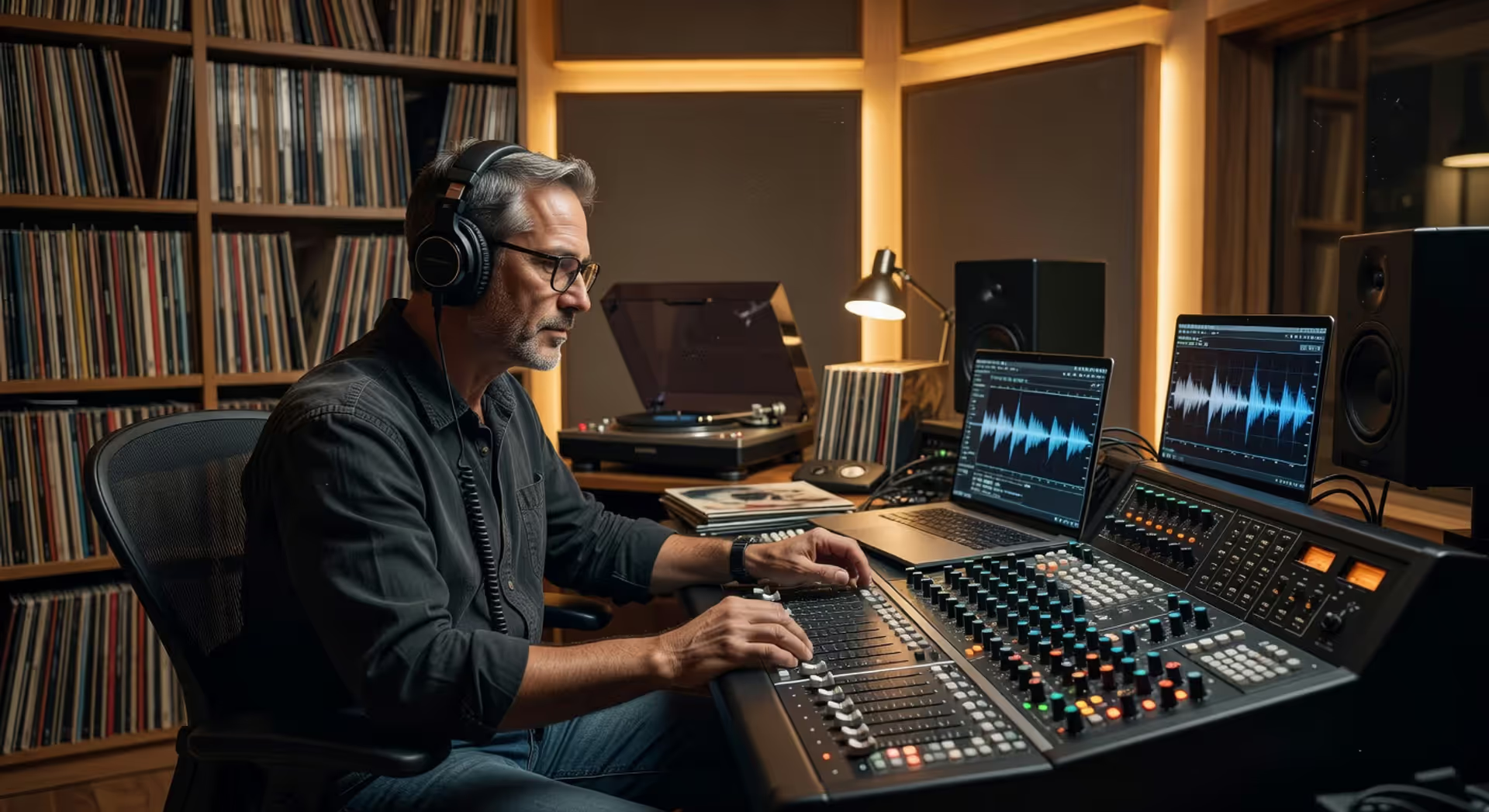
The music industry runs on hits, but someone has to find the artists who make them. That's where A&R comes in. Short for Artist and Repertoire, A&R professionals bridge the gap between raw talent and commercial success. They scout new artists, shape creative direction, and shepherd projects from demo to release. If you've ever wondered who decides which artists get signed or how labels discover the next big thing, you're asking about A&R. This role has evolved dramatically over the past decade, but it remains the heartbeat of every record label.
Understanding Artist and Repertoire in the Music Industry
A&R stands for Artist and Repertoire. The term dates back to the early recording industry when labels needed specialists to handle two distinct tasks: finding artists (the "artist" part) and selecting songs for them to record (the "repertoire" part). Back then, many performers didn't write their own material, so matching the right song to the right voice was an art form.
The role emerged in the 1950s and 60s as record labels grew into major businesses. Legendary A&R executives like John Hammond discovered Bob Dylan, Bruce Springsteen, and Aretha Franklin by trusting their instincts and spending countless hours in clubs and studios. The job was part talent scout, part creative producer, part career strategist.
Fast forward to 2026, and artist and repertoire explained looks quite different. Most artists now write their own songs, so the "repertoire" side has shifted toward guiding overall creative direction rather than picking covers. The streaming era brought data analytics into the mix—A&R reps now track playlist adds, skip rates, and social media engagement alongside their gut feelings.
But the core mission hasn't changed. A&R professionals still discover talent, develop artists, and make the creative and business decisions that turn potential into platinum records.
Core A&R Responsibilities and Daily Tasks
The role of A&R spans creative and business functions. On any given day, an A&R rep might listen to 50 demos, attend three live shows, negotiate with a manager, and sit in on a mixing session. It's rarely boring.
Author: Declan Wrenford;
Source: lamat-records.com
Scouting and Signing New Artists
Talent scouting in music remains the most visible A&R responsibility. Reps constantly search for artists who have both commercial potential and artistic integrity. This means attending showcases, monitoring streaming platforms, scrolling through TikTok, and following up on tips from producers, managers, and other industry contacts.
When an A&R rep finds someone promising, the evaluation process begins. They'll assess the artist's existing catalog, live performance ability, work ethic, social media presence, and "coachability"—whether the artist can take direction and grow. They'll also consider market timing: is there room for this sound right now?
If the artist passes these tests, the A&R rep pitches them internally. At major labels, this means convincing senior executives and often presenting streaming data, comparable artists, and projected budgets. At indie labels, the process is usually faster and more informal.
The signing process itself involves lawyers, managers, and contract negotiations that can take weeks or months. A&R reps typically don't negotiate directly, but they advocate for deal terms that serve both the label and the artist's development needs.
Guiding Creative Direction and Song Selection
Once an artist is signed, a and r responsibilities shift to development. This is where the "repertoire" legacy lives on, though it looks different now.
For artists who write their own material, A&R reps act as creative sounding boards. They listen to dozens of demos and help identify the strongest songs for an album or EP. They might suggest cutting a verse, changing a chorus, or scrapping a track entirely. The best A&R reps know how to give honest feedback without crushing an artist's confidence.
They also connect artists with the right collaborators—producers, co-writers, mixers, and engineers. An A&R rep might pair a singer-songwriter with a pop producer to make the sound more radio-friendly, or bring in a featured artist to expand the song's reach.
Throughout recording, A&R reps attend sessions, weigh in on arrangements, and keep projects on schedule and budget. They're the label's eyes and ears in the studio, making sure the final product aligns with both the artist's vision and commercial realities.
How A&R Scouts Discover and Evaluate Talent
How a and r scouts talent has transformed radically in the streaming age. The old model—hitting clubs every night hoping to stumble on genius—still happens, but it's now just one tool among many.
Streaming data is the new frontier. A&R teams monitor Spotify's Viral 50 charts, track which unsigned artists are gaining playlist traction, and use platforms like Chartmetric to analyze growth patterns. An artist pulling 100,000 monthly listeners without label support catches attention fast.
Social media discovery runs parallel. TikTok has become an A&R goldmine, with songs going viral and creating overnight stars. Instagram engagement, YouTube view counts, and even Reddit discussions factor into scouting decisions. The pattern I see most often is that social traction now precedes label interest rather than following it.
Live performance still matters, though. Streaming numbers can be gamed or inflated, but a packed club show with an engaged crowd tells a different story. A&R reps attend festivals, open mics, and showcases to see how artists connect with audiences in real time.
Demo submissions remain a channel, though they're the lowest-yield source. Most labels receive thousands of unsolicited demos monthly, and most go unheard. The demos that do get attention usually come through referrals—from producers, managers, or other artists the label trusts.

Author: Declan Wrenford;
Source: lamat-records.com
Evaluation criteria blend art and science. A&R reps look for:
- Originality within a genre: fresh enough to stand out, familiar enough to market
- Consistency: multiple strong songs, not just one viral hit
- Work ethic: willingness to tour, promote, and improve
- Existing fanbase: even 10,000 engaged fans signal potential
- Professional presentation: quality recordings, active social media, responsive communication
The biggest mistake new A&R scouts make is chasing trends instead of identifying talent. By the time a sound is trending, it's often too late to build a career on it. The best signings anticipate where music is heading, not where it's been.
What A&R Teams Do at Record Labels
What a and r teams do varies by label size and structure. At major labels—Universal, Sony, Warner—A&R departments are large and specialized. You'll find separate teams for different genres, regions, and even functions (scouting vs. development).
A typical major-label A&R team includes:
- A&R scouts: junior staff focused on discovery
- A&R coordinators: administrative support, session scheduling, budget tracking
- A&R managers: mid-level reps handling 3–5 signed artists
- A&R directors/VPs: senior executives overseeing the department and making final signing decisions
These teams collaborate constantly with other departments. Marketing needs to know release timelines. Legal reviews contracts. Production handles recording budgets. Publicity plans campaigns. A&R sits at the center, coordinating all these moving parts.
At independent labels, A&R teams are leaner. Often, one person handles scouting, development, and coordination. They wear more hats but usually have more autonomy and faster decision-making.
The table below breaks down the key differences:
| Aspect | Major Label A&R | Independent Label A&R |
| Budget size | $100K–$2M+ per project | $10K–$100K per project |
| Artist roster size | 50–200+ artists per label | 5–30 artists per label |
| Creative freedom | More input from executives and committees | Direct artist-A&R relationship, fewer approvals |
| Signing authority | Senior VP approval required | Often owner or director can greenlight |
| Typical responsibilities | Specialized (scouting OR development) | Generalized (full artist lifecycle) |
| Career advancement | Structured ladder with clear titles | Fluid, often jumps to larger labels |
One common misconception: bigger budgets don't always mean better results. Indie labels often develop deeper artist relationships and take more creative risks because they're not answering to corporate shareholders.
The best A&R people have taste and the ability to articulate why something is great. You can't teach taste, but you can develop your ability to communicate what you're hearing and why it matters.
— Iovine Jimmy
A&R Career Path and Required Skills
The a and r career path rarely follows a straight line. Few people start with "A&R Representative" on their business card. Most work their way up through adjacent roles.
Common entry points include:
- Internships at labels or management companies
- A&R coordinator or assistant positions
- Marketing or publicity roles that transition into A&R
- Music journalism or blogging that demonstrates taste and industry knowledge
- Artist management where you build relationships with labels
From coordinator, you might advance to scout, then A&R manager, then director or VP. At major labels, this progression can take 7–10 years. At indie labels, talented scouts can become decision-makers in 3–5 years.
The role demands a specific skill set:
Musical knowledge: You need to understand song structure, production trends, and genre conventions. You don't need to play an instrument, but you should know why a bridge works or doesn't.
Networking ability: A&R is a relationship business. You'll need connections with managers, producers, booking agents, and other A&R reps. The more people who think of you when they find talent, the better.
Communication skills: You'll pitch artists to executives, give feedback to musicians, and negotiate with managers. Clear, persuasive communication is non-negotiable.
Data literacy: In 2026, you can't ignore analytics. Understanding streaming metrics, social media engagement rates, and market research helps you make stronger cases for signings.
Patience and resilience: Most artists you scout won't get signed. Most signings won't become stars. You need thick skin and long-term thinking.
Do you need a degree? Not strictly. Many successful A&R reps have music business degrees from schools like Berklee or NYU, but plenty have English degrees, no degree at all, or backgrounds in completely unrelated fields. Experience and connections often matter more than credentials.
That said, education helps with the business side—contracts, royalties, copyright law. If you're serious about A&R, take some music business courses even if you don't pursue a full degree.

Author: Declan Wrenford;
Source: lamat-records.com
The Changing Role of A&R in Modern Music
The role of a and r has shifted more in the past five years than in the previous fifty. Three forces are reshaping the profession: streaming analytics, social media discovery, and the rise of independent artists.
Data-driven decisions now complement (and sometimes override) gut instinct. When an A&R rep can show that an unsigned artist's streams grew 300% in three months, with strong save rates and low skip rates, that's compelling evidence. Labels increasingly use predictive analytics to model an artist's potential reach and revenue.
But data has limits. It tells you what's already working, not what could work with the right development. The best A&R reps in 2026 balance numbers with intuition—they use data to validate hunches, not replace them.
Social media discovery changed who gets found and how fast. An artist can build a substantial following before any label knows they exist. TikTok, in particular, has compressed the timeline from obscurity to opportunity. A song can go from bedroom recording to viral phenomenon to major-label bidding war in weeks.
This creates pressure on A&R teams to move faster. If you wait too long to approach a buzzing artist, competitors will get there first—or the artist will decide they don't need a label at all.
That brings us to independent artists. Distribution platforms like DistroKid and TuneCore let musicians release music without labels. Management, marketing, and even radio promotion services are available à la carte. Some artists now view labels as optional rather than essential.
For A&R, this means the pitch has changed. You're not offering the only path to success anymore. You're offering resources, expertise, and scale that independent artists can't easily replicate—global marketing campaigns, playlist relationships, sync licensing networks, tour support. You have to prove your value.
The simpler option usually wins here: labels that offer transparent deals, artist-friendly terms, and genuine development support are attracting better talent than those pushing restrictive 360 deals.
One counterintuitive shift: A&R teams now scout established independent artists as often as they discover unknowns. An artist with 50,000 monthly Spotify listeners, a loyal fanbase, and a clear brand is often a safer bet than a total newcomer. It's a different kind of A&R—less about molding raw talent, more about scaling existing success.
FAQ: A&R in Music Questions Answered
The A&R role will keep evolving as technology and artist expectations shift, but the fundamentals remain constant. Someone needs to find talent, nurture it, and connect it with audiences. Whether that happens through data analytics or late-night club shows, the job still requires taste, tenacity, and the ability to hear a hit before anyone else does. If you're drawn to that challenge, A&R might be your path into the music industry's creative center.
Related Stories

Read more
Read more

The content on this website is provided for general informational and educational purposes only. It is intended to explain concepts related to music production, recording, mixing, mastering, music industry roles, and distribution.
All information on this website, including articles, guides, and examples, is presented for general educational purposes. Results and success in music production may vary depending on skill level, equipment, and effort.
This website does not provide professional music production services or guarantees of commercial success, and the information presented should not be used as a substitute for consultation with qualified music producers, audio engineers, or music industry professionals.
The website and its authors are not responsible for any errors or omissions, or for any outcomes resulting from decisions made based on the information provided on this website.