
What Is Digital Remastering and How Does It Work
What Is Digital Remastering?

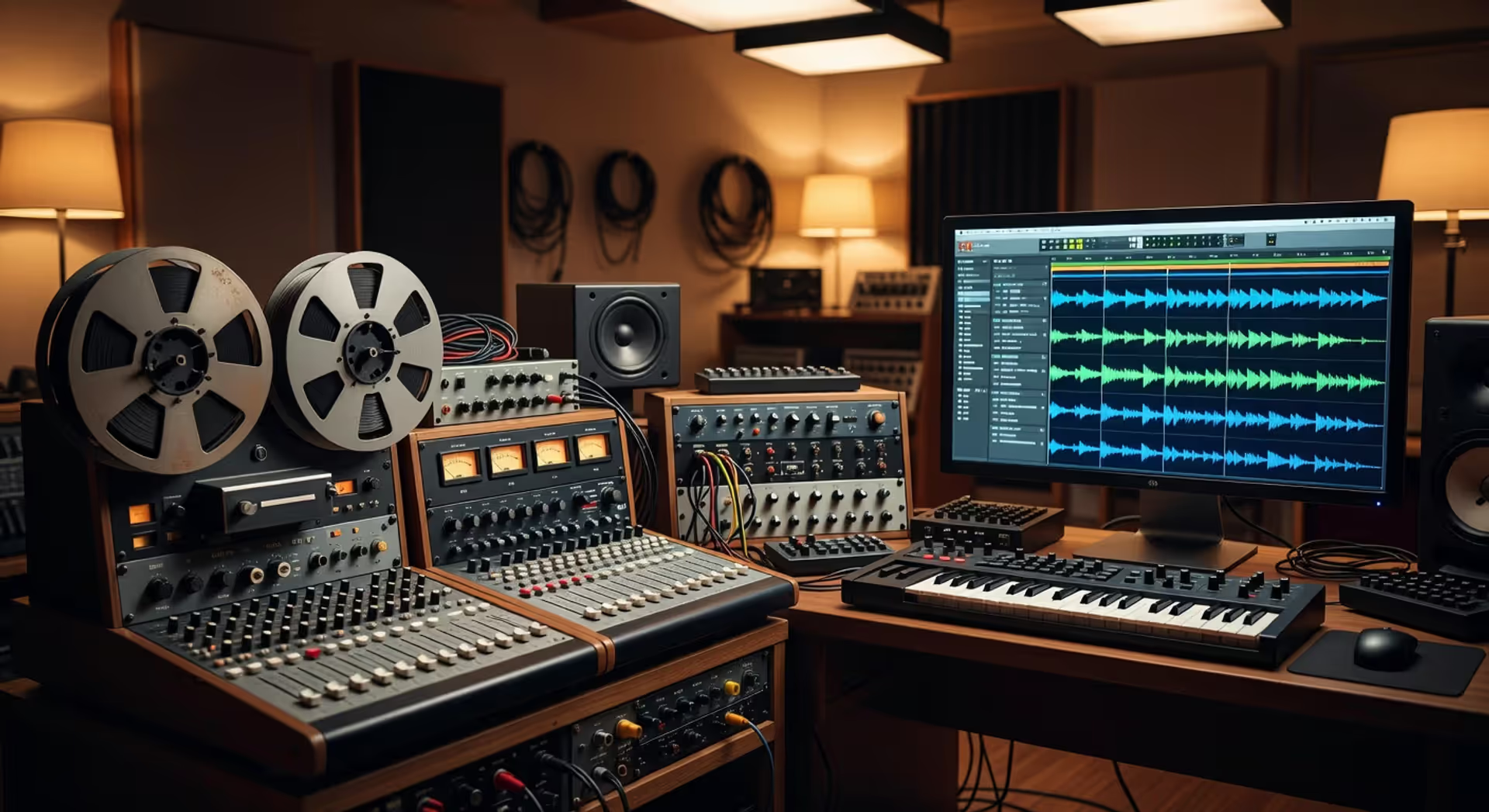
When you pull a vinyl record from 1973 off the shelf, you're hearing the limitations of that era's technology as much as the music itself. Tape hiss, narrow dynamic range, EQ curves tailored for AM radio—all baked into the master. Digital remastering strips away those constraints, rebuilding the audio for modern playback systems. It's not magic, and it's not always an improvement. But done right, it can reveal details the original listeners never heard.
Understanding Digital Remastering Explained
Digital remastering takes an existing recording—usually decades old—and processes it using modern tools to improve clarity, balance, and compatibility with current formats. The goal isn't to re-record anything. The performance stays identical. What changes is how that performance reaches your ears.
The practice took off in the 1980s when CDs arrived. Engineers suddenly had 16-bit digital space to work with, but most recordings lived on analog tape. They'd transfer those tapes to digital, then apply EQ, noise reduction, and dynamic adjustments. Early efforts were hit-or-miss. Some sounded clearer. Others came out brittle or overly bright because engineers overcompensated for vinyl's warmth.
By the 2000s, software advanced enough to let engineers work with surgical precision. Spectral editors could isolate a cough in the second verse without touching the guitar. AI tools in the 2020s pushed this further, predicting and filling gaps in damaged recordings or separating instruments that were mixed together fifty years ago.
Why bother? Formats evolve. Streaming services expect certain loudness levels. Listeners use earbuds, soundbars, car systems—not the studio monitors the original was mixed on. A 1968 mix optimized for mono AM radio sounds thin and distant on a 2026 home theater setup. Remastering adapts the audio to where people actually listen.
How Remastering Works Step by Step
The process starts with the best available source. Ideally, that's the original master tape—the final stereo mix before any manufacturing. Sometimes those tapes are lost, degraded, or stored improperly. Engineers might settle for a first-generation safety copy or, in worst cases, a high-quality vinyl rip.
Once sourced, the tape gets digitized at high resolution—typically 24-bit/96kHz or higher. This captures more detail than the final product needs, giving engineers room to work without losing quality.
Next comes the technical cleanup and enhancement phase.
Cleaning Up Legacy Audio and Removing Noise
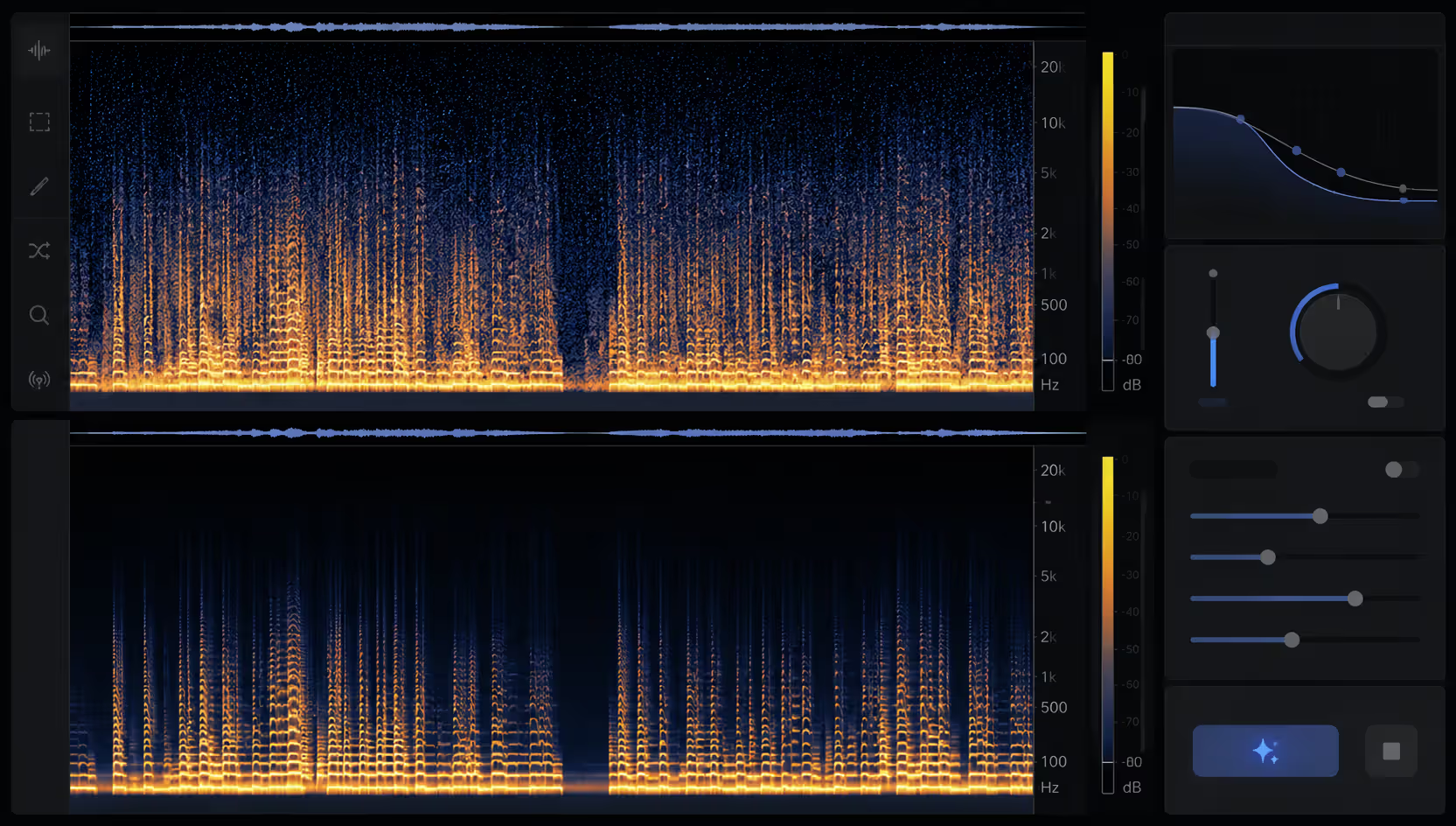
Analog tape adds noise. Hiss, hum, crackle, even the sound of the tape machine itself. Modern tools can analyze the audio's frequency spectrum and identify noise signatures—patterns that repeat but aren't part of the music.
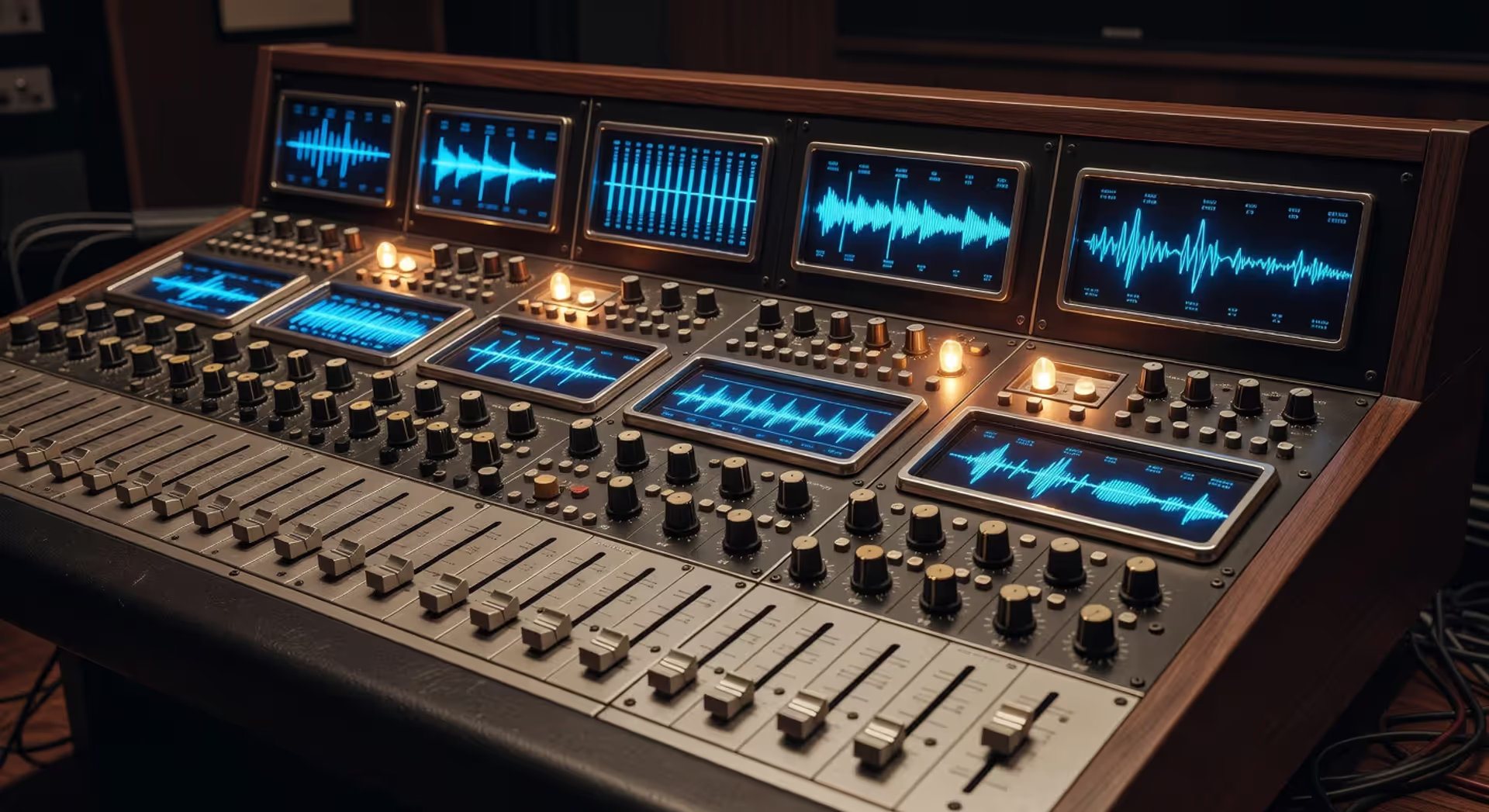
A spectral editor displays audio as a visual map, with time on one axis and frequency on the other. An engineer can literally see a click from a splice or a hum at 60Hz. They paint over it, and the software removes it while leaving surrounding frequencies intact.
Author: Declan Wrenford;
Source: lamat-records.com
But there's a trade-off. Aggressive noise reduction can make vocals sound watery or remove the natural room ambience. The art is knowing how much to remove. A little tape hiss often sounds more natural than a clinically silent background.
Improving Audio Quality Digitally Through Enhancement
After cleanup, engineers adjust EQ and dynamics. Older recordings often have muddy low-mids or harsh highs because of the tape formulations and mixing consoles used. A remastering engineer might boost clarity around 3–5kHz to bring vocals forward or roll off excessive brightness above 10kHz.
Dynamic range—the difference between the quietest and loudest parts—gets optimized too. Vinyl had physical limits; the needle would skip if bass was too loud or dynamics too wide. Digital has no such limits, but streaming platforms and casual listening environments favor a more compressed sound. Engineers apply multiband compression to even things out without squashing the life out of a performance.
The final step is loudness normalization. Streaming services like Spotify target around -14 LUFS (Loudness Units Full Scale). A 1970s rock album might sit at -18 LUFS, sounding quieter than modern tracks. Engineers bring it up to match, so listeners don't scramble for the volume knob.
Remastering Versus Mastering: Key Differences
People confuse these terms constantly. They're related but distinct.
| Aspect | Mastering | Remastering |
| Timing | Final step before manufacturing | Years or decades after original release |
| Source Material | Fresh stereo mix from multitrack session | Existing master recording (often analog tape) |
| Primary Goal | Prepare mix for manufacturing and distribution | Update old recording for new formats/systems |
| Typical Techniques | EQ, compression, sequencing, format conversion | Noise reduction, restoration, EQ correction, loudness adjustment |
| End Result | Polished, cohesive album ready to release | Refreshed version of existing release |
Mastering happens once, right after mixing. The engineer receives individual tracks or a stereo mix, applies final polish, and creates the master that factories duplicate. Remastering revisits that master later, usually because technology or listening habits have changed.
A common mistake is thinking remastering "fixes" a bad mix. It can't. If the drums were buried in the original mix, remastering can't pull them forward without access to the multitrack—and that would be a remix, not a remaster.
Modern Remastering Techniques Used Today
AI-powered restoration has become standard practice. Machine learning models trained on millions of audio samples can predict what a damaged section should sound like. If a tape has a dropout—a moment where the oxide coating flaked off—the algorithm analyzes surrounding audio and fills the gap convincingly.
Stem separation is another breakthrough. Tools like those based on Demuix or proprietary algorithms can take a stereo mix and split it into vocals, drums, bass, and other instruments. This lets engineers rebalance elements that were locked together in the original mix. A vocal that was too quiet can be lifted without touching the guitars.
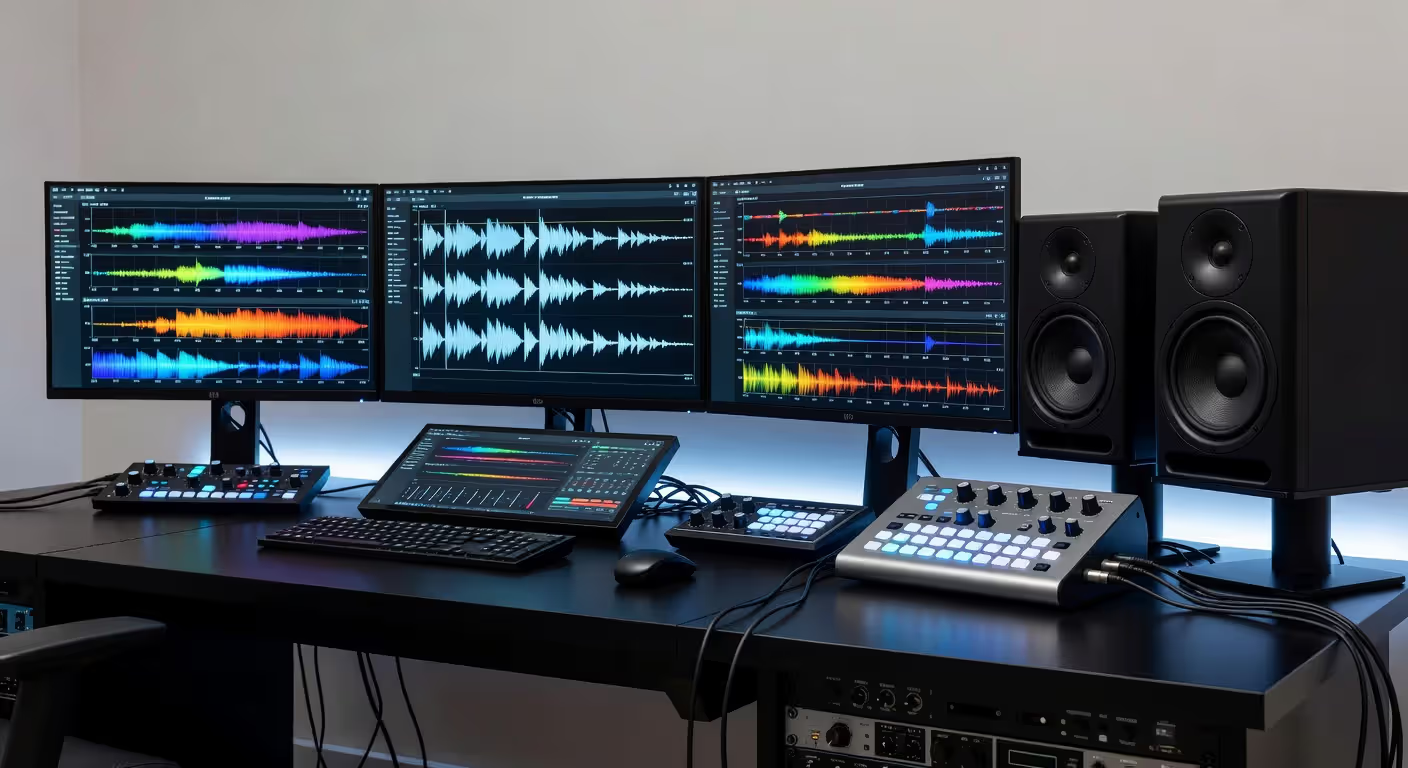
Spectral editing, mentioned earlier, has gotten more precise. Engineers can remove a single bad note, a cell phone ring (anachronistic for old recordings, but it happens in live tapes), or even adjust the pitch of an instrument slightly without artifacts.
Author: Declan Wrenford;
Source: lamat-records.com
Loudness normalization has shifted from simple peak limiting to sophisticated LUFS-based processing. This preserves more dynamic range while still hitting target levels for streaming.
Format conversion matters more now. A remaster might generate files for CD (16-bit/44.1kHz), hi-res download (24-bit/96kHz), vinyl lacquer cutting (with RIAA curve adjustments), and streaming (with platform-specific encoding). Each needs slightly different treatment.
The tools we have in 2026 let us make decisions our predecessors couldn't even consider. We can surgically remove a cough without touching the reverb tail around it. But that power means we have to be more thoughtful, not less. The best remasters are invisible—you just notice the music sounds right.
— Piper Emily
Why Artists and Labels Restore Old Recordings
Money drives many reissues. Anniversary editions—25th, 30th, 50th—create a marketing hook. A remastered album with bonus tracks can pull in longtime fans and new listeners who missed the original.
Preservation is another motive. Analog tape degrades. The magnetic particles literally fall off. Every playback wears it down slightly. Digitizing and remastering creates a safety copy that won't deteriorate further.
Format updates keep catalogs relevant. When streaming became dominant, labels rushed to remaster their back catalogs so they'd sound competitive next to new releases. An album that sounded fine on CD in 1995 might sound thin and quiet on Spotify in 2026.
Sometimes the original release had flaws. Early CDs often suffered from harsh digital transfers because engineers were still learning the medium. A 1985 CD of a 1972 album might sound worse than the vinyl. Remastering corrects those early missteps.
Correcting original technical mistakes happens too. Maybe the EQ was too bright because the mastering engineer's monitors had weak high-frequency response. Or the vinyl cutting engineer had to compress the bass to prevent skipping. Digital remastering can reverse those compromises.
Common Problems and Limitations in Upgrading Recording Fidelity
Source quality sets the ceiling. If the master tape is heavily degraded or a lower-generation copy, no amount of processing will create detail that isn't there. You can't remaster a cassette dub into hi-res clarity.
Over-compression is the most common remastering sin. The "loudness war" of the 2000s saw engineers push levels so hard that waveforms became solid blocks. Dynamics disappeared. Music sounded fatiguing. Some reissues from that era are measurably worse than the originals.

Author: Declan Wrenford;
Source: lamat-records.com
Loss of original character is subtler but real. Tape saturation, analog console coloration, even a bit of hiss—these contribute to the "sound" of an era. Scrub them away too aggressively and the recording can feel sterile. A 1960s soul record should have some warmth and grit. Making it sound like it was recorded yesterday isn't always the right call.
Mismatched EQ choices plague some remasters. An engineer might boost presence frequencies to add clarity but end up making sibilance harsh. Or they'll add low-end weight to a folk recording that was intentionally light and airy.
The pattern I see most often is engineers remastering to their own taste rather than honoring the original intent. A heavy metal album remastered by someone who prefers jazz might come out too polished. Context matters.
FAQ: Digital Remastering Questions Answered
Digital remastering walks a tightrope between preservation and modernization. Done with care and respect for the source, it brings decades-old recordings into the present without erasing their history. Done carelessly, it flattens dynamics and strips away character. The best remasters are the ones you don't consciously notice—the music just sounds the way you always imagined it should.
Related Stories

Read more

Read more


The content on this website is provided for general informational and educational purposes only. It is intended to explain concepts related to music production, recording, mixing, mastering, music industry roles, and distribution.
All information on this website, including articles, guides, and examples, is presented for general educational purposes. Results and success in music production may vary depending on skill level, equipment, and effort.
This website does not provide professional music production services or guarantees of commercial success, and the information presented should not be used as a substitute for consultation with qualified music producers, audio engineers, or music industry professionals.
The website and its authors are not responsible for any errors or omissions, or for any outcomes resulting from decisions made based on the information provided on this website.