

What Is ISRC in Music and Why Does It Matter
What Is ISRC in Music?

Every recording you release into the world needs a fingerprint. That's what an ISRC code is—a permanent, unique identifier that follows your song across every platform, every play, every royalty payment.
Without it, your music becomes invisible to the systems that track plays and distribute money. You could rack up millions of streams and never see a cent because there's no way to connect those plays back to you.
So what is ISRC in music, exactly? It's the backbone of modern music distribution. And if you're releasing music in 2026, you can't afford to skip it.
Understanding ISRC Codes in the Music Industry
ISRC stands for International Standard Recording Code. It's a 12-character alphanumeric code that identifies a specific sound recording—not the song itself, but that particular recorded version.
The system launched in 1986, developed by the International Organization for Standardization (ISO). Think of it as a social security number for your recording. Once assigned, it never changes and never gets reused.
Here's what the recording identification codes look like: US-AB5-12-34567
Let me break down that structure:
- US = Country code (where the ISRC was issued)
- AB5 = Registrant code (identifies who issued it—your label or distributor)
- 12 = Year of assignment (2012 in this example)
- 34567 = Designation code (unique to this specific recording)
No spaces, no dashes when you're entering it into systems. Just 12 characters strung together.
The code identifies the audio recording itself, not the composition. That's an important distinction we'll come back to. Your studio recording of "Summer Nights" gets one ISRC code explained. If you record it again next year with different production, that's a new recording—new ISRC.

Author: Declan Wrenford;
Source: lamat-records.com
How ISRC Codes Track and Identify Recordings
Streaming platforms read ISRC codes automatically. When someone plays your song on Spotify, Apple Music, or YouTube Music, the platform logs that ISRC. That log becomes your proof of playback.
Here's how isrc tracking works in practice:
Radio stations report ISRCs to performing rights organizations (PROs) like ASCAP, BMI, and SESAC. Digital service providers (DSPs) send play data to rights holders. SoundExchange uses ISRCs to distribute royalties for non-interactive streaming and satellite radio. Every single play gets tagged with your code.
The tracking happens at the recording level, not the album level. Your album might have 12 songs, but each song needs its own ISRC. The album itself gets a different identifier called a UPC (Universal Product Code).
This separation matters for royalty collection. If one track from your album goes viral on TikTok, the ISRC ensures you get paid specifically for that track's usage. The system doesn't pay out at the album level—it pays per recording.
The purpose of isrc codes becomes clearest when things go wrong. I've seen artists lose thousands because they distributed music without proper codes, and when the plays started rolling in, there was no way to claim them retroactively.
Platforms can refuse to ingest music without ISRCs. Most major distributors won't even let you upload without one. The code isn't optional—it's infrastructure.
Why Every Song Needs an ISRC Code
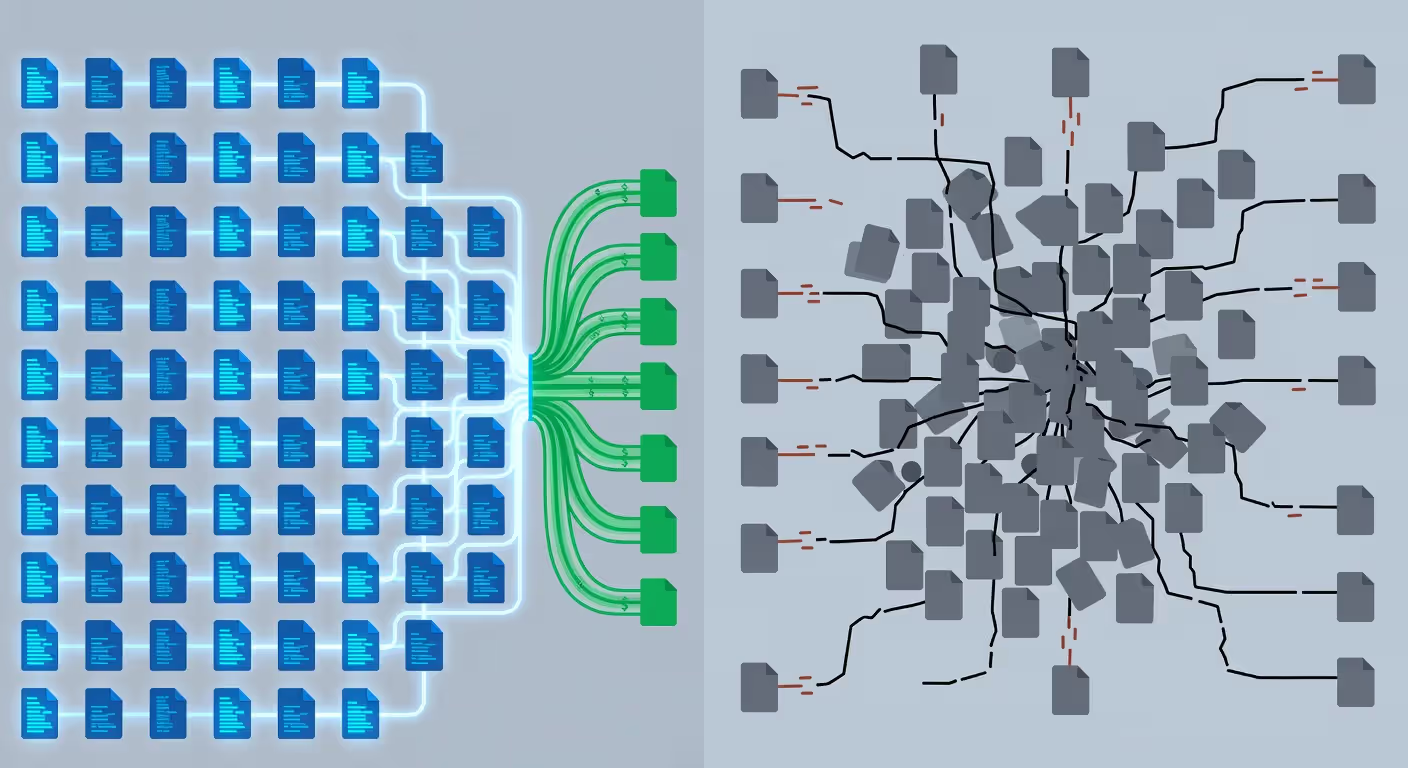
No ISRC means no royalty payments. That's the bottom line.
Streaming platforms require them for ingestion. Spotify, Apple Music, Tidal, Amazon Music—all of them demand ISRCs before they'll host your track. Try uploading without one and you'll hit a wall immediately.
Why songs need isrc codes extends beyond just getting your music online:
Royalty tracking: Every mechanical royalty, performance royalty, and neighboring rights payment flows through your ISRC. Without it, collection societies can't match plays to your account.
Copyright protection: The code creates a verifiable timestamp for your recording. It proves when you released it and establishes your claim to that specific version.
Chart eligibility: Billboard and other chart systems use ISRCs to aggregate plays across platforms. No code means your streams don't count toward chart positions.
Professional distribution standards: Major labels, sync licensing agencies, and music supervisors expect proper ISRC implementation. It signals you're serious about your music business.
Here's what happens if you skip it: Your music might still appear on platforms (if you're using a distributor that auto-assigns codes), but any plays that occur before the code gets added are lost. Those streams happened, but they're not connected to your payment account.
And you can't backdate an ISRC. Once those plays are gone, they're gone.
Author: Declan Wrenford;
Source: lamat-records.com
How to Get and Assign ISRC Codes to Your Music
You've got two paths here. Most artists take the first one because it's simpler.
Getting Codes Through Your Distributor
DistroKid, CD Baby, TuneCore, Ditto Music—pretty much every digital distributor assigns ISRCs automatically when you upload. They're already registered as ISRC managers, so they generate codes from their own registrant pool.
This happens behind the scenes. You upload your track, fill out the metadata, and the distributor stamps it with an ISRC before sending it to platforms. You'll see the code in your release dashboard after processing.
The cost is usually included in your distribution fee. DistroKid charges $22.99/year for unlimited uploads with ISRCs included. CD Baby charges per release but includes codes in the base price.
One catch: The distributor owns the registrant portion of that code. If you later move to a different distributor, you take the ISRC with you (it's permanent), but you can't generate new codes from that same registrant prefix.
That's fine for most people. The code works everywhere regardless of who issued it.
Registering as Your Own ISRC Manager
If you're running a label or want full control, you can become an ISRC manager yourself. You get your own registrant code and can generate unlimited ISRCs for your releases.
Here's the process for assigning isrc codes as your own manager:
Contact the ISRC agency for your country. In the US, that's the RIAA (Recording Industry Association of America). Request a registrant code—it's free, but you need to prove you're a legitimate music business entity.
Once approved, you'll receive your three-character registrant code. From there, you build codes following the standard format: your country code + your registrant code + year + sequential designation numbers.
You're responsible for keeping records of every code you assign. That means maintaining a database that shows which ISRC goes with which recording. Mess this up and you'll have tracking nightmares later.
When to assign them: Always before distribution. The ISRC should be embedded in your audio file's metadata before it hits any platform. Most digital audio workstations (DAWs) and mastering software let you add ISRC data to the file itself.
Cost considerations? Registering as a manager is free. The ongoing cost is just your time managing the database. For independent artists releasing a few songs per year, distributor-assigned codes make more sense. For labels releasing dozens of tracks, self-management pays off.
Author: Declan Wrenford;
Source: lamat-records.com
Common ISRC Mistakes Musicians Should Avoid
The biggest mistake? Reusing codes for different versions of the same song.
Your original studio recording gets one ISRC. You later release an acoustic version—that needs a different code. Even if it's the same composition, the recording is different. New audio = new ISRC.
This matters because streaming platforms treat them as separate tracks. If you use the same code for both, plays get merged into one listing, and you lose the ability to track performance separately. Worse, it can trigger content ID conflicts.
Here are the other common errors:
Assigning after distribution: Some artists upload first, then try to add ISRCs later. Doesn't work. The code must be embedded before the file reaches platforms. Retroactive assignment requires taking down the release and re-uploading, which resets your play counts.
Not keeping records: You need a master spreadsheet that maps every ISRC to its recording, release date, and distributor. I've seen artists completely lose track of which codes belong to which songs, especially after switching distributors multiple times.
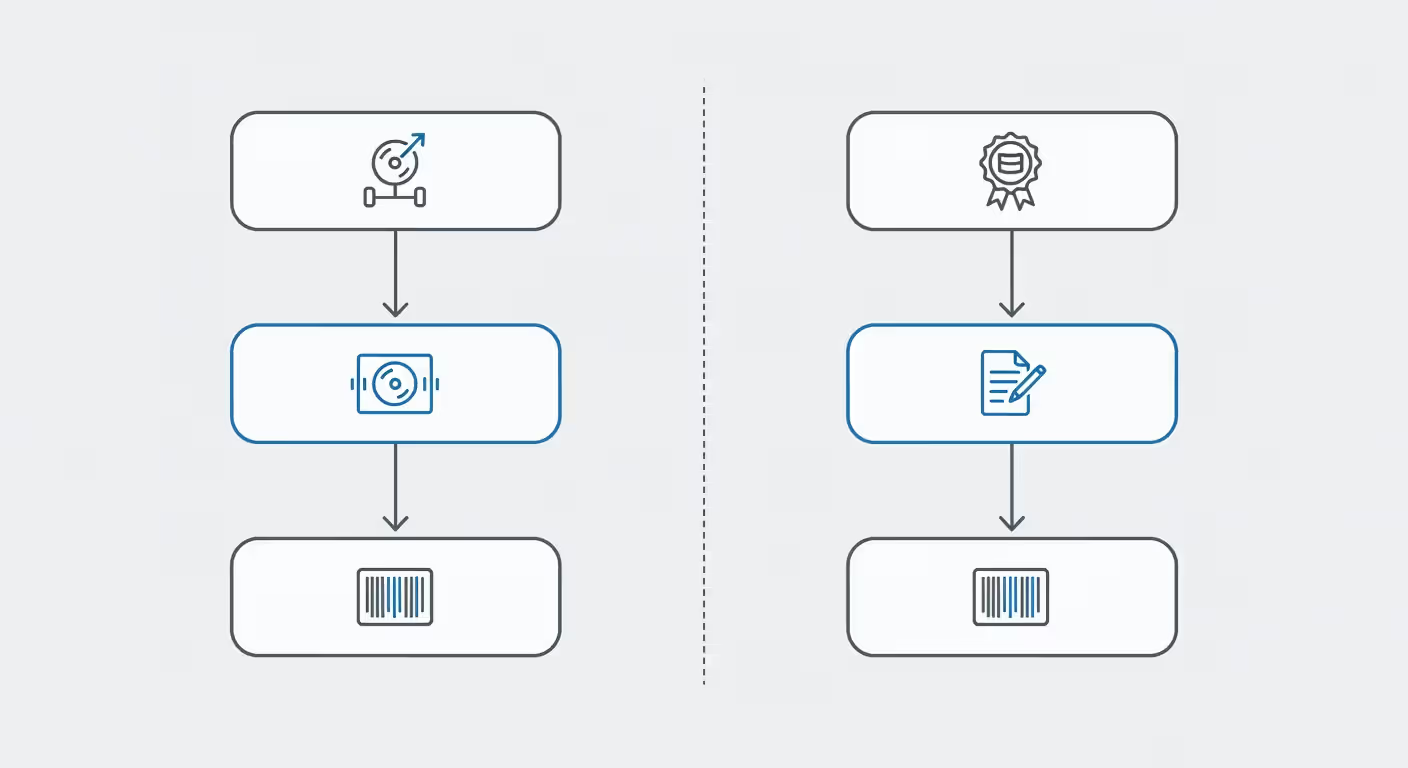
Confusion with other identifiers: Artists sometimes think the UPC barcode on their album is the same as an ISRC. It's not. UPC identifies the product (album/EP). ISRC identifies each individual recording on that product.
Changing ISRCs when re-releasing: If you take your music off Spotify and re-upload it later, you keep the same ISRC. The code is permanent. Creating a new one splits your play history and royalty streams.
Using the same ISRC across territories: Some artists think they need different ISRCs for US vs. UK releases of the same recording. You don't. One recording = one ISRC worldwide. That's the "International" part of the name.
The pattern I see most often is artists treating ISRCs casually until money goes missing. Then they scramble to fix their catalog, but by that point, historical data is already fragmented.
ISRC vs. Other Music Identification Codes
The music industry runs on multiple identification systems. Each one serves a different purpose.
Here's what you need to know about each code and when it applies:
| Code Type | What It Identifies | Who Assigns It | When It's Needed | Example Format |
| ISRC | Specific audio recording | Distributors or self-registered managers | Every individual track before distribution | US-AB5-12-34567 |
| UPC | Product (album, EP, single release) | Distributors or purchased from GS1 | Physical and digital product releases | 012345678905 (12-13 digits) |
| ISWC | Musical composition/song | Collecting societies (ASCAP, BMI, etc.) | Song registration for publishing royalties | T-123.456.789-0 |
| IPI | Individual songwriter or publisher | Performing rights organizations | Identifying rights holders in databases | 00123456789 (11 digits) |
Think of it this way: You write a song and record it. The song composition gets an ISWC. You as the songwriter get an IPI number. Your recording of that song gets an ISRC. When you package that recording into a single release, the product gets a UPC.
One song can have multiple ISRCs (different recordings), but only one ISWC (the composition stays the same). Your album has one UPC but 10 ISRCs if it contains 10 tracks.
Distributors usually handle UPC and ISRC automatically. You're responsible for registering your compositions with your PRO to get ISWC and IPI numbers. Those systems don't talk to each other automatically—you need to connect them manually through proper registration.
The single most common reason independent artists lose royalties isn't piracy or unfair contracts—it's incomplete or incorrect ISRC implementation. We process millions of royalty transactions annually, and roughly 12% fail to match because the ISRC is either missing, duplicated, or improperly assigned. That's money that goes into a black hole because there's no clean way to identify the rightful recipient. The artists who treat ISRCs as seriously as they treat their master recordings are the ones who actually get paid.
— Martinez Jennifer
FAQ: ISRC Code Questions Answered
Getting ISRCs right from the start saves you from headaches later. Treat them as non-negotiable infrastructure, assign them before distribution, keep good records, and you'll never have to wonder whether your plays are turning into payments. They will be.
Related Stories

Read more

Read more




The content on this website is provided for general informational and educational purposes only. It is intended to explain concepts related to music production, recording, mixing, mastering, music industry roles, and distribution.
All information on this website, including articles, guides, and examples, is presented for general educational purposes. Results and success in music production may vary depending on skill level, equipment, and effort.
This website does not provide professional music production services or guarantees of commercial success, and the information presented should not be used as a substitute for consultation with qualified music producers, audio engineers, or music industry professionals.
The website and its authors are not responsible for any errors or omissions, or for any outcomes resulting from decisions made based on the information provided on this website.