
How a Pickup Selector Works on Electric Guitars
How a Pickup Selector Works on Electric Guitars?

Every electric guitar player reaches for that little switch dozens of times during a session, often without thinking. But understanding how a pickup selector works transforms it from a mystery toggle into a precision tool for tone sculpting. The difference between a muddy rhythm sound and a cutting lead often comes down to knowing which position does what—and why.
What Is a Pickup Selector and Why It Matters
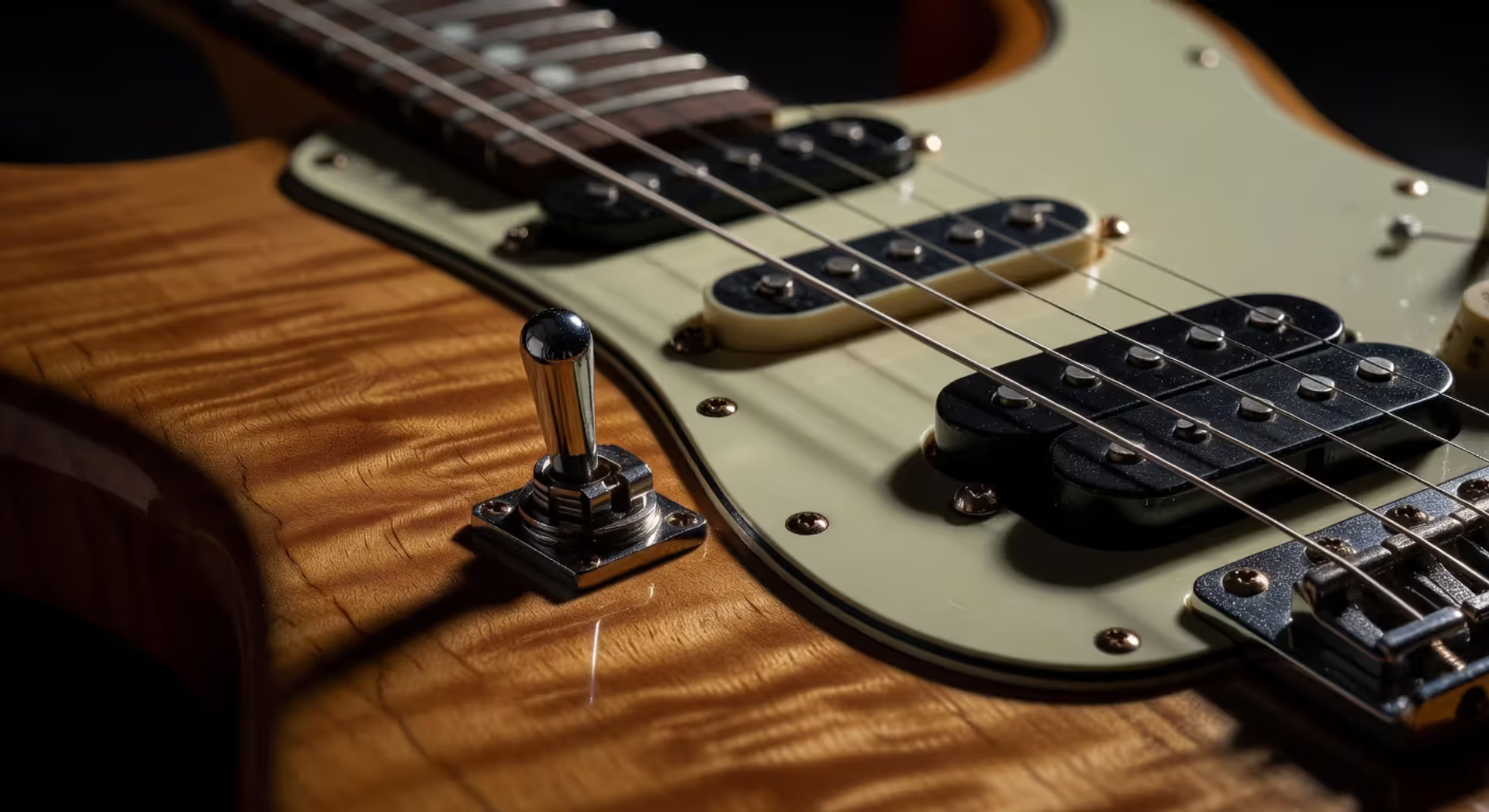
A pickup selector is the switch on your electric guitar that determines which pickup (or combination of pickups) sends signal to your amplifier. Most guitars feature either a toggle switch or a blade-style selector, and this humble component has shaped the sound of recorded music for over seventy years.
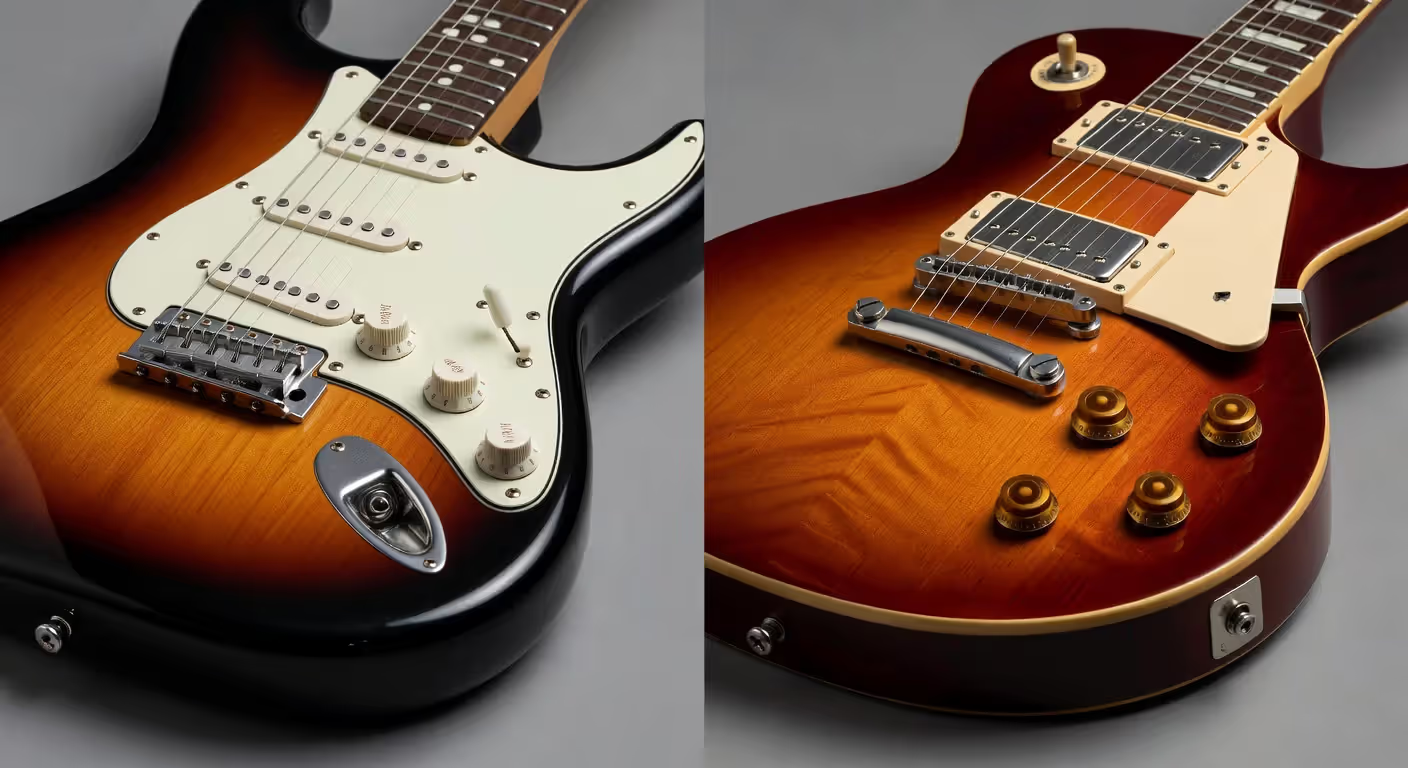
Leo Fender introduced the three-position switch on the Telecaster in 1950, giving players a simple choice: neck pickup, bridge pickup, or both. Gibson's Les Paul used a similar three-way toggle mounted on the upper bout. By 1954, the Stratocaster arrived with a three-position switch that players quickly learned to "hack" by wedging it between positions to blend pickups—a technique Fender eventually legitimized with the five-way switch in 1977.
The pickup selector explained in its simplest terms: it's a rotary or slide switch that completes different electrical pathways. When you flip to the bridge position, you're physically connecting the bridge pickup's hot wire to the output jack while disconnecting the others. That's it. No magic, just mechanical switching.
Why does this matter? Because your pickups are electromagnetic transducers with different frequency responses based on their position under the strings. The selector lets you choose which sonic character reaches your amp. Bridge pickups capture more treble and attack. Neck pickups deliver warmth and thickness. The combinations between them offer everything else.

Author: Savannah Quillmere;
Source: lamat-records.com
How the Pickup Selector Switch Functions
Inside that toggle switch on guitars sits a surprisingly simple mechanism. A wafer with conductive contacts rotates or slides to connect different terminals. Each position routes the signal from one or more pickups through the volume and tone circuit to the output jack.
Here's how a pickup selector works electrically: Each pickup has a "hot" output wire and a ground wire. The hot wire carries the audio signal—the tiny electrical current generated when strings vibrate in the pickup's magnetic field. The selector switch acts as a traffic controller, deciding which hot wires connect to the rest of the circuit.
In a basic three-way switch, position one might connect only the neck pickup's hot wire to the circuit. Position two connects both pickups (usually in parallel, occasionally in series depending on the wiring scheme). Position three connects only the bridge pickup. The ground wires typically stay connected regardless of switch position, completing the circuit through the guitar's bridge and strings.
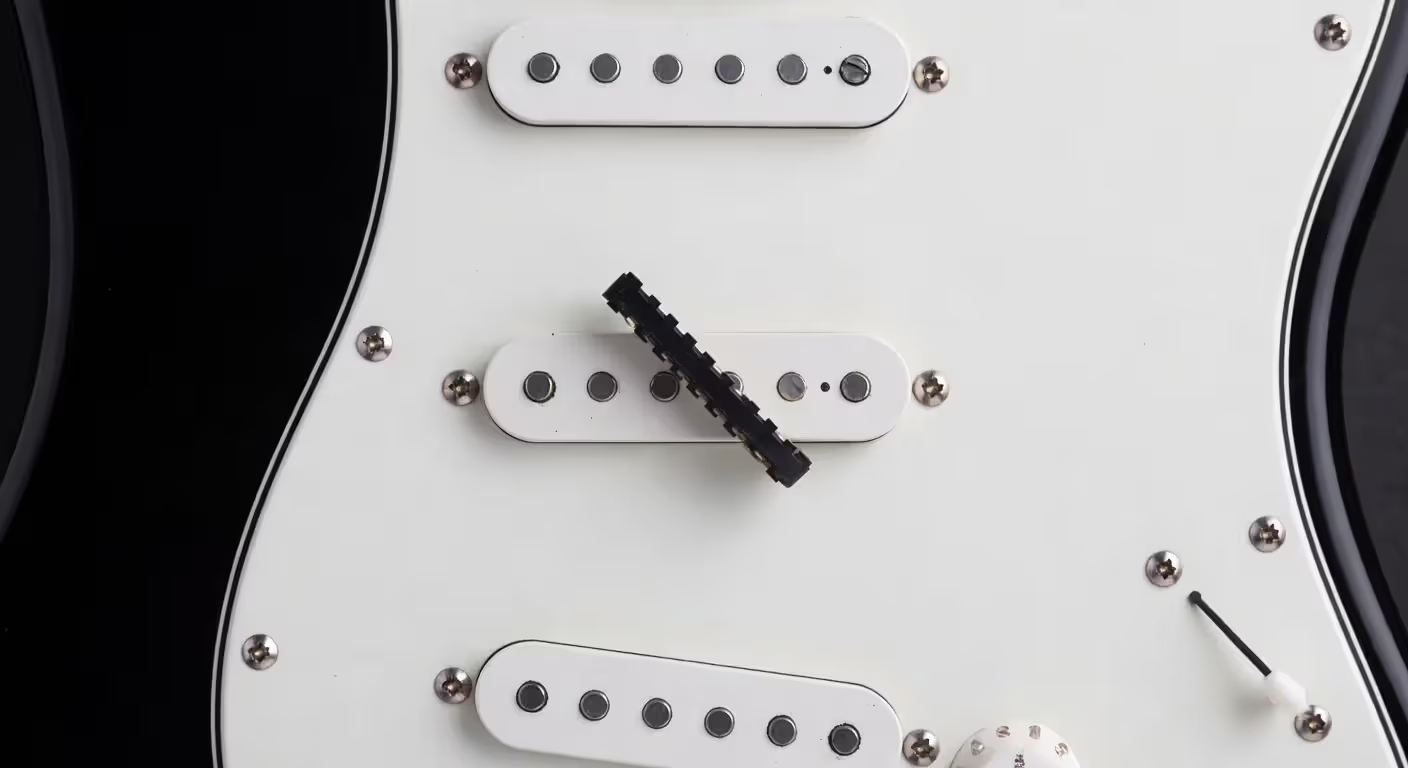
The five-way switch uses a more complex wafer with additional contact points. It can activate single pickups or create parallel combinations. Stratocaster-style five-way switches use a sliding blade that bridges different contact strips as it moves through positions.
Most switches use brass or copper alloy contacts. Over time, these oxidize, which causes that scratchy sound when you flip positions. The mechanical pressure of the switch closing scrapes away some oxidation each time, which is why working a scratchy switch back and forth often temporarily fixes the problem.
One detail many players miss: the switch doesn't amplify or boost anything. It's a passive component. If one position sounds louder than another, that's due to the pickup's output level or the impedance interaction between combined pickups, not the switch itself.
Understanding Pickup Switch Positions and Their Sounds
Different switch configurations offer different tonal palettes. Let's break down the most common types and what each position actually does.
3-Way Toggle Switch Positions
The classic three-way toggle appears on Les Pauls, SGs, and most dual-humbucker guitars. The rhythm position (toward the neck) activates the neck pickup alone. The middle position activates both pickups together. The treble position (toward the bridge) activates only the bridge pickup.
Neck position delivers warm, full-bodied tone with pronounced midrange and softer highs. It's thick without being muddy when your guitar is set up properly. Bridge position gives you bite, clarity, and cutting power—more treble, tighter bass, perfect for solos that need to push through a mix. The middle position combines both, offering a scooped, slightly hollow character that works beautifully for clean rhythm playing.
Some three-way switches wire the middle position in series rather than parallel, which increases output and creates a fatter, almost single-coil-like tone. Peter Green's Les Paul famously had one pickup wired out of phase, creating a thin, nasal middle position sound that became legendary.
5-Way Switch Positions
The five-way switch standard on Stratocasters and many modern guitars provides more granular control. Position one (closest to the bridge) activates the bridge pickup alone—bright, snappy, and aggressive. Position two combines bridge and middle pickups—the classic "quack" tone with scooped mids, perfect for funk and country.
Position three activates only the middle pickup, offering a balanced tone that sits between the extremes. It's often overlooked but incredibly useful for rhythm work that needs presence without harshness. Position four combines middle and neck pickups, creating a warm, full sound with enough clarity for complex chords. Position five activates the neck pickup alone—smooth, jazzy, and vocal-like.
Author: Savannah Quillmere;
Source: lamat-records.com
The pattern I see most often is players who only use positions one, three, and five, completely ignoring the blended positions two and four. That's leaving half your tonal range on the table. Those in-between sounds defined entire genres—Mark Knopfler's position two tone, for instance, or Nile Rodgers' position four rhythm sound.
Specialty Switch Configurations
Some guitars push beyond the standard configurations. The Telecaster's traditional three-way offers bridge pickup, neck pickup, and both in parallel—but with a twist. Many vintage-style Tele switches have a unique middle position wiring that routes the neck pickup through a different capacitor, creating a darker, bassier blend than you'd expect.
Four-way switches on some Telecasters add a series-wired option where both pickups connect in a chain rather than parallel. This boosts output and creates a fatter, humbucker-like tone.
Super Switches and megaswitches offer even more combinations, allowing coil splits, phase reversals, and series/parallel options. These appear on custom guitars and high-end production models aimed at players who want maximum tonal flexibility from a single instrument.
How Different Pickup Positions Affect Your Tone
The physical location of a pickup under the strings determines its fundamental character. This isn't subjective—it's physics.
Bridge pickups sit where the string vibration is tighter and more focused. The harmonic content is richer in high frequencies. You get more attack, more definition, and tighter bass response. The trade-off? Less warmth, sometimes a harsh edge if the pickup runs too hot or your amp is bright.
Neck pickups capture the string where vibration amplitude is greatest and the harmonic spectrum is warmer. More fundamental frequency, less treble bite. The result is a fatter, rounder tone that can sound almost vocal. But push too much gain into a neck pickup and you'll get muddy low-end bloom that loses note definition.
Middle pickups (on three-pickup guitars) occupy the sonic middle ground. They're often reverse-wound and reverse-polarity compared to the neck pickup, which creates humbucking when combined with either the neck or bridge. Solo'd, a middle pickup sounds slightly nasal, scooped, and focused—not as warm as the neck, not as bright as the bridge.
Selecting guitar pickups based on position becomes instinctive once you understand these characteristics. Need a lead tone that cuts? Bridge position. Want smooth jazz chords? Neck position. Looking for that glassy clean rhythm? Try a blended position.
Here's the comparison that matters:
| Position Number | Active Pickup(s) | Tonal Character | Common Uses/Genres |
| 1 (Bridge only) | Bridge | Bright, cutting, tight bass, high treble | Lead guitar, country, hard rock, metal rhythm |
| 2 (Bridge + Middle) | Bridge & Middle | Scooped mids, "quacky", sparkly | Funk, reggae, clean country, pop rhythm |
| 3 (Middle only) | Middle | Balanced, slightly nasal, clear | Versatile rhythm, blues, singer-songwriter |
| 4 (Middle + Neck) | Middle & Neck | Warm, full, smooth highs | Jazz, soul, R&B, warm lead tones |
| 5 (Neck only) | Neck | Dark, thick, smooth, pronounced mids | Jazz, blues lead, warm rhythm, ballads |
Frequency response measurements show the differences clearly. A bridge single-coil might peak around 2-3 kHz with strong presence up to 5 kHz. A neck pickup's peak often sits around 1.5-2 kHz with a gentler roll-off. These differences become even more pronounced with humbuckers, which emphasize midrange differently than single-coils.
Combining Pickups for Unique Tones
The real magic of pickup selection happens when you blend multiple pickups. This isn't just about mixing sounds—you're creating phase interactions and impedance relationships that generate entirely new tonal colors.
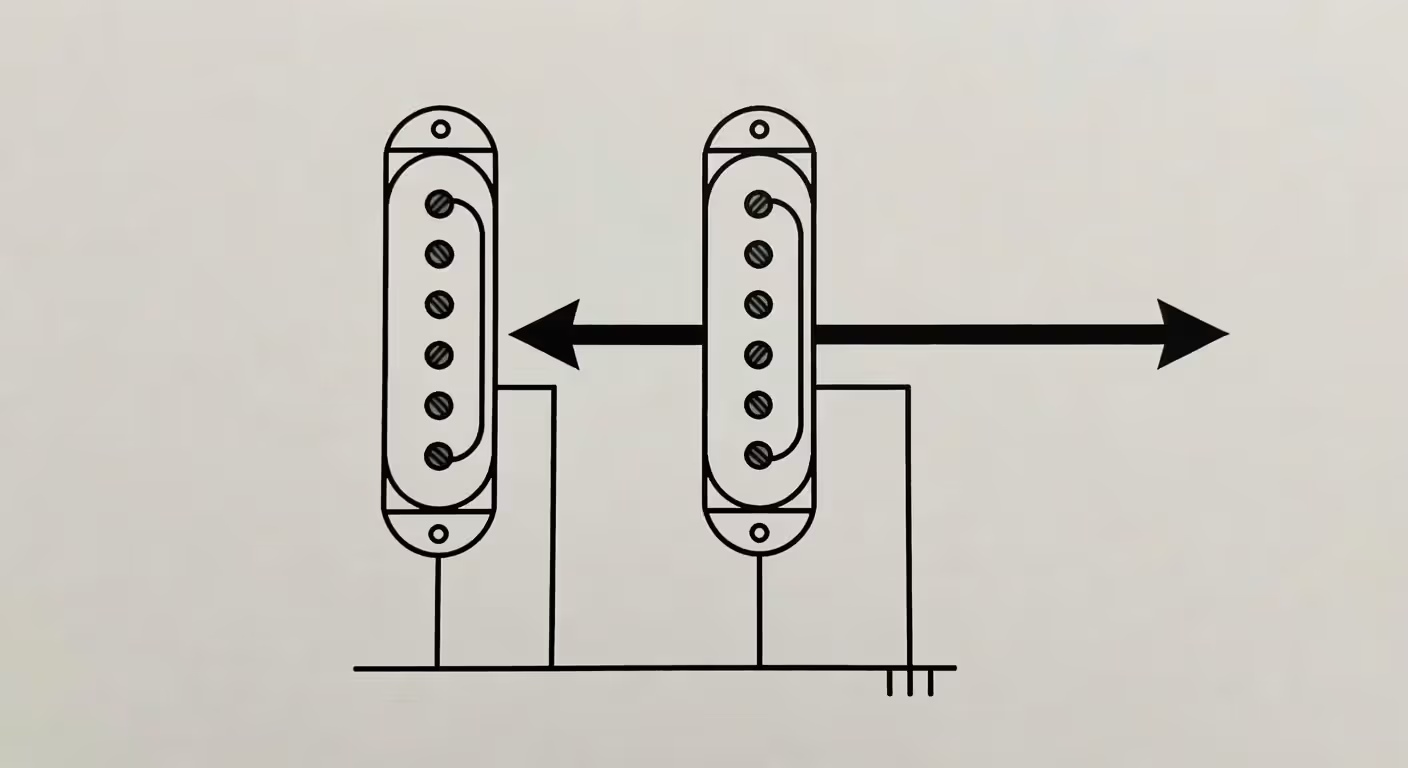
When two pickups operate together in parallel (the standard wiring), their signals combine but their impedances interact in ways that affect frequency response. You'll often notice a slight volume drop in middle positions compared to single-pickup positions. That's because the combined impedance load affects how the pickups interact with your guitar cable's capacitance.
The humbucking effect from coil combinations is another benefit. When a neck and middle pickup are wired with opposite magnetic polarity and opposite coil winding direction, they cancel out electromagnetic interference. That's why positions two and four on a Stratocaster are quieter (less hum) than positions one, three, or five. You're not using true humbuckers, but you're getting the noise-canceling benefit of two coils working in opposition.
Phase relationships matter tremendously. In-phase pickups reinforce each other, creating a fuller sound. Out-of-phase pickups partially cancel each other, producing a thin, nasal, scooped tone. Some players love this sound (Peter Green, Brian May), while others avoid it. You can't judge it as better or worse—it's a different color on your palette.
Author: Savannah Quillmere;
Source: lamat-records.com
Popular combined tones appear across genres. The Stratocaster's position two defined reggae guitar in the hands of players like Ernest Ranglin. Position four became synonymous with Stevie Ray Vaughan's rhythm tone. The middle position on a Les Paul powered countless classic rock recordings—think Cream-era Eric Clapton or early Fleetwood Mac.
Series wiring takes combination tones further. Instead of connecting pickups in parallel (both feeding the output simultaneously), series wiring chains them: the neck pickup's output becomes the bridge pickup's input. This doubles the coil count, increases output significantly, and creates a fatter, more compressed tone. Jimmy Page used series wiring on his Les Paul for certain songs, engaging it via push-pull pots rather than the standard switch.
One common mistake: assuming combined positions are always quieter or weaker. While they may have slightly lower output due to impedance interaction, they often sound fuller and more complex. The perceived "weakness" is actually a different frequency balance, not a lack of power.
Common Pickup Selector Problems and Solutions
Pickup selectors fail in predictable ways. Recognizing the symptoms helps you decide between a quick fix and a replacement.
Scratchy switches are the most common complaint. Every time you flip positions, you hear crackling, popping, or static. This happens when the metal contacts oxidize or accumulate dirt. The simple fix: spray contact cleaner (DeoxIT or similar) into the switch while working it back and forth twenty or thirty times. This scrapes the contacts against each other and flushes out contaminants.
For sealed switches where you can't spray cleaner inside, you'll need to remove the switch and clean it with isopropyl alcohol and a cotton swab. This requires removing the pickguard or control cavity cover—a fifteen-minute job on most guitars.
Positions that cut out completely indicate a more serious problem. Either a contact has broken, a wire has detached from the switch terminal, or the wafer inside has cracked. Open the control cavity and inspect the solder joints first. A cold solder joint (dull, grainy-looking instead of shiny) can break the connection. Reheating it with a soldering iron usually fixes the problem.
If the solder joints look good, the switch itself has failed. Replacement is the only option. Five-way switches cost around eight to fifteen dollars. Three-way toggles run ten to thirty dollars depending on quality. Installation is straightforward if you can solder—desolder the old wires, transfer them to the new switch in the same configuration, and mount it.
Loose toggle tips (the plastic cap on toggle switches) seem minor but they're annoying. Most tips use a set screw to attach to the switch shaft. Tighten it with a tiny hex wrench. If the set screw stripped, replace the tip—they're sold separately for a few dollars.
The pickup selector is the most underrated tone control on any guitar. Players spend thousands on pickups and amps but ignore the fact that choosing the right position for the musical moment is worth more than any boutique component. I've seen incredible tones come from cheap pickups in the right position, and terrible tones from expensive pickups in the wrong one.
— Lindy Fralin
When should you replace versus clean? If contact cleaner doesn't solve scratchiness after several applications, or if you have intermittent cutting out that comes and goes, replacement makes sense. Switches wear out. The contacts lose their spring tension, the wafer cracks, or internal components corrode beyond cleaning. A guitar played regularly might need a switch replacement every ten to twenty years.
One detail worth noting: aftermarket switches vary in quality. Import switches from unknown manufacturers often fail within a year. Stick with CRL, Oak Grigsby, or Switchcraft for reliability. The extra five or ten dollars buys you a switch that'll last another decade.
Choosing the Right Pickup Configuration for Your Style
Matching your switch type and pickup layout to your musical approach makes your guitar work with you instead of against you.
If you play primarily high-gain rock or metal, a simple three-way toggle with humbuckers gives you everything you need. Bridge position for rhythm and lead, neck position for solos that need sustain and smoothness, middle position for clean breaks. You won't miss the in-between positions because humbucker blends don't produce the same dramatic tonal shifts that single-coil blends do.
Country, funk, and pop players benefit enormously from five-way switches with single-coils. Those quacky in-between positions define the genre. Position two's scooped character cuts through without harshness. Position four provides warmth without muddiness. You'll use all five positions regularly.
Blues and rock players who cover a wide range of tones might prefer HSS (humbucker-single-single) or HSH (humbucker-single-humbucker) configurations with five-way switches. These provide humbucker power when you need it and single-coil clarity when you don't. The middle positions offer blends that work for everything from jazz to hard rock.
Jazz players often gravitate toward two-humbucker guitars with three-way switches. Neck position handles most of the work, middle position adds some clarity for comping, and bridge position provides definition for the occasional bright passage. The simpler switching keeps you focused on playing rather than tone chasing.
The pattern that emerges: more switching options aren't always better. They're better when your musical style demands constant tonal shifts. If you play one or two core sounds ninety percent of the time, a simple switch reduces decision fatigue and keeps you in the music.
One counterintuitive point: players who think they need every possible option often end up using fewer sounds than players with limited switches. Paradox of choice applies to guitar tone. Three great sounds you know intimately beat ten sounds you barely understand.
Author: Savannah Quillmere;
Source: lamat-records.com
Before buying a guitar, spend time with the pickup selector. Does it feel solid? Does it click into positions firmly or does it feel loose? Can you operate it smoothly while playing? These tactile details matter more than spec sheets suggest. A poorly positioned switch that's awkward to reach will stay in one position all night, rendering its options useless.
FAQ: Pickup Selector Questions Answered
Your pickup selector isn't just a switch—it's an instrument within your instrument. Understanding how it works mechanically and sonically transforms it from a mystery component into a precision tool. The difference between a good tone and a great tone often comes down to choosing the right position for the musical moment, not chasing expensive gear. Master your selector positions, learn their characters, and you'll find tones you didn't know your guitar had.
Related Stories
Read more

Read more


The content on this website is provided for general informational and educational purposes only. It is intended to explain concepts related to music production, recording, mixing, mastering, music industry roles, and distribution.
All information on this website, including articles, guides, and examples, is presented for general educational purposes. Results and success in music production may vary depending on skill level, equipment, and effort.
This website does not provide professional music production services or guarantees of commercial success, and the information presented should not be used as a substitute for consultation with qualified music producers, audio engineers, or music industry professionals.
The website and its authors are not responsible for any errors or omissions, or for any outcomes resulting from decisions made based on the information provided on this website.