
How Big Is a Vinyl Record Cover
How Big Is a Vinyl Record Cover?

You've decided to frame that iconic album cover sitting on your shelf, or maybe you're designing artwork for an upcoming release. Either way, you need to know: what are the actual measurements? Vinyl packaging isn't as straightforward as "12 inches for a 12-inch record." The covers are slightly larger, thickness varies wildly, and those extra millimeters matter when you're ordering frames or setting up design files. Let's break down exactly what you're working with.
Standard Vinyl Record Cover Dimensions
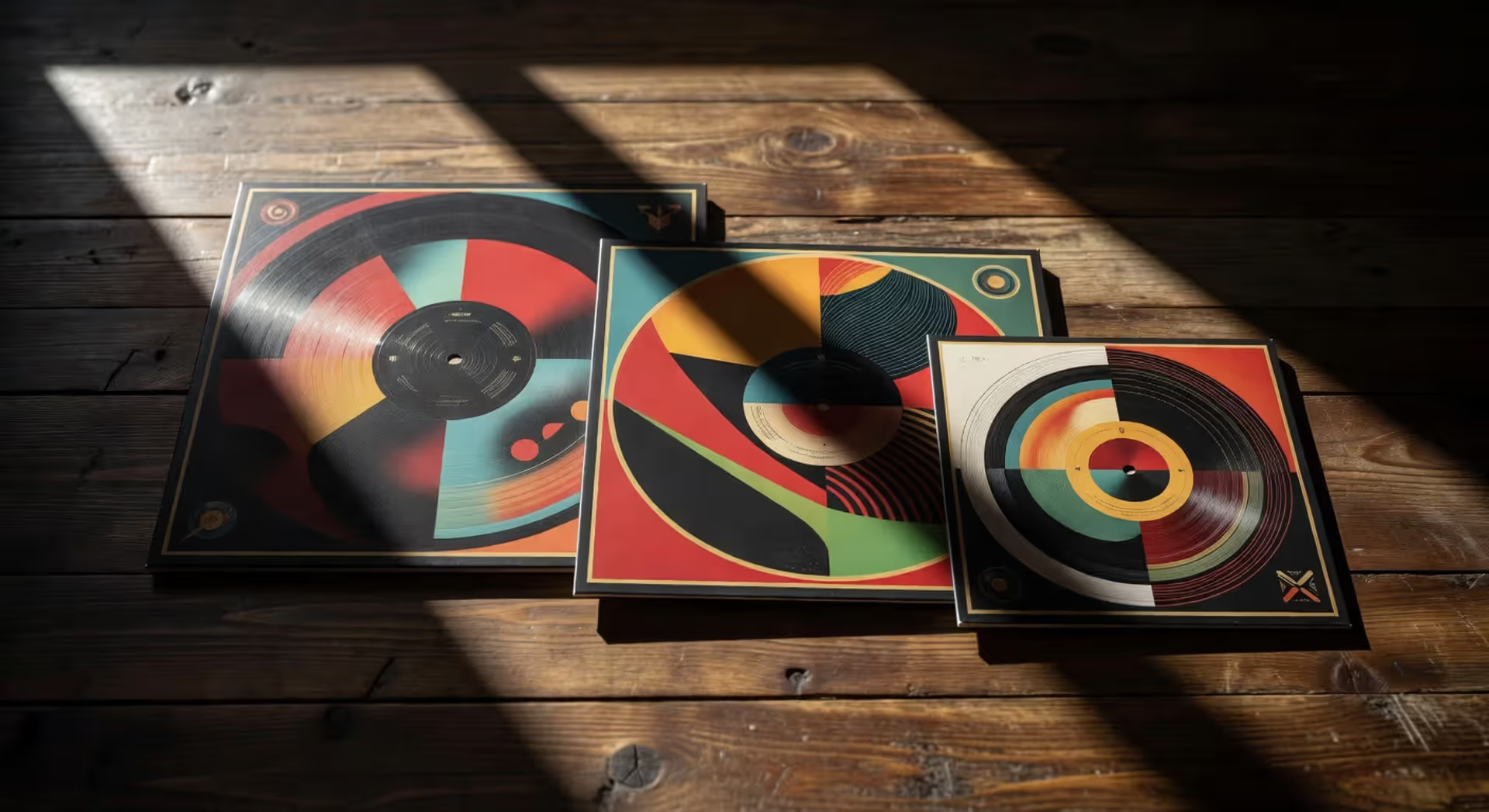
The 12-inch LP dominates most collections. Its jacket measures 12.375 inches on each side—31.43 cm if you're working metric. Why not exactly 12 inches? The record needs space to slide in and out without catching on the edges. Columbia Records settled on this size when they launched the LP format in 1948, and it's stayed put ever since.
Ten-inch records occupy a weird middle ground. Their covers clock in at 10.5 inches square (26.67 cm). You'll find these on jazz reissues from the '50s, some modern indie releases, and occasional special editions. Labels like Dischord and Touch and Go have used this format for decades, appreciating how it splits the difference between a single and full album.
The 7-inch single—your classic 45 RPM—comes in a 7.125-inch square sleeve (18.1 cm). Limited real estate means artists get creative. Think of The Beatles' "Strawberry Fields Forever" picture sleeve or any Motown single from the '60s. Designers pack incredible detail into that compact space.
Let me lay out the numbers in a way that's actually useful:
| Format | Jacket Size (inches) | Jacket Size (cm) | Common Uses | Spine Thickness |
| 12-inch LP | 12.375" × 12.375" | 31.43 × 31.43 | Albums, double EPs | 0.25"–0.5" |
| 10-inch | 10.5" × 10.5" | 26.67 × 26.67 | Reissues, limited runs | 0.2"–0.4" |
| 7-inch single | 7.125" × 7.125" | 18.1 × 18.1 | 45s, picture discs | 0.1"–0.2" |
Spine thickness depends on what's inside. One LP? About a quarter-inch. Double album? You're pushing half an inch. Box sets can exceed an inch once you factor in booklets and extras.
What Affects Record Sleeve Size
Gatefold sleeves throw a wrench in simple measurements. Pink Floyd's "The Wall" or Fleetwood Mac's "Rumours"—these open like books, doubling your artwork space. Closed, they match standard dimensions: 12.375 inches square. But thickness? Now you're at 0.5 to 0.75 inches depending on cardboard weight and how many records are tucked inside.
Author: Declan Wrenford;
Source: lamat-records.com
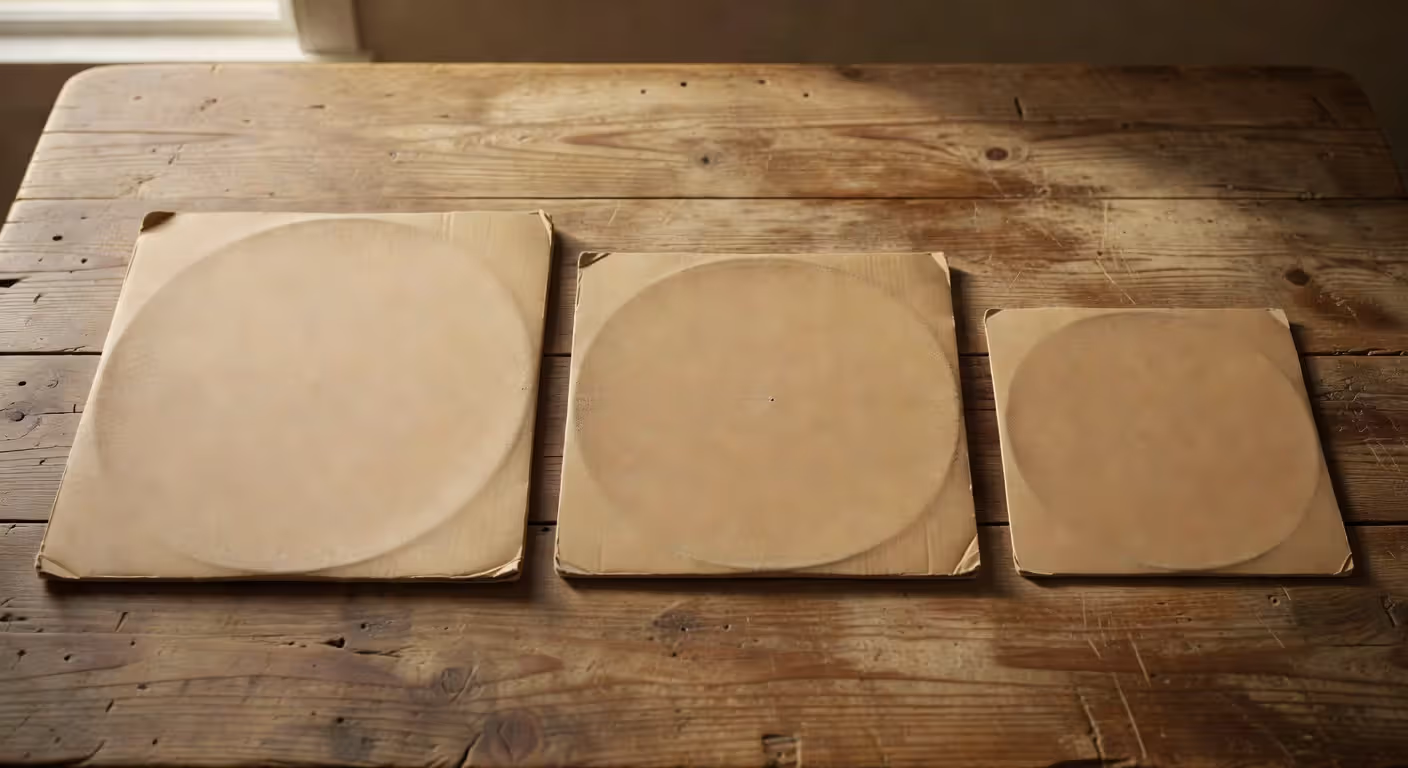
Cardboard quality varies more than people realize. Budget pressings use 18-point stock—thin, flimsy, prone to ring wear. Premium releases jump to 24-point or even 28-point. Mobile Fidelity Sound Lab and Analogue Productions regularly use heavyweight board that feels substantial in your hands. The dimensions stay the same, but that extra thickness affects how many records fit on your shelf.
Outer protective sleeves add bulk. A standard poly sleeve contributes roughly 0.02 inches to each side. Doesn't sound like much until you're sliding 50 records into a storage cube designed with tight tolerances. Resealable sleeves are thicker—sometimes 0.03 inches—which collectors prefer for frequently handled records.
Japanese pressings deserve mention. That OBI strip—the paper band wrapping the spine with Japanese text—doesn't change the jacket dimensions but adds about 0.05 inches to the width. If you collect Japanese imports, you'll notice they sit slightly proud of US pressings on the shelf.
European manufacturing once differed slightly in finishing techniques. German pressings from the '70s sometimes used glossier cardboard that measured fractionally thicker. Globalization has mostly eliminated these quirks, but vintage collectors still encounter them.
Measuring Your Vinyl Covers for Framing
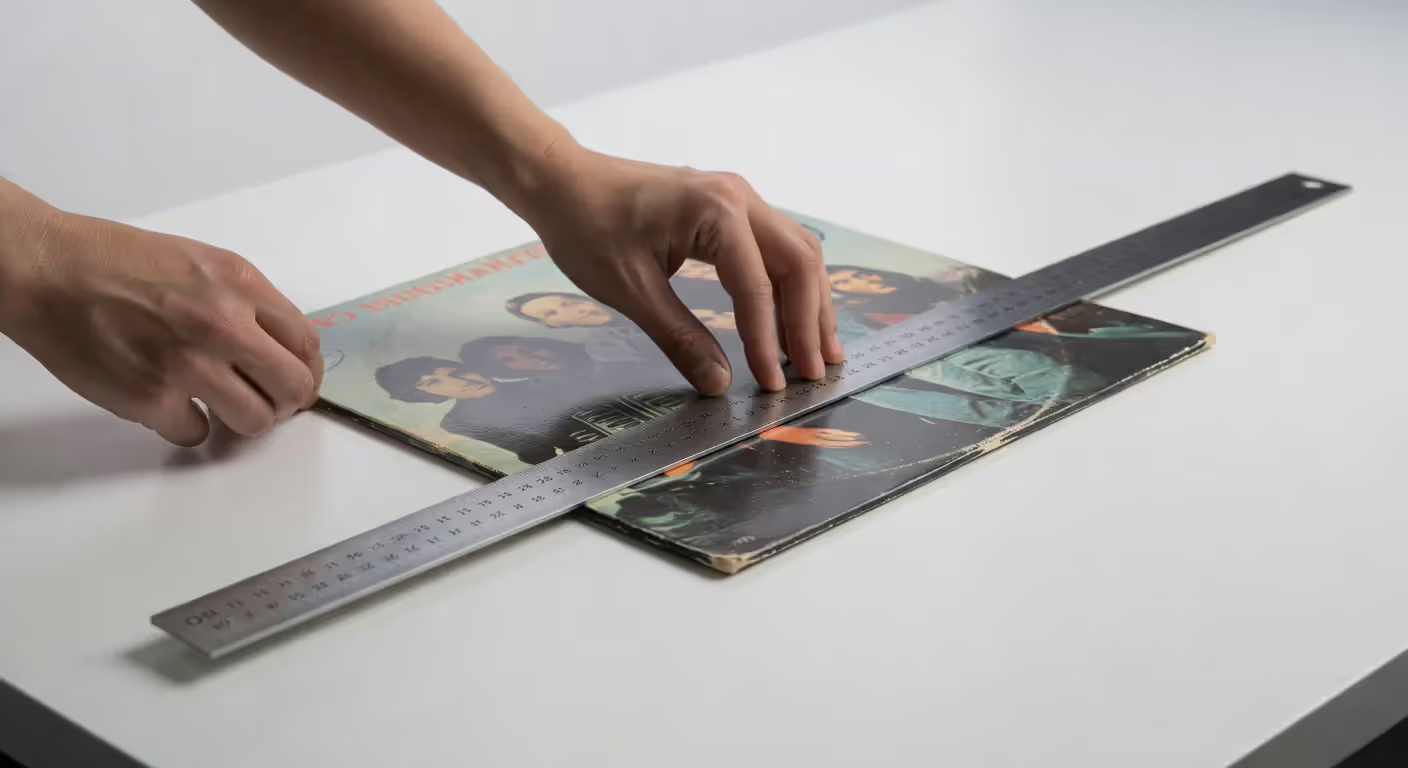
Grab a ruler. Lay your record flat on a table—don't hold it in the air where it might flex. Measure edge to edge, not corner to corner. If the jacket's warped (and let's be honest, older covers often are), measure the widest points.
Standard 12-inch LPs need 12.5-inch square frames. That half-inch gap is crucial. I've watched people try forcing a 12.375-inch cover into a 12-inch frame. It doesn't end well—bent corners, cracked cases, frustrated collectors. Michael's, Hobby Lobby, and most frame shops stock 12.5-inch squares specifically for records.
Seven-inch singles fit 8-inch frames comfortably. Some collectors use 7.5-inch frames for a tighter look, but you risk damage if the sleeve is even slightly oversized. Better to have breathing room.
Frame depth matters as much as width. A basic single-LP sleeve needs 0.25 inches minimum, but 0.5 inches handles most situations. Gatefolds require 0.75 inches or you won't get the frame back closed. Check the frame specs before buying—"depth" is sometimes listed as "rabbet depth" or "interior depth."
Author: Declan Wrenford;
Source: lamat-records.com
UV protection saves your artwork. Direct sunlight fades album covers faster than you'd think. I've seen Velvet Underground covers go from vibrant yellow to pale cream in five years of window exposure. UV-filtering glass or acrylic costs 30-40% more but preserves colors indefinitely. Worth it for valuable or irreplaceable covers.
Leave the record inside when framing. The weight keeps the jacket flat and prevents warping. Empty sleeves bow and curl over time, especially in humidity.
Record Packaging Components and Their Sizes
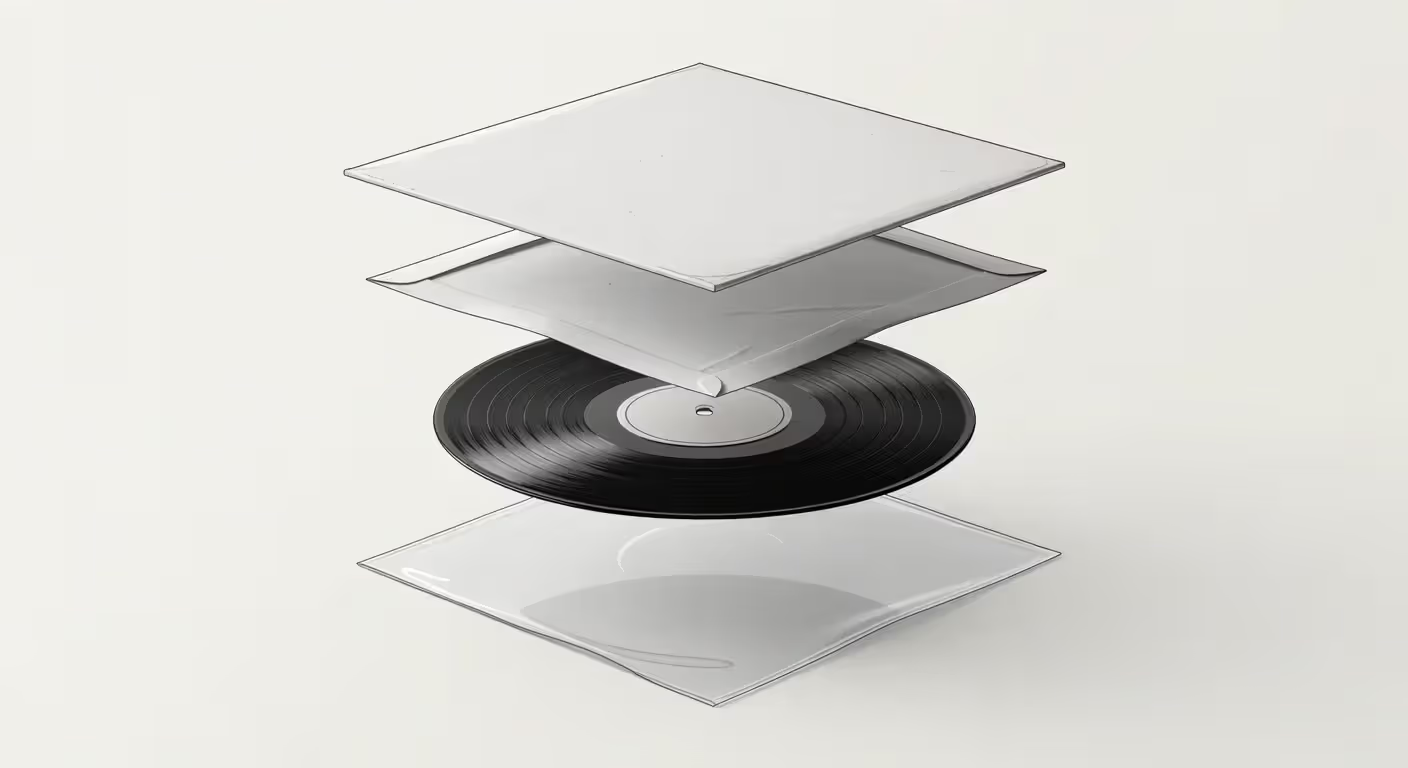
Every vinyl package layers multiple components, each with specific measurements. Understanding these helps when you're ordering replacement sleeves or designing custom packaging.
The outer jacket—what you see on the shelf—measures 12.375 inches square for LPs. The cardboard itself runs 0.02 to 0.03 inches thick before you add anything inside. Premium jackets use heavier stock that feels sturdier but maintains the same outer dimensions.
Inner sleeves sit directly against the record. Paper inners measure about 12.25 inches square—just small enough to slide easily into the outer jacket. Poly-lined sleeves (like Mobile Fidelity's rice paper inners) use identical dimensions but sandwich a plastic layer between paper sheets to reduce static and scuffing.
Protective outer sleeves wrap the entire package. These measure roughly 12.5 inches square for 12-inch records—big enough to accommodate the jacket plus a little wiggle room. Blake Sleeves and Sleeve City make popular versions ranging from 2-mil to 5-mil thickness.
Breaking down the layers:
| Component | Dimensions (12-inch format) | Material Options | Function |
| Outer jacket | 12.375" × 12.375" × 0.25" | 18–28 point cardboard | Displays artwork, structural protection |
| Inner sleeve | 12.25" × 12.25" | Paper, poly-lined, HDPE | Prevents record scratches |
| Protective outer | 12.5" × 12.5" | Polyethylene, polypropylene | Guards jacket from shelf wear |
| Gatefold (closed) | 12.375" × 12.375" × 0.5" | Heavy cardboard | Extended artwork panels |
Spine width gets interesting when you're organizing a collection. Single LPs average 0.25 inches. Add a second record and you're at 0.4 to 0.5 inches. Triple albums like George Harrison's "All Things Must Pass" push 0.75 inches. Box sets blow past an inch once you include booklets, posters, and extras. This matters when calculating shelf space—200 single albums need different depth than 200 doubles.
Author: Declan Wrenford;
Source: lamat-records.com
Custom Vinyl Cover Design Specifications
Designing album artwork requires precision. Your canvas starts at 12.375 inches square—the trim size where the printer cuts. But you can't design to the edge and call it done.
Bleed extends 0.125 inches beyond trim on all sides. Your working canvas becomes 12.625 inches square. Any background color or image element that should reach the edge must extend into this bleed zone. Printing and cutting aren't perfectly aligned—they're close, but not exact. Without bleed, you risk white slivers along edges where the cut drifted slightly.
Safe zones protect critical content. Keep text, logos, and important visual elements at least 0.25 inches inside the trim edge. That creates an 11.875-inch square safety area. Anything closer risks getting trimmed off or sitting uncomfortably near the border. I've seen band names cut in half because designers ignored safe zones.
Gatefold designs span 24.75 inches wide by 12.375 inches tall when laid flat. The spine sits dead center, typically 0.25 to 0.5 inches wide depending on the number of records. Text on the spine should read correctly when the album lies face-up with the spine on the left—standard shelf orientation.
Resolution can't be compromised. 300 DPI at actual size, period. Your 12.625-inch design file should be 3,787 × 3,787 pixels minimum. Anything less looks fuzzy or pixelated in print. I've rejected files from designers who thought 150 DPI "looked fine on screen." Screens and printing presses work differently.
Color mode matters more than people realize. Work in CMYK from the start, not RGB. RGB colors convert to CMYK during printing, and they shift—usually duller, sometimes dramatically. That vibrant blue you loved in RGB might print as muddy purple. Design in CMYK and you'll see accurate colors throughout the process.
File format: PDF with embedded fonts. Most pressing plants want print-ready PDFs. Some accept layered files (PSD, AI, INDD) but PDFs eliminate compatibility issues. Outline your fonts or embed them—missing fonts cause production delays.
Back covers need the same treatment as front covers. Bleed, safe zones, resolution—all identical. The spine must align properly with both panels, which requires careful measurement and mockup testing. Duplication.ca and Furnace Record Pressing provide templates that show exactly where spine text should sit.
The standardization of vinyl dimensions wasn't just about manufacturing efficiency—it created a canvas that artists and designers have worked within for over 70 years. That 12.375-inch square is as iconic to music culture as the sound of the needle drop. When we design packaging today, we're not just creating a container; we're contributing to a physical format that listeners can hold, frame, and pass down for generations.
— Mitchell David
Frequently Asked Questions About Vinyl Record Sizes
Knowing these measurements eliminates guesswork when you're framing artwork, designing sleeves, or organizing your collection. The 12.375-inch LP standard has survived format wars, digital revolutions, and seven decades of technological change. Account for thickness variations and protective sleeves when buying frames or storage, and you'll avoid the sizing mistakes that frustrate collectors and damage valuable covers.
Related Stories
Read more
Read more


The content on this website is provided for general informational and educational purposes only. It is intended to explain concepts related to music production, recording, mixing, mastering, music industry roles, and distribution.
All information on this website, including articles, guides, and examples, is presented for general educational purposes. Results and success in music production may vary depending on skill level, equipment, and effort.
This website does not provide professional music production services or guarantees of commercial success, and the information presented should not be used as a substitute for consultation with qualified music producers, audio engineers, or music industry professionals.
The website and its authors are not responsible for any errors or omissions, or for any outcomes resulting from decisions made based on the information provided on this website.