
What Is Audiophile Vinyl and Why Does It Sound Better
What Is Audiophile Vinyl?

Content
Content
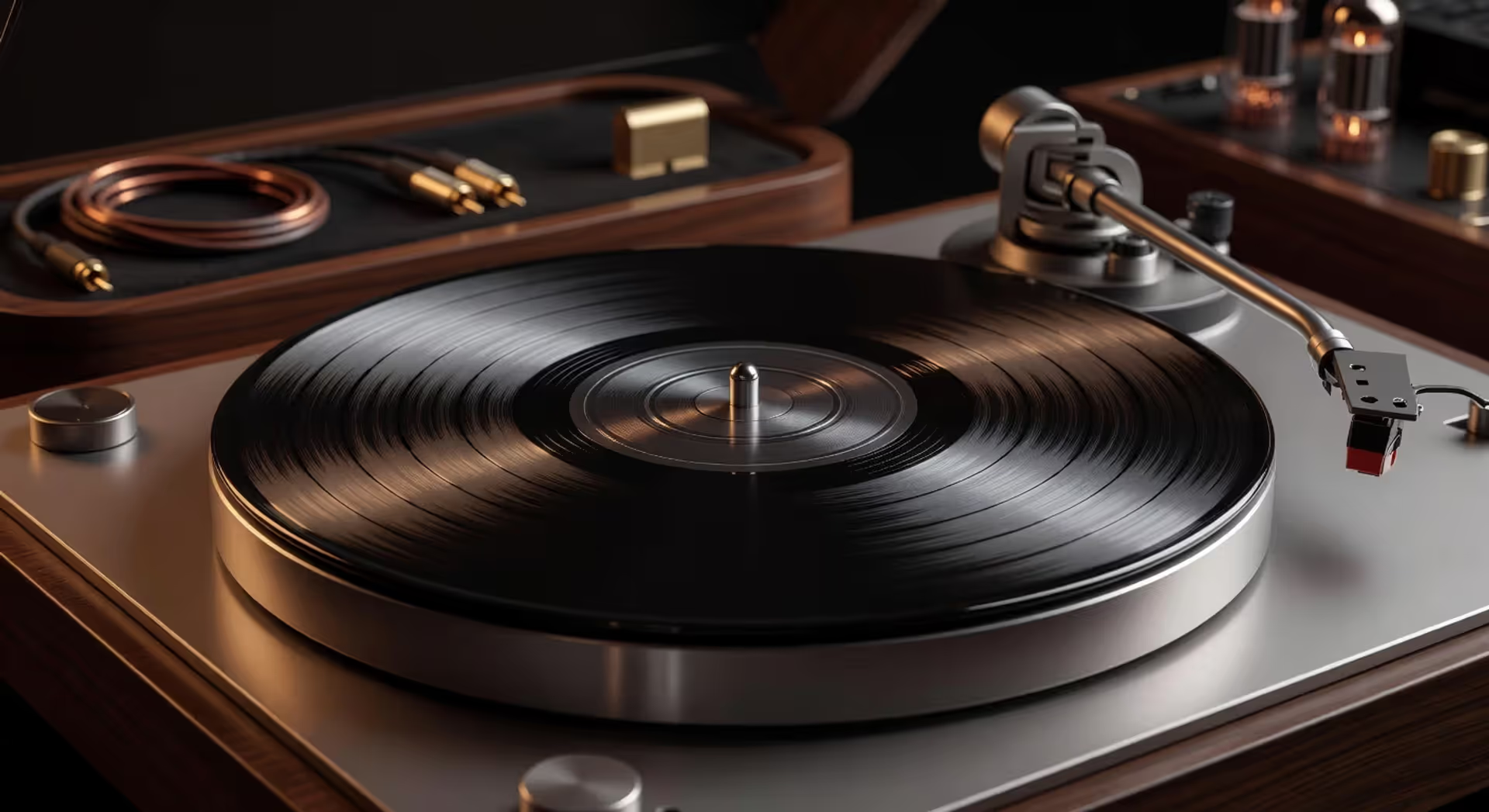
Vinyl enthusiasts throw the term "audiophile" around constantly, but what does it actually mean when applied to records? At its core, audiophile vinyl represents the pinnacle of analog sound reproduction—pressings manufactured with meticulous attention to every detail that affects sound quality. These aren't your typical bargain-bin records. They're created using superior source material, higher-grade vinyl compounds, and stricter quality control standards than mass-market releases. The difference isn't just marketing hype. When played on capable equipment, audiophile pressings reveal layers of detail, dynamics, and spatial information that standard pressings simply can't match.
Defining Audiophile Vinyl Records
So what is audiophile vinyl, exactly? It's a pressing that prioritizes sonic fidelity above all else. There's no official certification body that stamps records "audiophile approved," but the industry has developed informal standards that separate premium from pedestrian.
Collectible vinyl quality starts with the source. True audiophile pressings originate from the best available master tapes—ideally first-generation analog masters. The mastering engineer then cuts a lacquer with attention to groove spacing, cutting depth, and frequency balance that maximizes the format's strengths while minimizing its limitations.
Mass-market pressings take shortcuts everywhere. They might use fourth- or fifth-generation tape copies, squeeze more music per side to save on manufacturing costs, and rush through quality control to meet release deadlines. The stampers wear down after thousands of copies, but production continues anyway.
Audiophile labels operate differently. Companies like Music Matters Jazz, Analogue Productions, and Mobile Fidelity Sound Lab limit their pressing runs, retire stampers early, and inspect every record before it ships. Some even number their releases individually.
The price reflects this care. Where a standard new release might cost $25-$30, audiophile pressings typically start at $40 and can exceed $100 for deluxe editions or small-batch releases.
How Audiophile Pressings Are Made
The manufacturing process separates good from exceptional. It starts in the mastering studio, where an engineer transfers the source recording to a lacquer disc using a cutting lathe. This isn't a simple transfer—it's an interpretive art.
The mastering engineer adjusts EQ, dynamics, and stereo width to optimize the recording for vinyl's physical constraints. Bass frequencies need careful management or the stylus will jump out of the groove. Excessive high frequencies cause distortion. Peak levels must stay within limits.
Premium record pressings use cutting lathes maintained to exacting standards. The cutting stylus itself—a heated sapphire or diamond tip—must be sharp and precisely shaped. Even microscopic imperfections transfer to every record pressed from that lacquer.
From the lacquer, the plant creates a metal "father," then "mothers," then finally the stampers that press the actual records. Each generation loses a tiny bit of fidelity. Audiophile plants minimize these losses through careful chemistry and handling.
Author: Savannah Quillmere;
Source: lamat-records.com
Virgin Vinyl vs. Recycled Vinyl
The compound matters enormously. Virgin vinyl—polyvinyl chloride that's never been melted down before—produces a quieter surface with less distortion than recycled material.
Recycled vinyl contains impurities: dust particles, degraded polymers, sometimes bits of paper labels. These contaminants create audible noise and increase surface friction. Budget labels use high percentages of recycled content to cut costs.
Audiophile pressing characteristics include virgin or near-virgin vinyl formulations. Some plants add proprietary compounds to improve rigidity, reduce static, or enhance durability. The exact recipes remain trade secrets.
The Role of Mastering Engineers
Here's something most buyers don't realize: the mastering engineer's choices matter more than the vinyl weight or fancy packaging.
A skilled engineer knows how to extract maximum fidelity from the source material. They understand the compromises—where to roll off deep bass, how much limiting to apply, whether to cut at higher volume or preserve more dynamics.
The best audiophile pressings credit the mastering engineer prominently. Names like Kevin Gray, Bernie Grundman, Ryan Smith, and Chris Bellman signal serious attention to sonic quality. Their work elevates good recordings to reference status.
Physical Characteristics of Premium Records
Walk into a record store and you'll see weight specifications everywhere: 180-gram, 200-gram, even 220-gram pressings. The assumption is simple—heavier equals better.
It's not that simple.
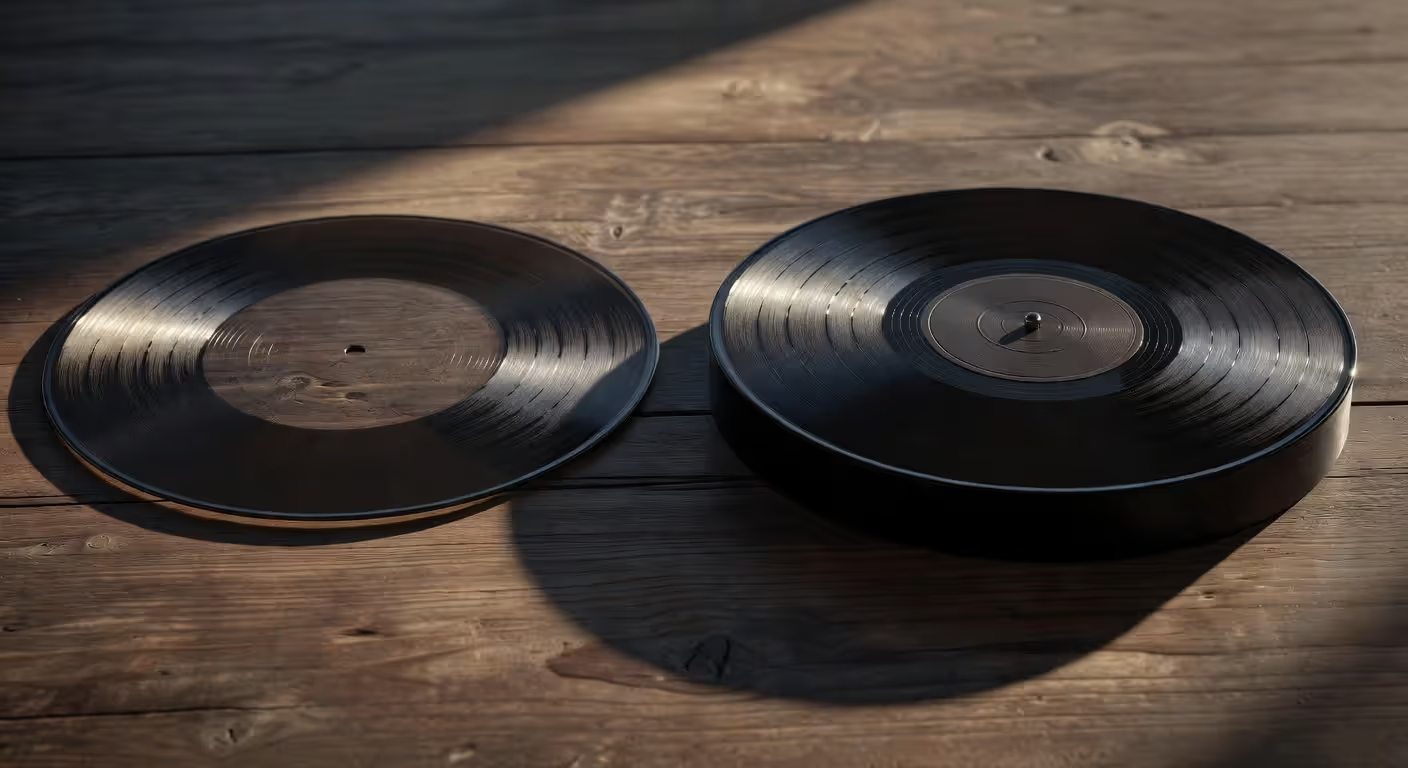
Heavyweight vinyl records do offer real advantages. Thicker discs resist warping better during cooling and storage. They provide more mass for the platter to stabilize, reducing resonance. The additional thickness allows for deeper groove modulation, which can improve dynamics.
But weight alone doesn't guarantee quality. I've heard 120-gram pressings that sound spectacular and 200-gram versions that sound compressed and lifeless. The mastering and pressing quality matter far more than the scale reading.
Standard pressings typically weigh 120-140 grams. Audiophile releases usually start at 150 grams, with 180 grams being the most common premium weight. Some specialty releases push to 200 grams, though the sonic benefits beyond 180 grams remain debatable.
Author: Savannah Quillmere;
Source: lamat-records.com
Thickness affects more than just weight. Thicker records allow wider groove spacing—the distance between adjacent grooves. More space means less chance of pre-echo (hearing the next groove faintly) and post-echo. It also permits higher cutting levels for increased dynamic range.
Material composition includes additives beyond basic PVC. Some formulations incorporate carbon black for anti-static properties. Others use proprietary compounds for improved rigidity or reduced surface noise. Colored vinyl generally sounds inferior to black because the pigments introduce impurities, though modern formulations have narrowed this gap.
Factors That Affect Vinyl Sound Quality
High quality vinyl explained requires understanding the entire production chain. Multiple factors combine to create the final sonic signature.
Pressing plant reputation: Not all plants maintain the same standards. RTI (Record Technology Inc.) in California, Pallas in Germany, and Quality Record Pressings in Kansas earned their reputations through consistent excellence. They maintain their equipment meticulously, use superior vinyl compounds, and enforce strict QC.
Lesser plants cut corners. They run worn stampers longer, use higher percentages of recycled vinyl, and skip inspection steps. The same mastering can sound dramatically different depending on where it's pressed.
Source material: This is huge. Vinyl sound quality factors start with what feeds the cutting lathe. First-generation analog master tapes contain more information than any digital file. But many modern releases originate from digital sources—sometimes high-resolution files, sometimes standard CD-quality 16-bit/44.1kHz.
Contrary to popular belief, digital sources can yield excellent vinyl when handled properly. The issue arises when labels use compressed, brick-walled digital masters designed for streaming. No amount of audiophile pressing can rescue a dynamically crushed source.
Playback speed: Most albums play at 33⅓ RPM. But 45 RPM pressings offer sonic advantages. The faster speed increases the linear velocity of the groove past the stylus, improving high-frequency response and reducing distortion.
Many audiophile labels issue 45 RPM versions spread across multiple discs. The tradeoff is convenience—more flipping—for improved fidelity.
Quality control: Premium labels inspect every disc. They check for surface imperfections, off-center holes, and sonic defects. Rejected pressings get melted down. Budget operations ship everything that's physically playable, regardless of sonic quality.
The mastering is where the magic happens or where it all falls apart. You can press a mediocre master on 200-gram virgin vinyl with gold plating and it'll still sound mediocre. But take a great master, press it carefully with fresh stampers, and even 150-gram vinyl will sing. Weight is the last thing I think about when evaluating a pressing.
— Gray Kevin
What You Need to Hear the Difference
Here's the uncomfortable truth: audiophile vinyl reveals its superiority only when played on equipment capable of extracting that information.
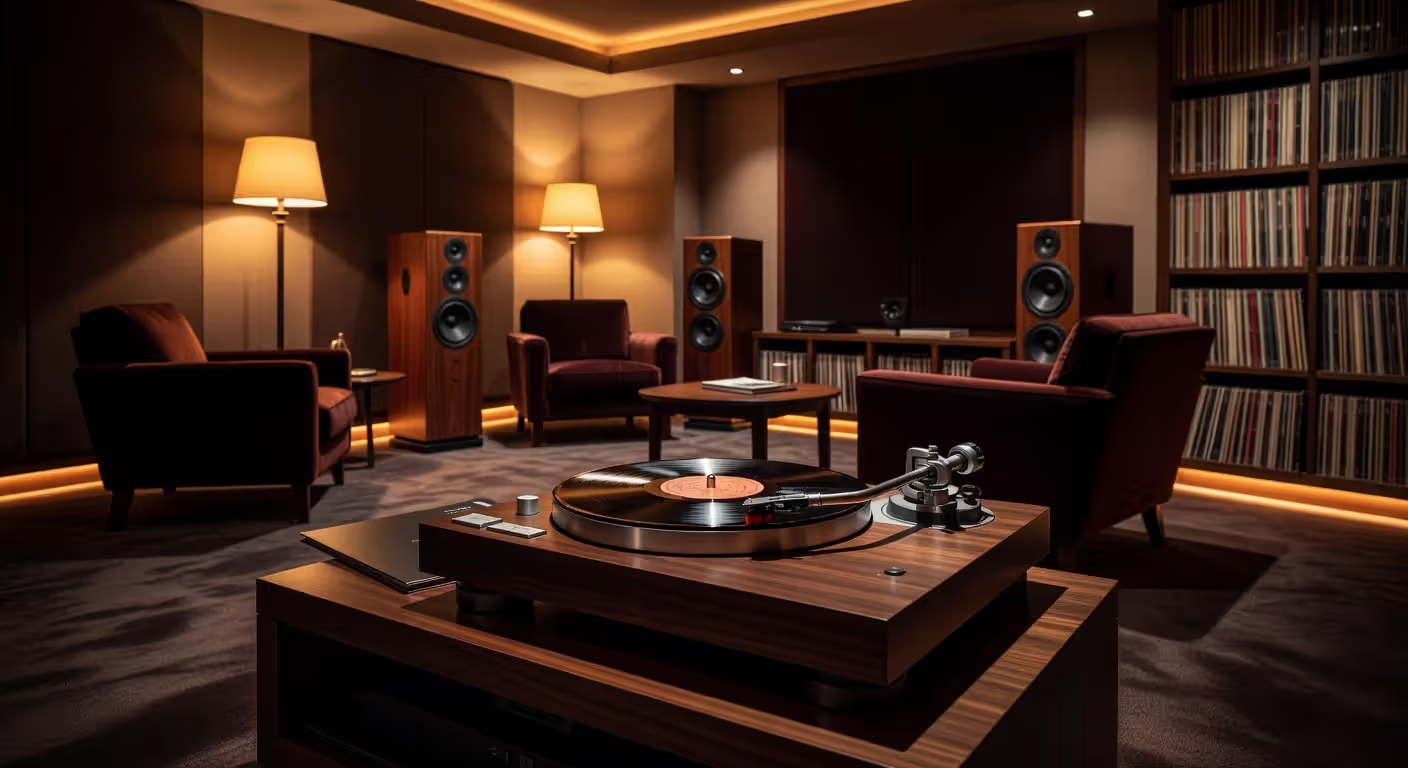
Audiophile turntable listening requires at minimum a decent turntable with proper speed stability, a quality cartridge, and an accurate phono preamp. You don't need to spend $10,000, but a $200 all-in-one player won't reveal the differences you paid for.
The turntable provides stable rotation and isolates the platter from vibration. Budget players suffer from speed inconsistencies (wow and flutter) and poor isolation, which add coloration that masks the pressing's quality.
The cartridge and stylus trace the groove and convert mechanical motion to electrical signal. Higher-quality cartridges track more accurately, retrieve more detail, and introduce less distortion. A worn or damaged stylus can't properly read the groove, regardless of the pressing quality.
The phono preamp amplifies the tiny cartridge signal and applies the RIAA equalization curve. Cheap preamps add noise and distortion while failing to accurately implement the EQ curve.
Beyond the turntable system, your amplifier and speakers matter too. But the pattern I see most often is people buying expensive audiophile pressings while using entry-level playback gear, then wondering why they don't hear much difference.
Identifying Quality Pressings Before You Buy
Research prevents disappointment. Several strategies help you identify superior pressings before spending your money.
Check pressing plant information: Labels often specify where records were manufactured. Seeing "Pressed at RTI" or "Pressed at Pallas" signals quality. Unknown or unspecified plants raise questions.
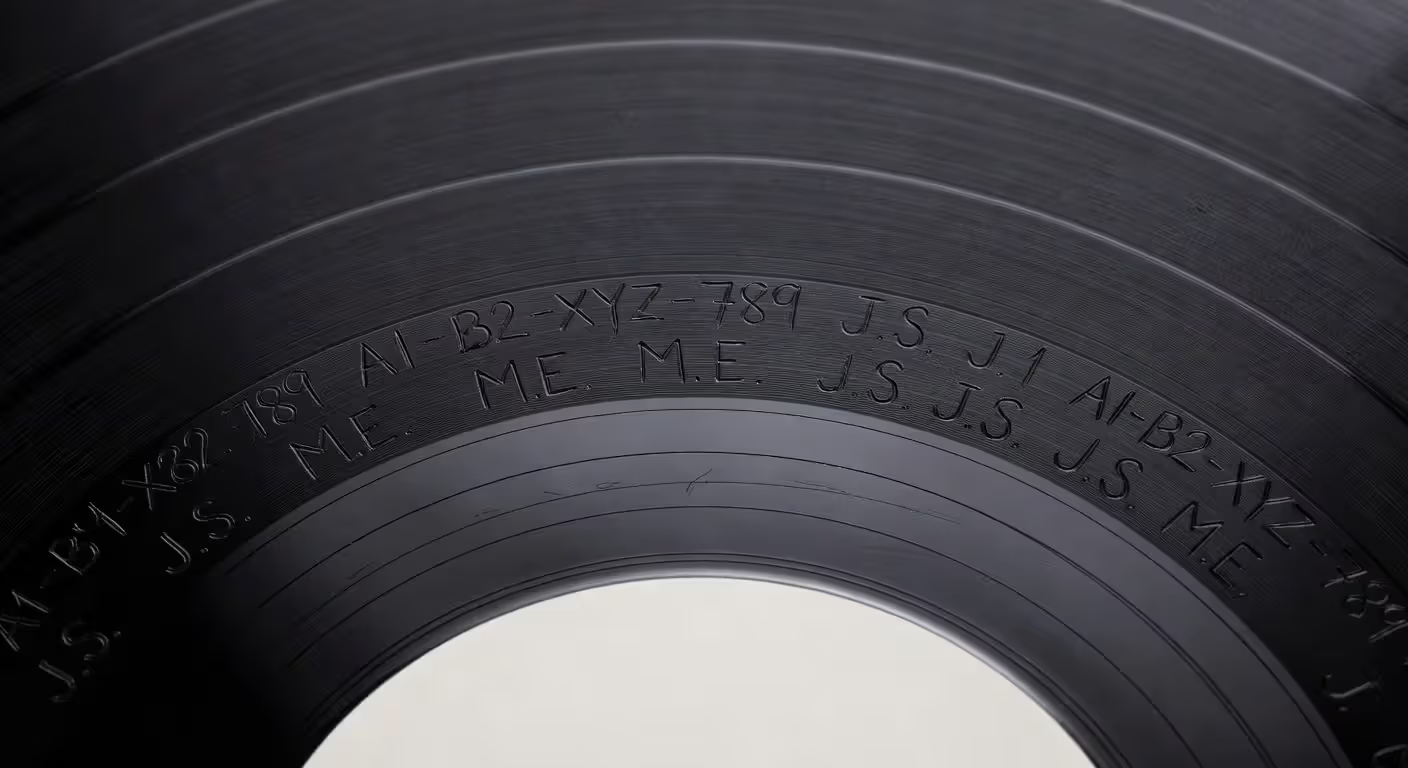
Research the mastering: Look for mastering engineer credits. Established names with proven track records indicate serious attention to sound quality. The deadwax (the smooth area between the grooves and label) often contains hand-etched initials identifying the mastering engineer.
Read the matrix numbers: Those cryptic codes in the deadwax tell stories. They identify the lacquer cut, stamper, and sometimes the pressing plant. Online databases like Discogs allow you to cross-reference matrix numbers and determine which pressing you're considering.
Know the label: Certain labels consistently deliver audiophile pressing characteristics. Mobile Fidelity (MoFi), Analogue Productions (AP), Music Matters Jazz, Speakers Corner, Pure Pleasure, and others built reputations on quality. Their releases cost more but rarely disappoint.
Avoid obvious reissue pitfalls: Not all reissues are equal. Some companies license recordings, then cut corners on mastering and pressing. Warning signs include vague sourcing information ("remastered from the original recordings" without specifics), budget pricing that seems too good to be true, and labels with no track record.
Community resources help. The Steve Hoffman Music Forums host detailed discussions about specific pressings. Users share measurements, photos of deadwax, and listening impressions. Discogs reviews provide additional perspectives.
Author: Savannah Quillmere;
Source: lamat-records.com
Common Misconceptions About Audiophile Vinyl
Let's clear up some persistent myths that confuse buyers and waste money.
"Heavier always sounds better": We've covered this, but it bears repeating. Weight correlates with quality in audiophile releases because serious labels use thicker vinyl as part of an overall quality approach. But weight alone doesn't cause better sound. A poorly mastered 200-gram pressing sounds worse than a well-mastered 140-gram one.
"All reissues are inferior to originals": Sometimes true, often false. Original pressings used first-generation stampers, which is an advantage. But they also used the technology and standards of their era. A modern audiophile reissue mastered from the original tapes using current techniques and pressed at a top plant can equal or exceed the original's sound quality.
Original pressings also carry nostalgia premiums that have nothing to do with sound. A $500 original might sound no better—or even worse—than a $40 modern reissue.
"Price equals quality": Price reflects many factors beyond sound quality: licensing costs, limited pressing quantities, deluxe packaging, market demand. Some audiophile labels charge premium prices for genuinely superior products. Others exploit the market with overpriced releases that don't justify the cost.
Conversely, some modestly priced releases sound fantastic because the label focused resources on mastering and pressing rather than elaborate packaging.
"Digital sources can't make good vinyl": This myth refuses to die. High-resolution digital sources (24-bit/96kHz or higher) contain more than enough information for excellent vinyl. The mastering approach matters more than whether the source is analog or digital.
Problems arise when labels use low-resolution or heavily processed digital sources, not from digital per se.
"You need golden ears to hear the difference": Most people can hear the difference between a quality pressing and a mediocre one when played on decent equipment. You don't need supernatural hearing. You need quiet surroundings, familiar music, and equipment capable of revealing the differences.
Standard Vinyl vs. Audiophile Vinyl Characteristics
| Feature | Standard Pressing | Audiophile Pressing |
| Weight | 120-140 grams | 150-200 grams (typically 180g) |
| Vinyl Material | High recycled content | Virgin or near-virgin vinyl |
| Mastering Source | May use generation copies or compressed digital | First-generation masters, high-res digital, or original analog tapes |
| Pressing Plant QC | Basic inspection, worn stampers | Rigorous inspection, fresh stampers, limited runs |
| Typical Price Range | $20-$30 | $40-$125+ |
| Sound Clarity | Good for casual listening | Enhanced detail, dynamics, and soundstage |
FAQ: Audiophile Vinyl Questions Answered
The pursuit of audiophile vinyl isn't about snobbery or spending money for bragging rights. It's about experiencing music with the depth, detail, and emotional impact that careful manufacturing preserves. When you understand what separates exceptional pressings from ordinary ones, you make smarter buying decisions and build a collection that rewards repeated listening. Start with a few proven audiophile releases of albums you love, play them on capable equipment, and discover what you've been missing.
Related Stories
Read more
Read more


The content on this website is provided for general informational and educational purposes only. It is intended to explain concepts related to music production, recording, mixing, mastering, music industry roles, and distribution.
All information on this website, including articles, guides, and examples, is presented for general educational purposes. Results and success in music production may vary depending on skill level, equipment, and effort.
This website does not provide professional music production services or guarantees of commercial success, and the information presented should not be used as a substitute for consultation with qualified music producers, audio engineers, or music industry professionals.
The website and its authors are not responsible for any errors or omissions, or for any outcomes resulting from decisions made based on the information provided on this website.