
What Is an Offset Guitar and Why Does It Matter
What Is an Offset Guitar?

Content
Content
If you've spent any time browsing guitars online or wandering through a music shop, you've probably noticed instruments with unusually curved, asymmetrical bodies that don't quite match the classic Stratocaster or Les Paul silhouette. These are offset guitars, and they've carved out a devoted following among players who value their distinctive look, comfortable feel, and unique sonic character. But what exactly makes a guitar "offset," and why do so many musicians swear by them? Let's break down everything you need to know about these unconventional instruments.
Understanding Offset Guitar Body Design
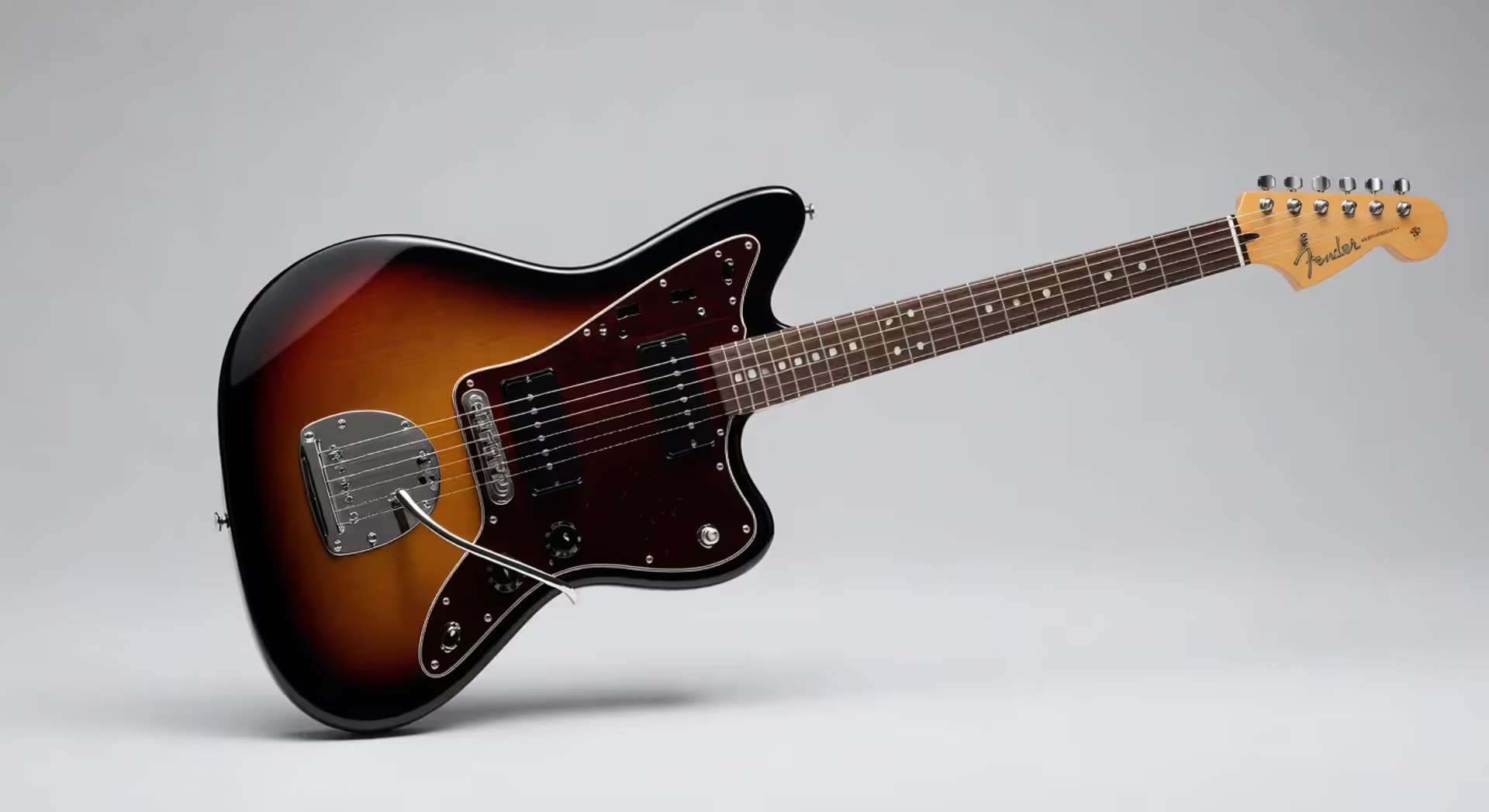
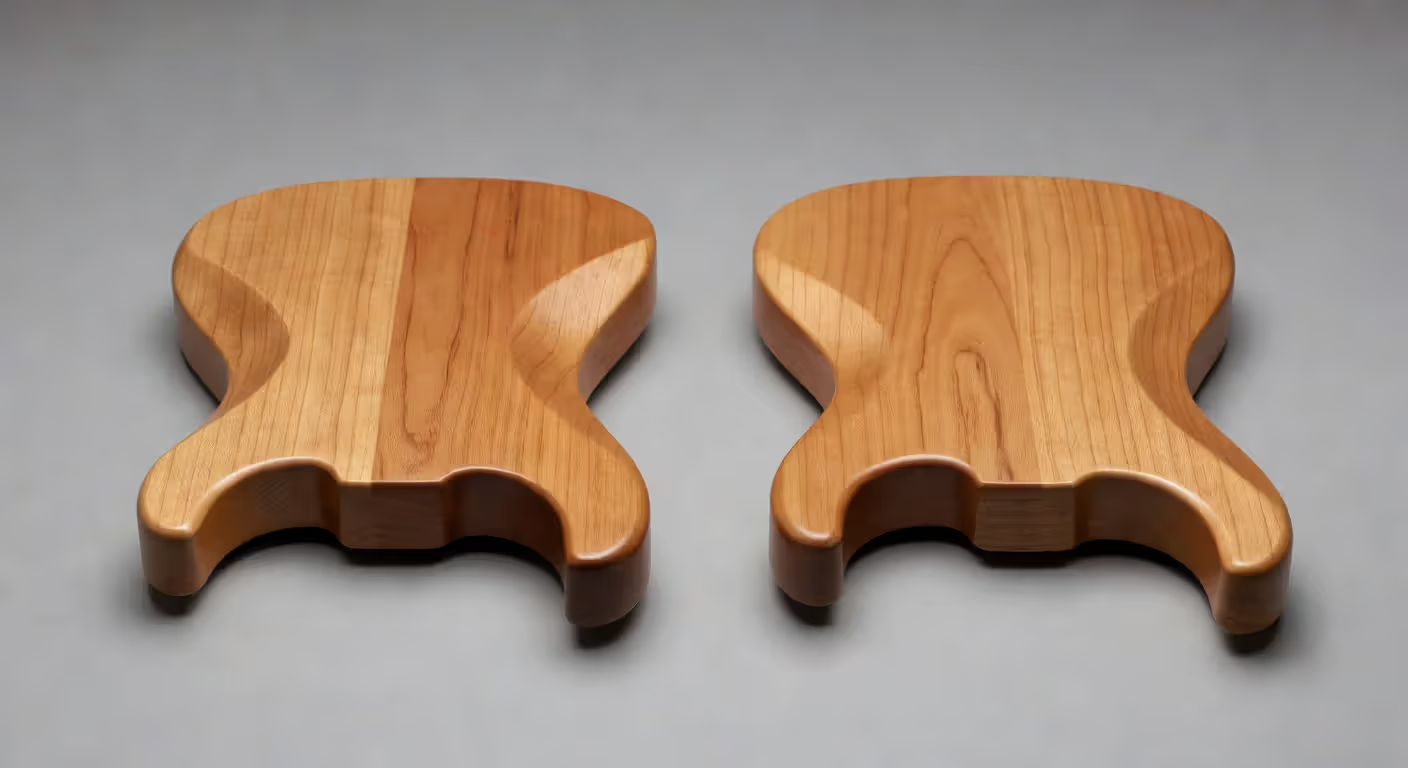
The term "offset" refers to the asymmetrical waist design that sets these guitars apart from traditional body shapes. Unlike a Stratocaster or Telecaster, where the upper and lower bouts curve inward fairly symmetrically, offset guitars feature body contours that don't mirror each other across the waist.
The upper bout typically extends further than the lower bout, creating that characteristic lopsided appearance. This offset body guitar design isn't just for looks—it shifts the instrument's balance point and changes how the guitar sits against your body.
You can spot an offset guitar from across the room. The waist curves are more pronounced and asymmetrical. The horns often have sharper, more angular cuts. Many offset models also feature larger, more flowing body contours that give them a retro-futuristic aesthetic that still looks fresh decades after their introduction.
The offset guitar explained in simplest terms: it's a guitar where the body's upper and lower halves don't match up symmetrically around the waist. This design choice affects everything from ergonomics to weight distribution.
Author: Miles Arbordale;
Source: lamat-records.com
History of Offset Guitars
Fender introduced the first offset guitars in the late 1950s, aiming to create instruments that would appeal to jazz players and compete with the upscale hollow-body guitars dominating that market. The Jazzmaster arrived in 1958, followed by the Jaguar in 1962, both featuring the offset body design that would become iconic.
Initial reception was mixed. Jazz guitarists largely stuck with their archtops. The instruments found modest success, but they didn't become the mainstream hits Fender hoped for during their first decade.
The Jazzmaster and Jaguar Era
The Jazzmaster was Fender's flagship model when it launched, priced higher than the Stratocaster. It featured a 25.5-inch scale length, distinctive soapbar-style pickups, and a complex switching system that gave players multiple tonal options. The floating tremolo system was designed for subtle vibrato, not the dive-bomb theatrics that would come later.
The Jaguar followed four years later with a shorter 24-inch scale length, making it easier for players with smaller hands to navigate the fretboard. It added even more switches and a spring-loaded string mute, creating what might be the most complex control layout Fender ever mass-produced.
Both guitars struggled commercially in their early years. They were expensive, complicated, and didn't fit neatly into the rock and roll or country scenes that dominated 1960s American music.
Revival in Alternative and Indie Music
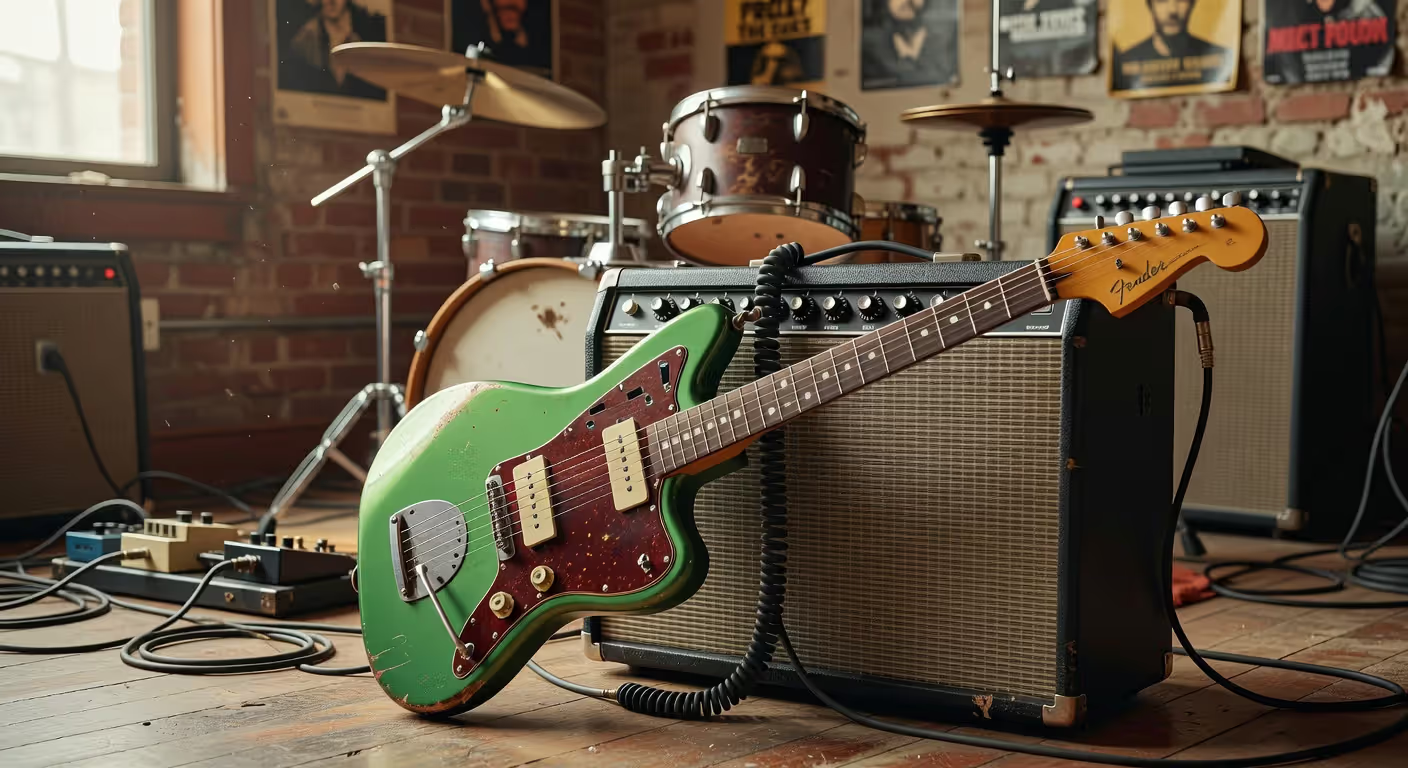
Everything changed in the 1980s and 1990s. Punk, new wave, and alternative rock musicians discovered these guitars in pawn shops and used gear stores. They were affordable, looked different from the classic rock staples, and had a bright, jangly tone that cut through distortion beautifully.
Sonic Youth, The Cure, Dinosaur Jr., and countless other bands made offset guitars their signature instruments. Kurt Cobain's left-handed Jaguar became one of the most photographed guitars in rock history. By the mid-1990s, offset models had gone from forgotten Fender experiments to symbols of alternative music culture.
Author: Miles Arbordale;
Source: lamat-records.com
Key Characteristics That Define Offset Guitars
Several design elements consistently appear across offset guitar models, setting them apart from standard body styles.
The body contours are deeper and more sculptured than you'll find on a Strat or Tele. These curves aren't just cosmetic—they create comfortable arm and rib rests that many players find more ergonomic during long sessions.
Weight distribution shifts forward compared to standard guitars. The asymmetrical body places more mass toward the neck, which can affect how the guitar hangs on a strap. Some players love this balance; others need time to adjust.
Hardware placement differs noticeably. The bridge sits further back on many offset models, and the control plates are often positioned differently. Jazzmasters and Jaguars feature separate rhythm and lead circuits with dedicated controls, giving you essentially two guitars in one.
Scale length variations matter more than many beginners realize. The Jazzmaster's 25.5-inch scale matches a Strat, while the Jaguar's 24-inch scale sits between a Gibson and a Fender. This shorter scale creates less string tension, making bends easier but sometimes causing tuning stability challenges.
| Feature | Offset Guitars | Standard Guitars |
| Body Shape | Asymmetrical waist, extended upper bout, flowing contours | Symmetrical or balanced waist, traditional curves |
| Weight Distribution | Forward-shifted balance point, more neck-heavy | Center-balanced or slightly rear-weighted |
| Typical Scale Length | 24"–25.5" (varies by model) | 24.75" (Gibson) or 25.5" (Fender standard) |
| Hardware Placement | Bridge positioned rearward, complex switching systems | Traditional bridge placement, simpler controls |
| Playing Comfort | Deep body contours, different sitting/standing feel | Standard arm rests, familiar ergonomics |
The characteristics of offset guitars extend to their visual identity too. Chrome plates, matching headstocks, and block inlays became standard on many models, creating a cohesive aesthetic package.
Offset Guitars Compared to Standard Body Styles
The ergonomic differences become obvious once you actually play one. When sitting, an offset guitar often balances differently on your leg. The asymmetrical body can feel more natural or slightly awkward depending on your playing position and body type.
Standing up changes the equation. That forward weight distribution means the neck doesn't dive as much as it might on a rear-heavy Les Paul, but it also means you're supporting more weight with your fretting hand. You'll develop muscle memory for the balance after a few practice sessions.
The aesthetic appeal is undeniable and highly subjective. If you grew up listening to alternative rock, offset guitars probably look "right" to you. If you're more into classic rock or blues, they might seem oddly proportioned. Neither perspective is wrong—guitar aesthetics are deeply personal.

Author: Miles Arbordale;
Source: lamat-records.com
One pattern I see most often is players either immediately connecting with an offset's feel or bouncing off it entirely. There's rarely a middle ground. The best approach is to spend 20 minutes with one before making any decisions.
Sitting versus standing comfort varies more with offset models than standard guitars. Some players find them perfect for studio work but awkward for three-hour gigs. Others experience the opposite. Body shape, strap length, and playing style all factor into the equation.
Tone and Sound Characteristics of Offset Models
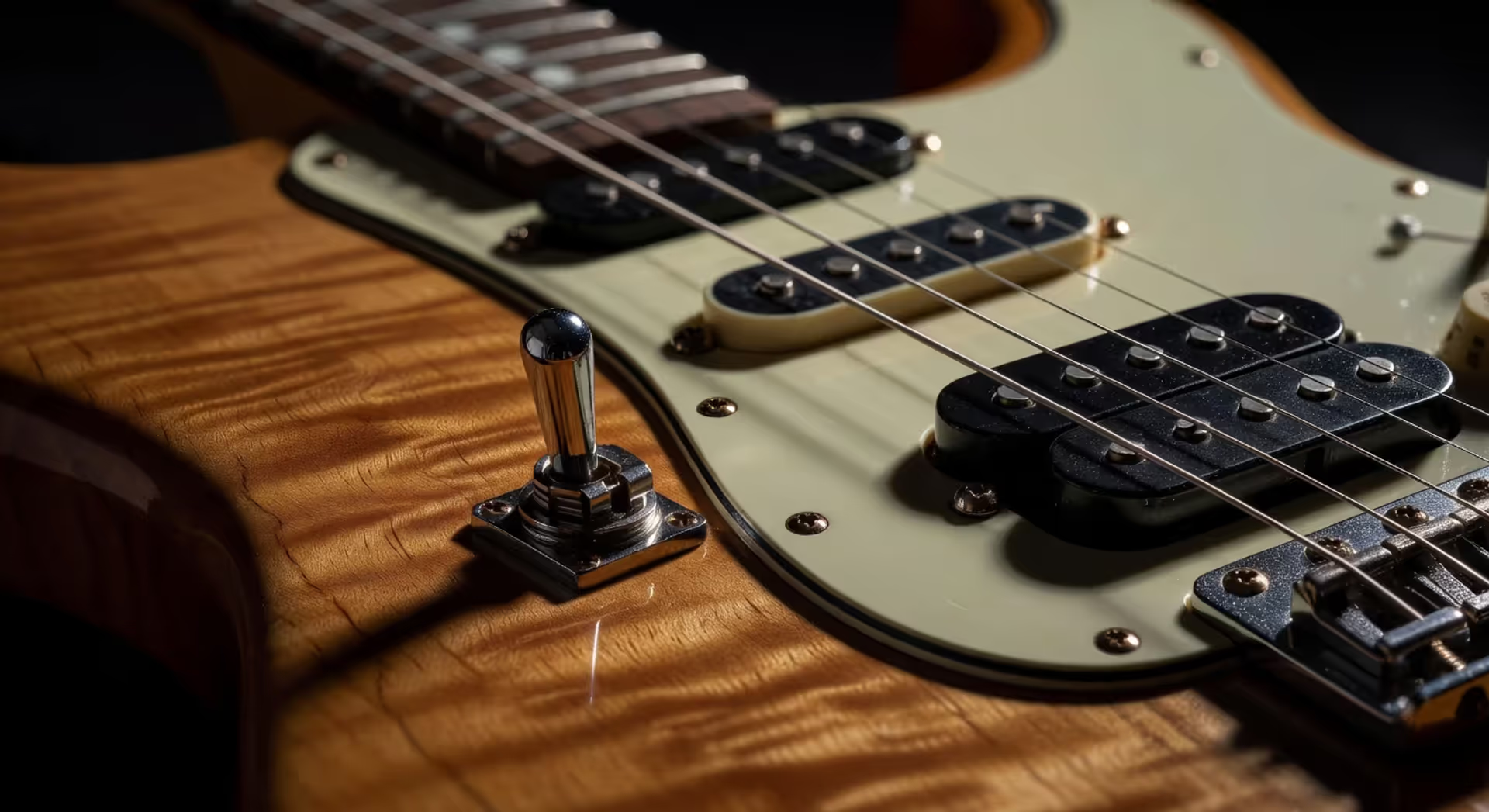
Pickup configurations on classic offset guitars differ significantly from standard Fender single-coils. Jazzmaster pickups are wider and flatter, with a warmer, fuller tone that sits somewhere between a Strat and a P-90. Jaguar pickups are smaller, brighter, and more focused, with excellent note definition even under heavy distortion.
The tonal range of offset guitars leans toward the brighter, more articulate end of the spectrum. They excel at clean, jangly tones and cutting through dense mixes. The treble response is pronounced without being harsh, and the midrange has a unique scooped character that works beautifully for rhythm parts.
Sustain qualities depend heavily on the specific model and setup. The floating tremolo systems on Jazzmasters and Jaguars can sometimes rob sustain compared to hardtail bridges, but proper setup minimizes this issue. The shorter scale length on Jaguars creates a slightly looser, more elastic feel that some players describe as "slinky."
Genre suitability is broader than you might expect. Yes, offset guitars dominate indie, alternative, and surf music. But they've also found homes in post-punk, shoegaze, grunge, and even some metal subgenres. The bright, cutting tone works surprisingly well for heavy music when you need clarity through layers of distortion.
The offset body design isn't just aesthetic rebellion—it's a functional choice that changes how the instrument resonates. The asymmetrical mass distribution affects harmonic overtones in ways that standard symmetrical bodies simply can't replicate, giving you that characteristic shimmer and chime that cuts through any mix.
— Verlinde Thurston
The offset guitar tone has become so associated with specific musical movements that it carries cultural weight beyond its actual sonic properties. When you plug in a Jazzmaster, you're tapping into decades of alternative music history.
Why Offset Guitars Remain Popular Today
The appeal to alternative and indie musicians hasn't faded one bit. If anything, it's intensified as new generations discover the same instruments their musical heroes played. Offset guitars signal a certain aesthetic and musical philosophy that resonates with players who want to stand apart from mainstream rock conventions.
Vintage aesthetics matter more than ever in 2026's retro-obsessed music culture. Offset guitars look simultaneously timeless and distinctly mid-century, hitting that sweet spot of nostalgia without seeming dated. They photograph beautifully, which doesn't hurt in an era where your Instagram feed is part of your musical identity.
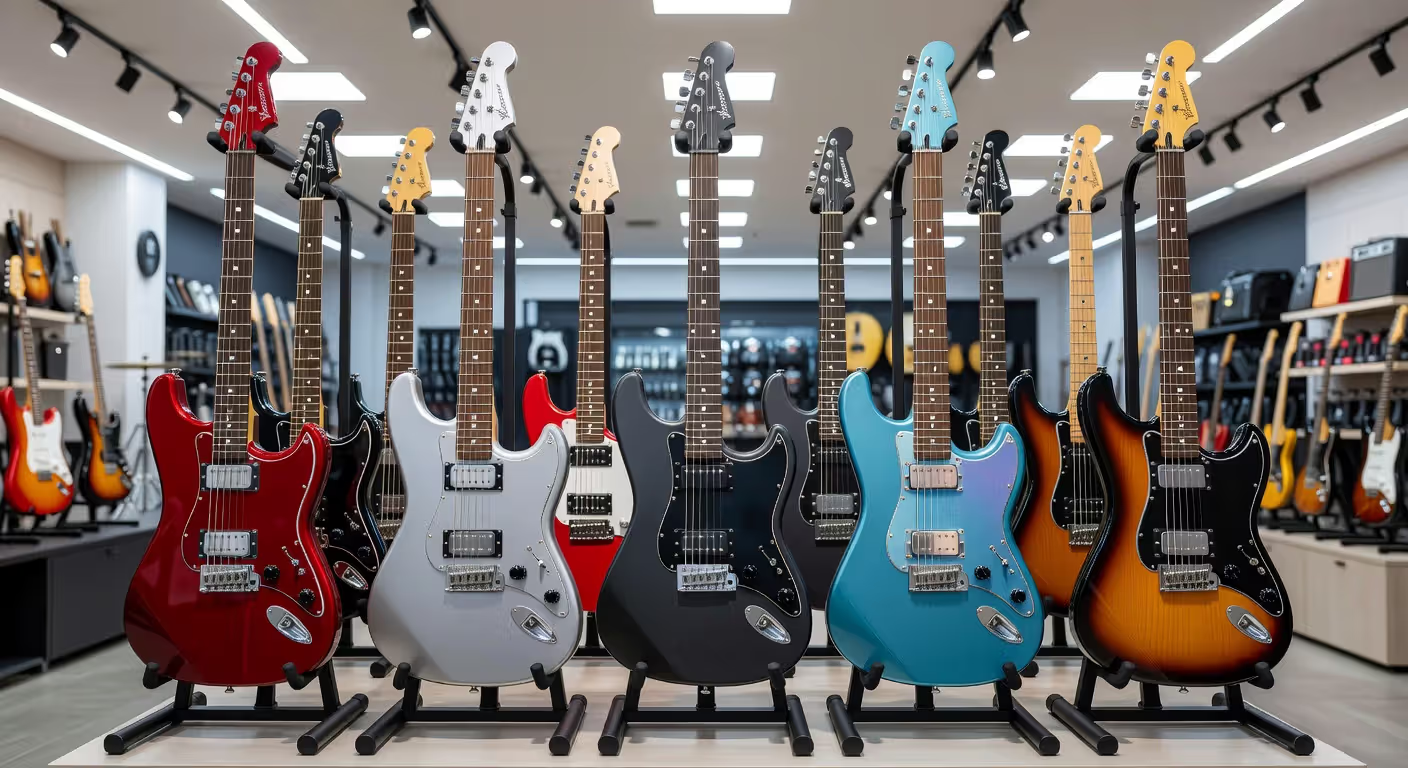
Modern reissues have made these guitars more accessible and reliable than ever. Fender's Player Series, Squier's Classic Vibe models, and boutique builders like Novo and Deimel offer offset designs at every price point. You're no longer hunting through pawn shops hoping to find a playable vintage Jag.
Author: Miles Arbordale;
Source: lamat-records.com
Comfort factors drive many purchasing decisions. Players who've struggled with the traditional Strat or Les Paul ergonomics often find offset guitars solve problems they didn't realize were problems. The deeper body contours reduce fatigue during long sessions, and the different balance point can ease shoulder and back strain.
The simpler option usually wins here: try before you buy. Offset guitars inspire strong reactions, and you won't know which side you fall on until you've spent real time with one.
FAQ: Common Questions About Offset Guitars
Offset guitars aren't for everyone, and that's exactly what makes them special. They offer a distinct playing experience, a recognizable sound, and a visual identity that sets you apart from the Strat-and-Les-Paul crowd. Whether you're drawn to their history, their ergonomics, or simply the way they look on stage, these asymmetrical instruments continue to inspire musicians who want something different. If you've been curious about offset guitars, the best time to try one is now—you'll know within minutes whether you've found your instrument or just confirmed your loyalty to traditional designs.
Related Stories

Read more
Read more

The content on this website is provided for general informational and educational purposes only. It is intended to explain concepts related to music production, recording, mixing, mastering, music industry roles, and distribution.
All information on this website, including articles, guides, and examples, is presented for general educational purposes. Results and success in music production may vary depending on skill level, equipment, and effort.
This website does not provide professional music production services or guarantees of commercial success, and the information presented should not be used as a substitute for consultation with qualified music producers, audio engineers, or music industry professionals.
The website and its authors are not responsible for any errors or omissions, or for any outcomes resulting from decisions made based on the information provided on this website.