
How to Get Paid for Your Music Streams
How to Get Paid for Your Music Streams?

Getting paid for your music streams isn't automatic. You can't just upload a song and watch the money roll in. There's a system—actually, several overlapping systems—that determine whether you'll collect every dollar your streams generate. Most independent artists leave money on the table because they don't understand how streaming income works or which accounts they need to set up. This guide walks you through the entire process, from how platforms calculate payments to the practical steps that ensure you're collecting everything you've earned.
How Streaming Royalties Work
Streaming royalties are payments generated every time someone plays your music on a platform like Spotify or Apple Music. But here's where it gets complicated: streaming doesn't create one type of royalty. It creates two.
First, there's the mechanical royalty. This covers the reproduction of the composition—the underlying song itself, separate from any particular recording. When someone streams your track, the platform is essentially making a copy of that composition, and the songwriter gets paid for that.
Second, there's the performance royalty. This one pays for the public performance of the music. Streaming counts as a public performance, even though it's happening in someone's headphones.
Most platforms pay both types, but they don't pay them to the same place. The mechanical portion typically flows through your distributor to you (if you're the songwriter) or to your publishing administrator. The performance portion goes through Performance Rights Organizations (PROs) like ASCAP, BMI, or SESAC in the US.
There's a third category that applies specifically to non-interactive streaming services like Pandora or SiriusXM: SoundExchange royalties. These are statutory payments for digital performance of the sound recording itself, and they're split between the recording owner and the performing artists.
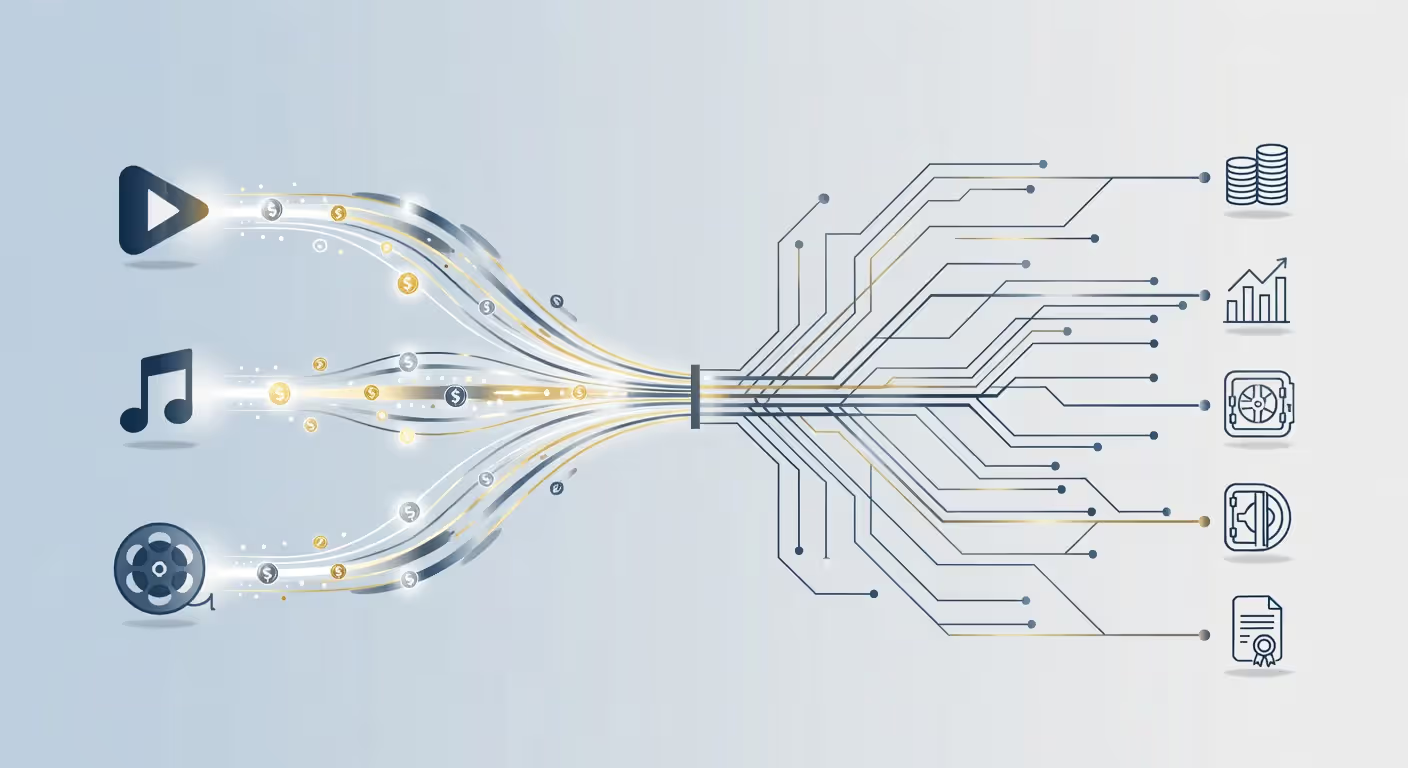
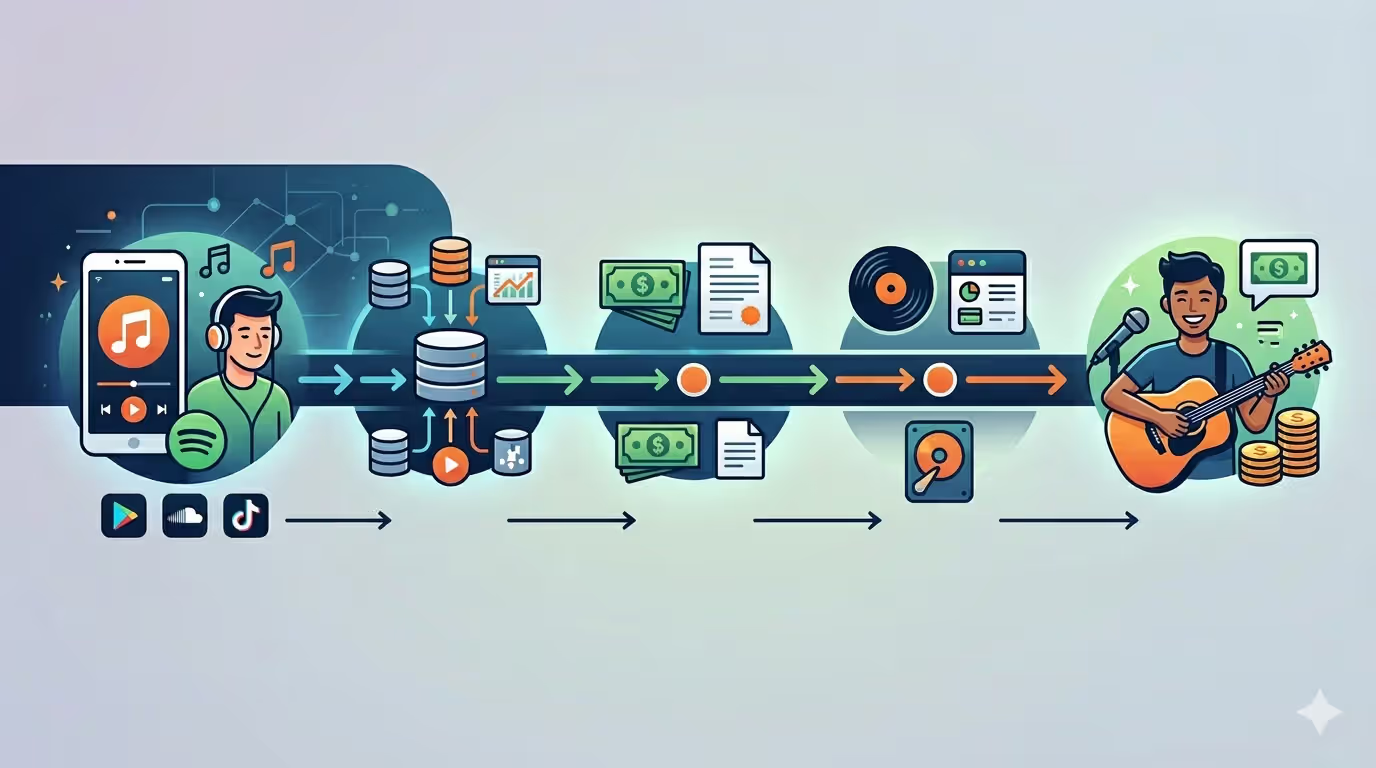
The money flow looks like this: Platform collects subscription and ad revenue → Platform pays out to rights holders based on market share of streams → Money splits between recording owner (via distributor) and songwriters (via PRO or mechanical collection agency) → You receive payment after the platform's reporting period and your collector's processing time.
Most artists don't realize they're entitled to multiple revenue streams from a single play. That's why setting up all your accounts matters.
Author: Declan Wrenford;
Source: lamat-records.com
Per Stream Payment Rates by Platform
The question everyone asks first: "How much does Spotify pay per stream?" The answer varies by platform, and the rates shift based on subscription tier, listener location, and the platform's total revenue pool.
Here's what the major platforms paid on average in 2026:
| Platform | Average Pay Per Stream | Payment Threshold | Payout Schedule |
| Spotify | $0.003–$0.004 | Varies by distributor | Monthly (2–3 month delay) |
| Apple Music | $0.007–$0.010 | Varies by distributor | Monthly (2–3 month delay) |
| Tidal | $0.012–$0.015 | Varies by distributor | Monthly (2–3 month delay) |
| Amazon Music | $0.004–$0.007 | Varies by distributor | Monthly (2–3 month delay) |
| YouTube Music | $0.002–$0.004 | Varies by distributor | Monthly (2–3 month delay) |
| Pandora | $0.001–$0.002 | $10 (SoundExchange) | Quarterly (SoundExchange) |
| Deezer | $0.006–$0.008 | Varies by distributor | Monthly (2–3 month delay) |
These numbers represent what reaches the recording owner through a distributor. They're not fixed rates—streaming platforms use a pro-rata model where your payout depends on your share of total streams during a given period.
Apple Music and Tidal consistently pay more per stream because they have higher subscription prices and no free tier diluting the revenue pool. YouTube Music pays less because a large portion of streams come from ad-supported users.
One thing most artists miss: premium subscriber streams pay significantly more than free-tier streams. A thousand plays from paying Spotify users might earn you $4, while the same number from free users might only generate $1.50.
The pattern I see most often is artists comparing their per-stream rates to these averages and panicking when their numbers come in lower. Remember that these are averages across all territories. Streams from listeners in the US, UK, and Canada pay more than streams from countries with lower subscription prices.
Setting Up Your Accounts to Collect Streaming Revenue
This is where most money gets lost. You can have a million streams, but if you haven't set up the right accounts, you won't collect all the royalties those streams generate.
Music Distributors and Aggregators
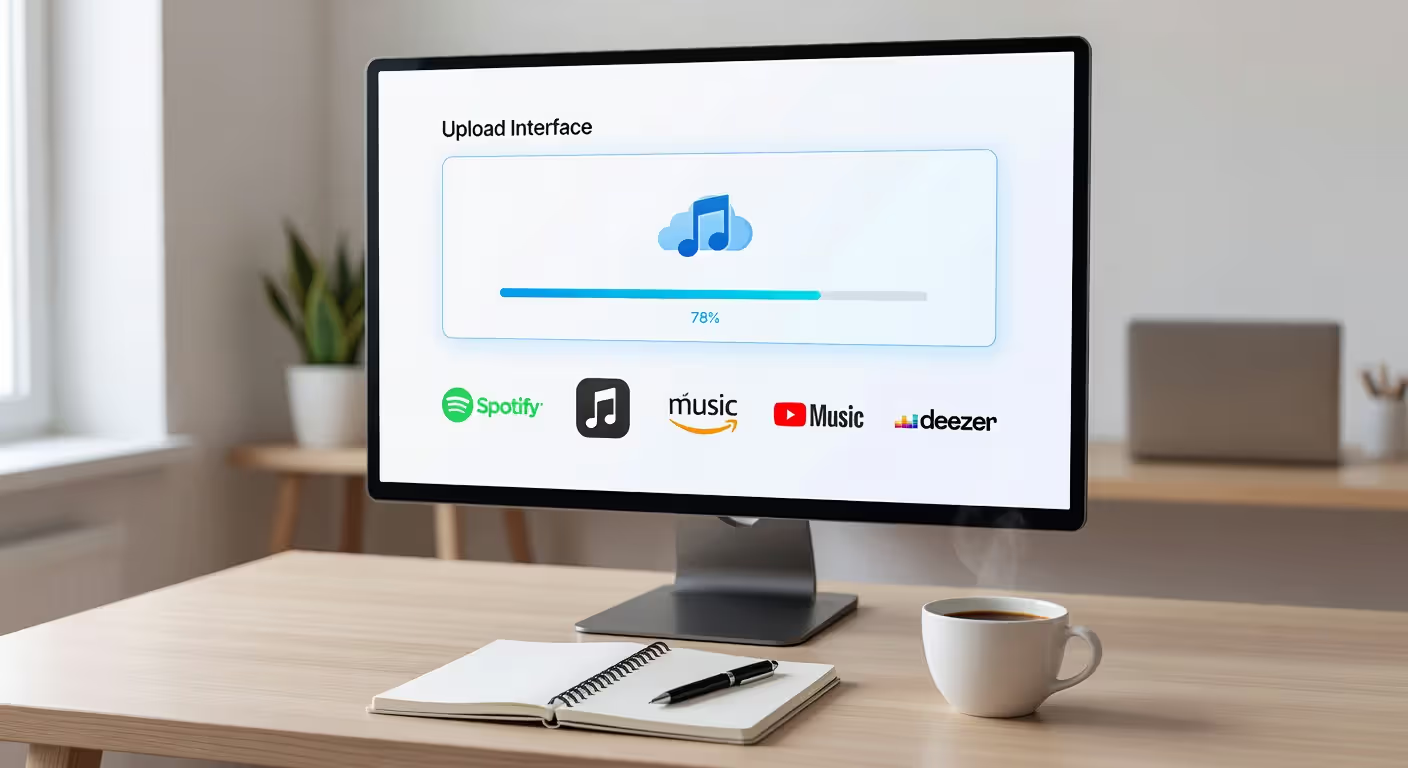
Your distributor is your gateway to streaming platforms. You can't upload directly to Spotify or Apple Music—you need a middleman.
Popular options include DistroKid, CD Baby, TuneCore, and Amuse. They differ in pricing models (annual fee vs. commission) and services offered, but they all do the same basic job: deliver your music to platforms and collect your recording royalties.
When choosing a distributor, check these points:
- Do they take a commission or charge a flat fee?
- How quickly do they pay out?
- What's their minimum payout threshold?
- Do they collect YouTube Content ID revenue?
- Can you keep 100% of your rights?
DistroKid charges an annual fee but lets you keep all your royalties and upload unlimited tracks. CD Baby takes a 9% commission but offers more hands-on services. The simpler option usually wins here—most independent artists just need reliable delivery and fast payouts.
Author: Declan Wrenford;
Source: lamat-records.com
Performance Rights Organizations (PROs)
Your PRO collects performance royalties from streaming platforms, radio, venues, and anywhere else your music gets publicly performed.
In the US, you'll register with ASCAP, BMI, or SESAC. You can't join multiple PROs—pick one. ASCAP and BMI are open to all songwriters and charge small membership fees. SESAC is invitation-only.
You need to register both as a songwriter and as a publisher (even if you're self-published). This ensures you collect both the writer's share and the publisher's share of performance royalties. Most artists only register as songwriters and lose 50% of their performance income.
The process is straightforward:
- Create your songwriter account
- Create your publishing entity (can be as simple as "[Your Name] Publishing")
- Register each song with complete metadata
- Link your IPI/CAE number to your distributor
PROs don't track streaming data themselves—they receive reports from the platforms. That's why accurate metadata matters so much.
SoundExchange Registration
SoundExchange collects royalties from non-interactive digital streaming services—platforms where users can't pick specific songs on demand. This includes Pandora, SiriusXM, iHeartRadio, and similar services.
These royalties are separate from what your distributor collects. If you don't register with SoundExchange, this money sits in their unclaimed account.
Registration is free at soundexchange.com. You'll need to:
- Register as both a rights owner and a featured artist
- Provide your IPI/IPN number
- Submit your catalog information
- Set up your payment details
SoundExchange pays 45% to the rights owner, 50% to featured artists, and 5% to session musicians. If you own your master recordings and you're the performer, you'll collect 95% of the total.
One mistake I see constantly: artists register but never update their catalog. When you release new music, add it to your SoundExchange account. Otherwise, those royalties go unclaimed.
Common Mistakes That Prevent Artists from Getting Paid
Even with all the right accounts set up, artists lose streaming income through avoidable errors.
Missing or incorrect metadata is the biggest culprit. If your song's ISRC code, songwriter information, or publishing split percentages are wrong, royalties can't be matched to your account. They end up in a black box—collected by the platform but never distributed because they can't identify the rightful owner.
Always double-check these fields before uploading:
- ISRC codes (unique to each recording)
- ISWC codes (unique to each composition)
- Songwriter names (spelled exactly as registered with your PRO)
- Split percentages (must add up to 100%)
- Publisher information
Not registering works with your PRO is another common gap. Your distributor doesn't automatically notify your PRO about new releases. You need to manually register each song with your performance rights organization, including complete songwriter and publisher information.
Splitting royalties incorrectly causes payment delays and disputes. When multiple songwriters collaborate, you need to agree on splits before release and ensure everyone's information is filed correctly. If your metadata says you wrote 50% but your PRO registration claims 100%, platforms won't pay out until the conflict is resolved.
Ignoring publishing rights leaves money on the table. If you write your own music, you own both the recording and the composition. Many artists only set up collection for the recording side through their distributor and never touch the publishing side. That's potentially half your streaming income unclaimed.
Choosing the wrong distributor can cost you in hidden fees or delayed payments. Some distributors have high payout thresholds ($100+), meaning your earnings sit in their account until you hit that minimum. Others take commissions on top of their fees. Read the terms carefully.
The biggest issue we see is artists who've never registered their songs with a PRO or mechanical rights organization. They're collecting maybe 30-40% of what they're actually owed. Streaming generates multiple royalty types from a single play, and if you're not set up to collect all of them, that money just sits there unclaimed.
— Farner Kristin
How Long It Takes to Receive Streaming Payouts
Patience is required. Streaming income doesn't arrive immediately after someone plays your song.
Here's the typical timeline: Your song streams in January → Platform closes the month and calculates royalties in February → Platform reports data to your distributor in late February or early March → Distributor processes and pays you in March or April.
That's a two-to-three-month delay between the stream and the payment. Some distributors are faster, but most follow this schedule because they're waiting on the platforms to report and pay them first.
PRO payments take even longer. Performance royalties can take six to nine months to reach you because PROs collect from multiple sources, process massive amounts of data, and distribute quarterly or semi-annually.
SoundExchange pays quarterly, with a similar three-to-six-month lag between performance and payment.
Payment thresholds also affect timing. If your distributor requires a $50 minimum and you're earning $15 per month, you'll wait over three months for your first payout. Once you hit the threshold, payments become regular.
What affects timing:
- Platform reporting speed (varies by service)
- Distributor processing schedule (monthly, quarterly, or on-demand)
- Minimum payout thresholds
- Payment method (PayPal is faster than checks or wire transfers)
- Metadata accuracy (errors cause delays while issues are resolved)
One counterintuitive point: faster isn't always better. Distributors that pay quickly sometimes sacrifice accuracy. I'd rather wait an extra two weeks and get the correct amount than receive a rushed payment that's missing royalties.
Author: Declan Wrenford;
Source: lamat-records.com
Maximizing Your Streaming Income
Getting paid is one thing. Getting paid more requires strategy.
Playlist placement multiplies your streams exponentially. A single placement on a major editorial playlist can generate hundreds of thousands of plays. Focus on getting your music in front of Spotify's editorial team by pitching through Spotify for Artists at least two weeks before release. User-generated playlists matter too—they're easier to land and can snowball into editorial consideration.
Release consistency keeps you in the algorithm's favor. Platforms reward artists who release regularly because it indicates an active, engaged audience. Releasing a single every 4-6 weeks performs better than dropping an album once a year and going silent.
Proper metadata isn't just about getting paid—it's about getting discovered. Genre tags, mood descriptors, and accurate song information help platforms recommend your music to the right listeners. The more streams you generate, the more you earn.
Claiming all revenue streams means setting up every collection account: distributor, PRO, SoundExchange, and a publishing administrator if you're serious about composition royalties. Each one captures a different slice of your streaming income.
International collection matters more than most artists realize. If your music streams in Europe, you're entitled to neighboring rights royalties that US-based collection doesn't cover. Services like Songtrust or Sentric can help collect these international publishing royalties.
Pre-save campaigns boost your first-week numbers, which signals to platform algorithms that your release is worth promoting. Strong opening week performance increases your chances of editorial playlist placement.
Collaborate strategically. Features with artists who have established audiences expose your music to new listeners and generate streams from their fanbase.
The reality is that streaming income alone won't support most artists. But it's one piece of a larger revenue picture that includes sync licensing, merchandise, live performance, and direct fan support. Treat streaming as a discovery tool and a passive income source, not your primary revenue stream.
FAQ: Getting Paid from Music Streaming Questions Answered
Getting paid for your music streams requires more setup than most artists expect, but once your accounts are in place, the income flows automatically. Register with a distributor, join a PRO, sign up for SoundExchange, and keep your metadata accurate. Those steps ensure you're collecting every royalty type your streams generate. The money won't make you rich overnight, but it adds up—and it's yours to claim.
Related Stories
Read more
Read more

The content on this website is provided for general informational and educational purposes only. It is intended to explain concepts related to music production, recording, mixing, mastering, music industry roles, and distribution.
All information on this website, including articles, guides, and examples, is presented for general educational purposes. Results and success in music production may vary depending on skill level, equipment, and effort.
This website does not provide professional music production services or guarantees of commercial success, and the information presented should not be used as a substitute for consultation with qualified music producers, audio engineers, or music industry professionals.
The website and its authors are not responsible for any errors or omissions, or for any outcomes resulting from decisions made based on the information provided on this website.