
What Owning Your Masters in Music Means for Artists
What Owning Your Masters in Music Means for Artists?

Every song you hear exists in two worlds. The recording itself. And the composition behind it.
Most artists don't realize they've signed away half their future until it's too late. You might write, perform, and fund your own track—then discover someone else controls how it's used, where it appears, and how much you earn from it. That someone owns your masters.
Understanding master recording ownership isn't just industry jargon. It's the difference between building wealth from your catalog and watching others profit from your work for decades. Let's break down what owning your masters actually means and why it matters more now than ever.
What Are Master Recordings in the Music Industry
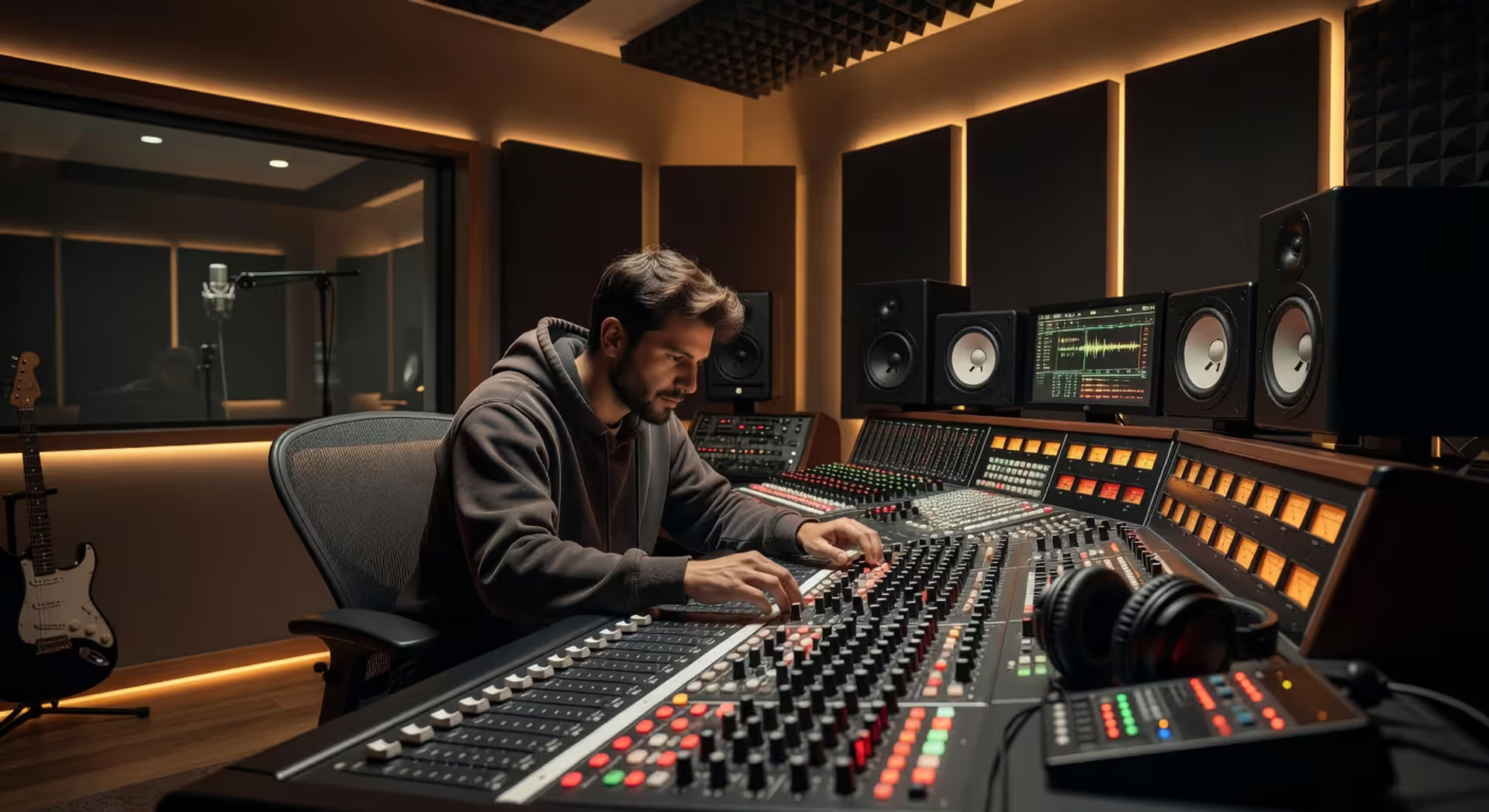
A master recording is the original, finalized version of a song. It's the actual audio file—the specific performance captured in the studio. When Drake's voice hits that first note, when the bass drops, when the final mix gets approved—that's the master.
Here's what trips people up: the master isn't the song itself. It's one specific recording of that song. You could record the same composition ten different ways and create ten separate masters.
Traditionally, record labels owned masters. The setup was simple: labels paid for studio time, producers, marketing, and distribution. In exchange, they kept ownership of the recordings. Artists got an advance (essentially a loan) and royalties after recouping costs.
This model dominated for decades because labels controlled the expensive infrastructure artists needed. Recording equipment cost hundreds of thousands. Distribution meant physical manufacturing and retail relationships. Radio promotion required industry connections most artists didn't have.
The power dynamic has shifted dramatically. Home recording technology costs a fraction of what it once did. Distribution happens through digital platforms anyone can access. An artist can now create, release, and promote music without ever entering a traditional label office.
Author: Lena Corwyn;
Source: lamat-records.com
But old contract structures persist. Many artists still sign away master recording ownership explained in dense legal language they don't fully grasp. They assume the advance is "free money" rather than a debt against future earnings. By the time they understand ownership of recorded music, they've already transferred it.
Why Owning Masters Matters for Your Music Career
The financial math is stark. When you own your masters, you keep 100% of master recording royalties. When a label owns them, you typically get 15-25% as an artist royalty—and only after recouping your advance.
Let's say a song generates $100,000 in streaming revenue. If you own the master, that's your $100,000 (minus distribution fees, usually 10-15%). If a label owns it under a standard deal, you might see $20,000—and only after paying back your advance, marketing costs, and other recoupable expenses.
The gap widens over time. Hit songs generate income for decades through streaming, licensing, and sync placements. Owning your masters means that long-tail revenue flows to you, not to a company that fronted you money years ago.
Creative control matters just as much. Master owners decide how recordings get used. Want to pull your music from a streaming service? Owner's choice. Refuse a commercial license because it conflicts with your values? Owner's call. Allow your song in a film or TV show? You guessed it.
Licensing creates opportunities labels might ignore. A song placed in a popular Netflix series can generate $20,000-$100,000 per episode. Commercials pay even more—sometimes $50,000-$500,000 depending on usage and brand. Video games, podcasts, YouTube creators—they all need music and pay for it.
I see artists discover these opportunities years after release, only to learn they can't capitalize without label approval. Or worse, the label licenses the track and the artist gets their small royalty percentage while the label pockets the bulk of the sync fee.
Why owning masters matters extends to your legacy and estate planning. Masters are assets. They can be sold, used as collateral for loans, or passed to heirs. Artists who own their catalogs build generational wealth. Those who don't leave their families with royalty checks they can't control.
Master Recording Ownership Explained vs Publishing Rights
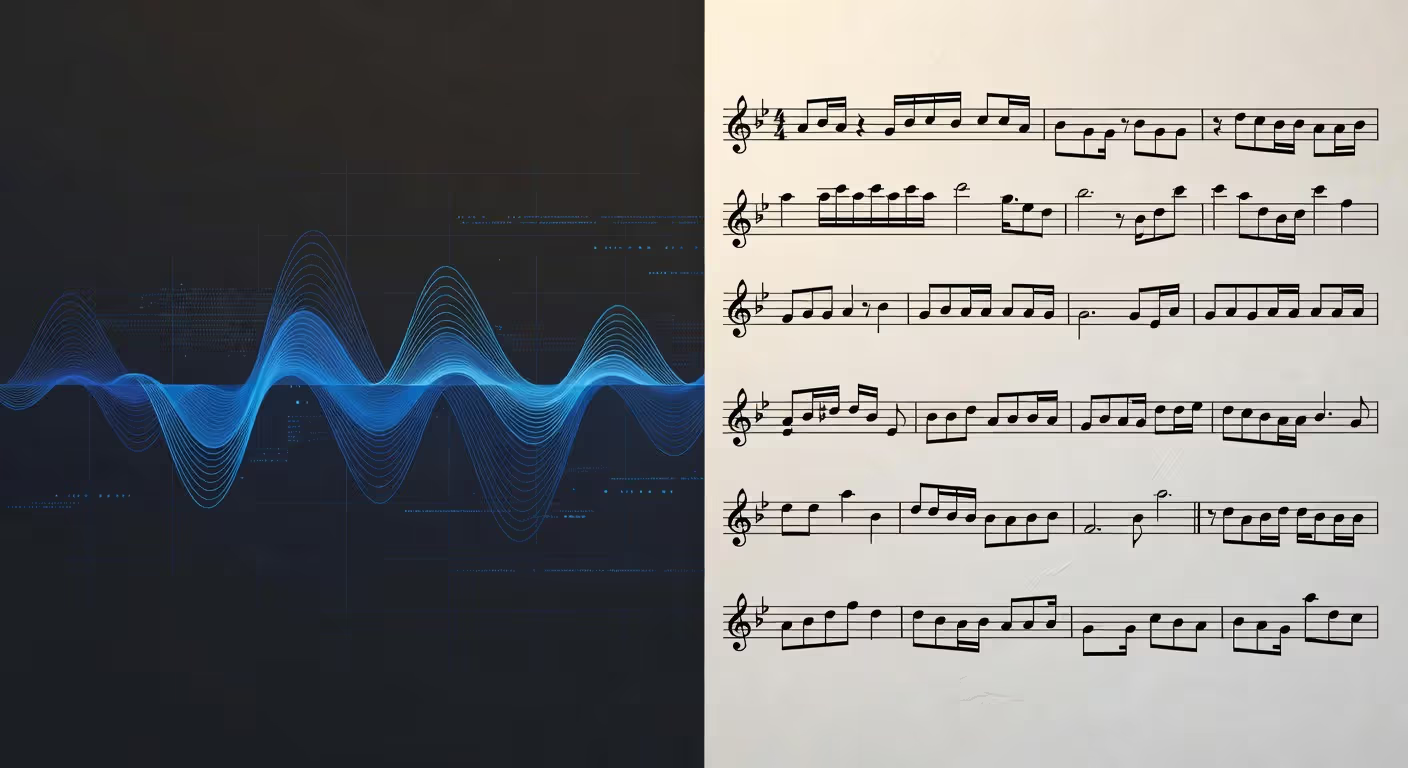
This confuses nearly everyone at first. Music has two separate copyright systems running in parallel.
What Masters Control
Masters cover the recording itself—the audio you hear. When someone streams your song on Spotify, downloads it from Apple Music, or a DJ plays it at a club, that's a master recording use. The master owner collects mechanical and performance royalties tied to that specific recording.
Master rights control:
- Physical and digital sales
- Streaming revenue
- Public performance of the recording
- Sync licensing (when your recording appears in visual media)
- Sampling (when someone uses a piece of your audio)
What Publishing Controls
Publishing covers the underlying composition—the melody, lyrics, and song structure. Even if your recording didn't exist, the song itself would still have value. Publishing rights generate income when anyone records or performs that composition, not just when your version gets played.
Publishing rights control:
- Cover versions by other artists
- Sheet music sales
- Public performances of any version
- Mechanical royalties when the composition is reproduced
- Sync licensing of the composition (separate from master sync)
Here's the key distinction: if Taylor Swift writes a song and records it, two copyrights exist. One for her recording (master). One for her composition (publishing). If another artist covers that song, they need publishing permission but create their own new master.
| Aspect | Master Rights | Publishing Rights |
| What it controls | The specific recorded audio performance | The underlying composition (melody, lyrics, chords) |
| Who typically owns it | Record labels or independent artists | Publishers, songwriters, or PROs (split among writers) |
| Revenue sources | Streaming, downloads, physical sales, recording sync fees | Cover versions, sheet music, composition sync fees, performance royalties |
| Licensing uses | Film/TV/commercial placement of the recording, sampling | Any use of the song composition regardless of who performs it |
| How royalties are collected | Distributors, record labels, direct from platforms | PROs (ASCAP, BMI, SESAC), mechanical rights organizations, publishers |
| Typical artist split | 15-25% (label deal) or 85-90% (independent) | 50% (if solo writer) or split among co-writers, minus publisher cut |
The pattern I see most often is artists focusing entirely on masters while ignoring publishing. Both matter. You want to own or control both whenever possible.
Author: Lena Corwyn;
Source: lamat-records.com
How Artists Can Retain Rights to Master Recordings
The simplest path: record independently. Pay for studio time yourself, hire producers as work-for-hire, and distribute through services like DistroKid, TuneCore, or CD Baby. You own what you create and fund.
But independent recording requires capital. Studio time, mixing, mastering, and production can cost $5,000-$50,000 per song depending on quality and location. Most emerging artists don't have that lying around.
That's where creative deal structures come in. Some artists negotiate to keep masters even when labels fund recording. This usually means accepting a smaller advance or higher revenue split in the label's favor for other services like marketing and promotion.
Master lease agreements offer a middle ground. The label gets exclusive rights to your master for a set period—typically 5-10 years—then ownership reverts to you. You get funding and support now, ownership later. The label recoups their investment during the lease term.
This beats traditional deals where labels own masters in perpetuity. Time-limited licenses mean you regain control during your career, not decades after you've stopped performing.
Some contracts include reversion clauses. If the label doesn't recoup their investment within a certain timeframe, or if the recording stops generating minimum revenue, rights revert to the artist. Always negotiate for these terms.
Buying back masters is possible but expensive. Labels typically want 5-10 times annual revenue from a catalog. If your old recordings generate $50,000 yearly, expect to pay $250,000-$500,000 to reclaim them. Still, many successful artists consider it worthwhile.
Joint ventures split ownership. You and the label each own a percentage—maybe 50/50, maybe 70/30 in your favor. Both parties share costs and revenues proportionally. This works when you have leverage and bargaining power.
The simpler option usually wins here: if you can afford to record independently, do it. Retaining your masters from day one beats trying to negotiate them back later.
Real Examples of Artists Controlling Their Recordings
Taylor Swift's masters battle became the most visible ownership fight in recent memory. When her former label sold her first six albums' masters to Scooter Braun in 2019, she couldn't buy them back despite wanting to. Her solution? Re-record everything.
She's systematically releasing "Taylor's Version" of each album, creating new masters she owns. Fans stream the new versions, reducing revenue from the old masters and shifting control. It's working—her re-recordings regularly outsell the originals.
Chance the Rapper built his entire career on ownership. He turned down multiple major label offers, released music independently, and kept 100% of his masters. His approach proved you could win Grammys, sell out arenas, and maintain creative control without signing traditional deals.
Frank Ocean famously fulfilled his Def Jam contract with the visual album "Endless," then immediately released "Blonde" independently through his own label. He used the major label's resources for one project while keeping ownership of the work he truly cared about.
Master ownership isn't just about money—it's about self-determination. An artist who controls their recordings controls their narrative, their legacy, and their ability to build sustainable wealth. In 2026, there's no excuse for talented artists to sign away these rights without fully understanding what they're giving up.
— Wallace Donald
Jay-Z bought back his masters from Def Jam early in his career, recognizing their long-term value. That catalog became part of his billion-dollar empire. He later negotiated ownership terms for other artists through Roc Nation, helping them avoid the mistakes he witnessed.
Russ records, mixes, masters, and releases everything himself. He's openly shared his streaming numbers and revenue, proving independent artists can generate millions while maintaining full ownership. His transparency has inspired thousands of artists to reconsider traditional label deals.
These examples share a pattern: artists who control their recordings make strategic decisions based on long-term value, not short-term advances. They understand that owning your masters in music means owning your future.
Author: Lena Corwyn;
Source: lamat-records.com
Common Mistakes Artists Make About Retaining Your Masters
The biggest mistake? Assuming you own recordings you paid to create. You hired a producer, rented studio time, and covered all costs—so the master is yours, right? Not necessarily.
If your producer agreement doesn't explicitly state you're hiring them as work-for-hire, they might own or co-own the master. Same with engineers, session musicians, or anyone who contributed creatively. Verbal agreements mean nothing when ownership disputes arise.
Always get written work-for-hire agreements before recording. One sentence can save you years of legal headaches: "All recordings created during this session are works made for hire, and the hiring party retains full ownership of all master recordings."
Artists sign production deals thinking they're just getting studio access. These agreements often include language transferring master ownership to the production company. You think you're renting a studio—you're actually signing away your recordings.
Read every contract. Better yet, have an entertainment attorney read it. The $500-$1,500 you spend on legal review can save you hundreds of thousands in lost revenue.
Many artists ignore reversion clauses or don't negotiate for them. If your contract doesn't specify when or how you can reclaim masters, you probably never will. Labels won't voluntarily return valuable assets.
Some artists focus entirely on advance size without considering ownership terms. A $100,000 advance with no master ownership often generates less lifetime value than a $20,000 advance with ownership or reversion rights.
Another common error: not registering your works properly. File copyright registrations for your masters with the U.S. Copyright Office. Register with SoundExchange for digital performance royalties. Join a PRO (ASCAP, BMI, or SESAC) for performance royalties. These administrative steps protect your rights and ensure you get paid.
Artists also underestimate the value of old recordings. That song you released five years ago might seem irrelevant now, but it could get licensed for a commercial or go viral on TikTok. Masters generate income for decades—don't give them away just because they're not currently popular.
FAQ: Ownership of Recorded Music Questions Answered
Master ownership shapes your entire music career trajectory. It determines how much you earn, what creative control you maintain, and what assets you build over time. The industry has shifted—technology and distribution democratized access, and artists now have real choices about how they structure their careers. You don't need a traditional label deal to succeed, and if you do partner with a label, you can negotiate terms that protect your long-term interests. Educate yourself, read every contract, and remember that masters generate income for decades. The decisions you make today about ownership will affect your financial reality for the rest of your life.
Related Stories
Read more

Read more

The content on this website is provided for general informational and educational purposes only. It is intended to explain concepts related to music production, recording, mixing, mastering, music industry roles, and distribution.
All information on this website, including articles, guides, and examples, is presented for general educational purposes. Results and success in music production may vary depending on skill level, equipment, and effort.
This website does not provide professional music production services or guarantees of commercial success, and the information presented should not be used as a substitute for consultation with qualified music producers, audio engineers, or music industry professionals.
The website and its authors are not responsible for any errors or omissions, or for any outcomes resulting from decisions made based on the information provided on this website.