
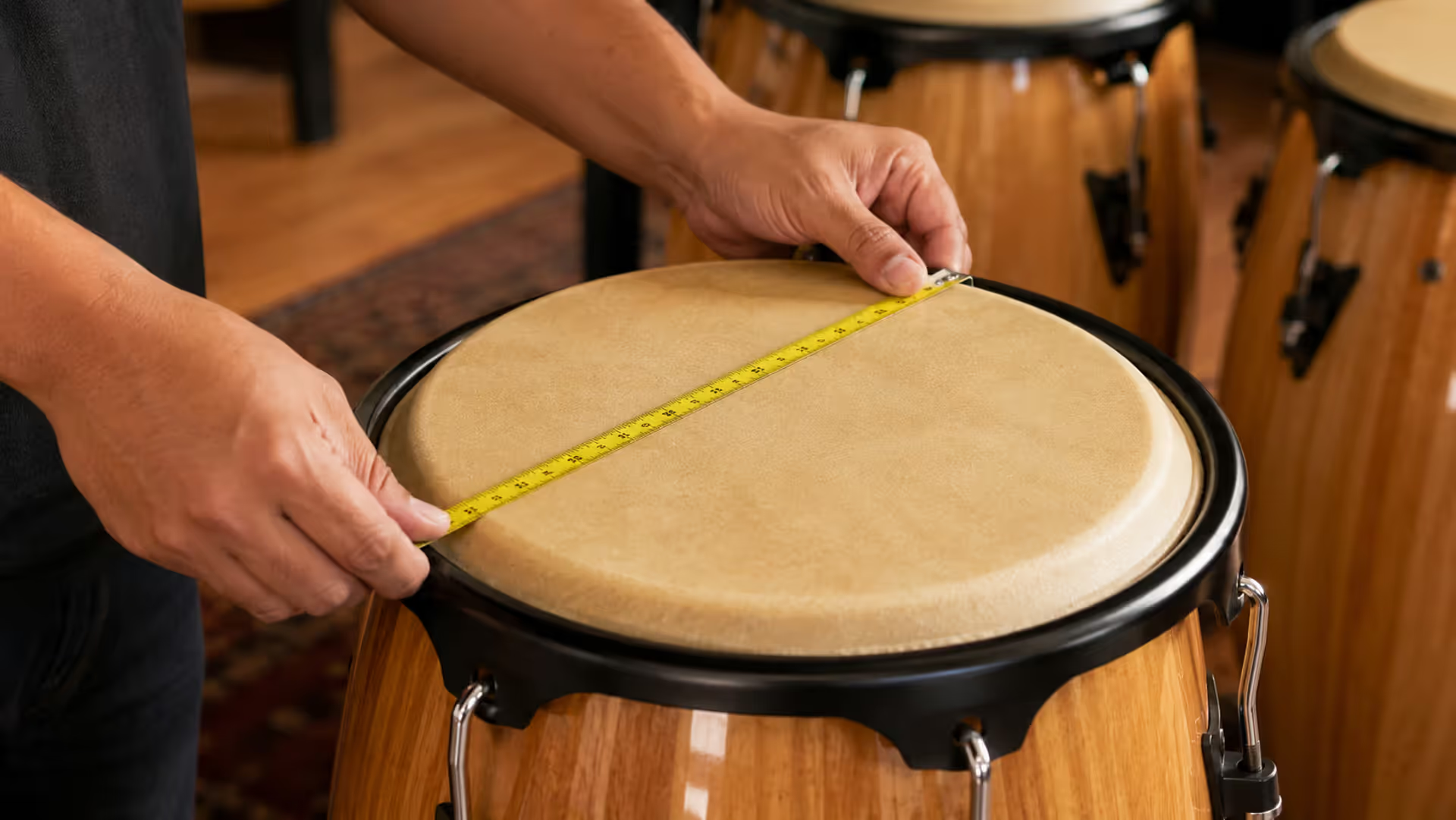
How to Measure Conga Heads for the Perfect Fit
How to Measure Conga Heads for the Perfect Fit?

Measuring conga heads isn't rocket science, but it's one of those things you can't afford to mess up. Order the wrong size and you'll either have a head that won't fit at all or one that sits loose and sounds terrible. The good news? With a tape measure and five minutes, you can nail the exact dimensions you need. This guide walks you through every step, from understanding what to measure to avoiding the pitfalls that trip up even experienced drummers.
Why Accurate Conga Head Measurements Matter
A poorly fitted drumhead creates problems you'll hear immediately. Too small, and it won't reach the bearing edge properly—you'll struggle with tuning and the drum will sound choked. Too large, and you're left wrestling with excess material that bunches up or creates uneven tension across the playing surface.
Sound quality suffers first. When a head doesn't sit flush on the bearing edge, certain frequencies get muffled while others ring out harshly. You lose that warm, resonant tone congas are known for. The drum might even produce odd overtones or buzzing that no amount of tuning can fix.
Then there's the durability issue. A mismatched head experiences uneven stress during installation. Some areas stretch too much while others barely engage. This imbalance shortens the head's lifespan dramatically—what should last years might fail in months.
Fitting a new drumhead correctly also affects playability. An improperly sized head changes the feel under your hands. The rebound feels off, slaps don't crack the way they should, and open tones lose clarity. Professional players can tell instantly when something's wrong.
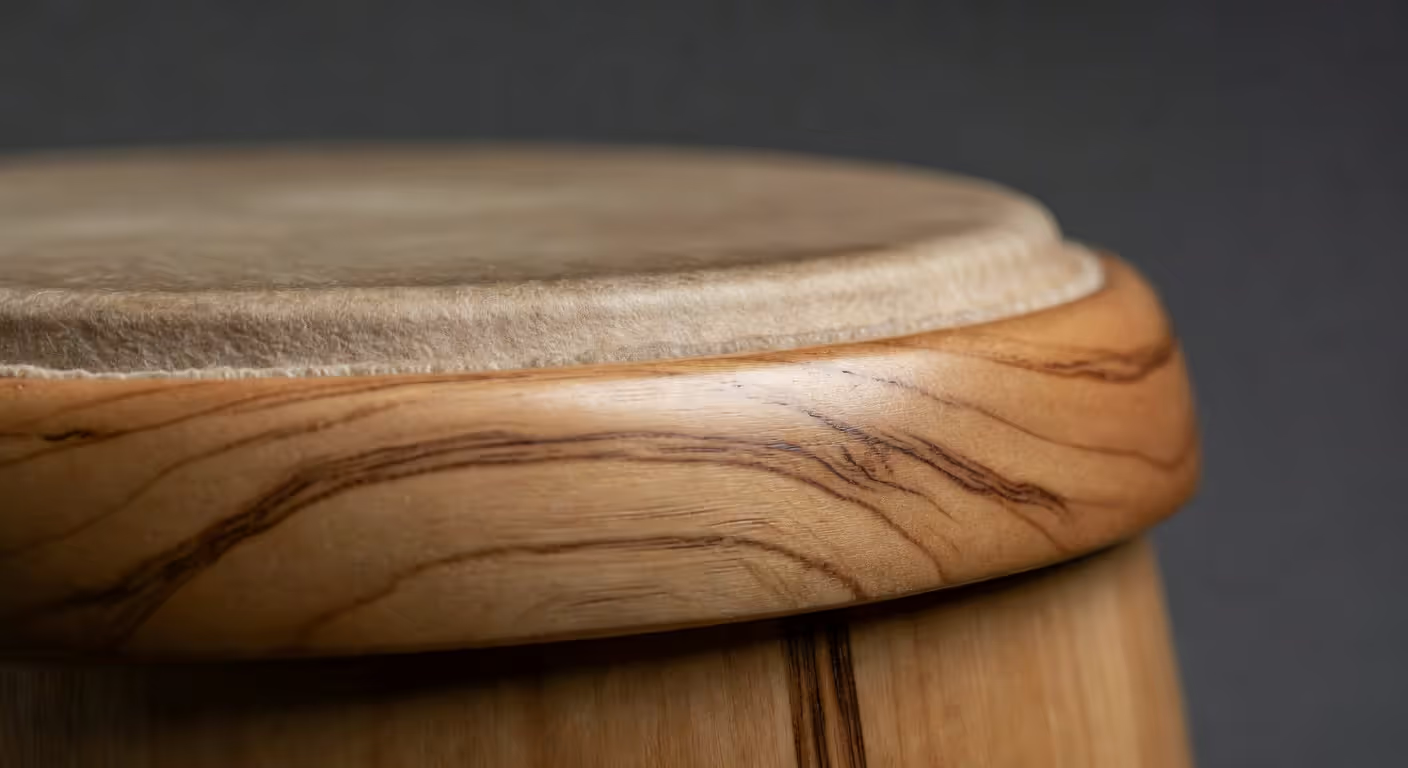
The bearing edge matters more than most people realize. This is the top rim of the drum shell where the head actually sits. Even a millimeter off in your conga drum dimensions can mean the difference between a perfect fit and a frustrating installation.
Author: Savannah Quillmere;
Source: lamat-records.com
Tools You Need to Measure Conga Drumheads
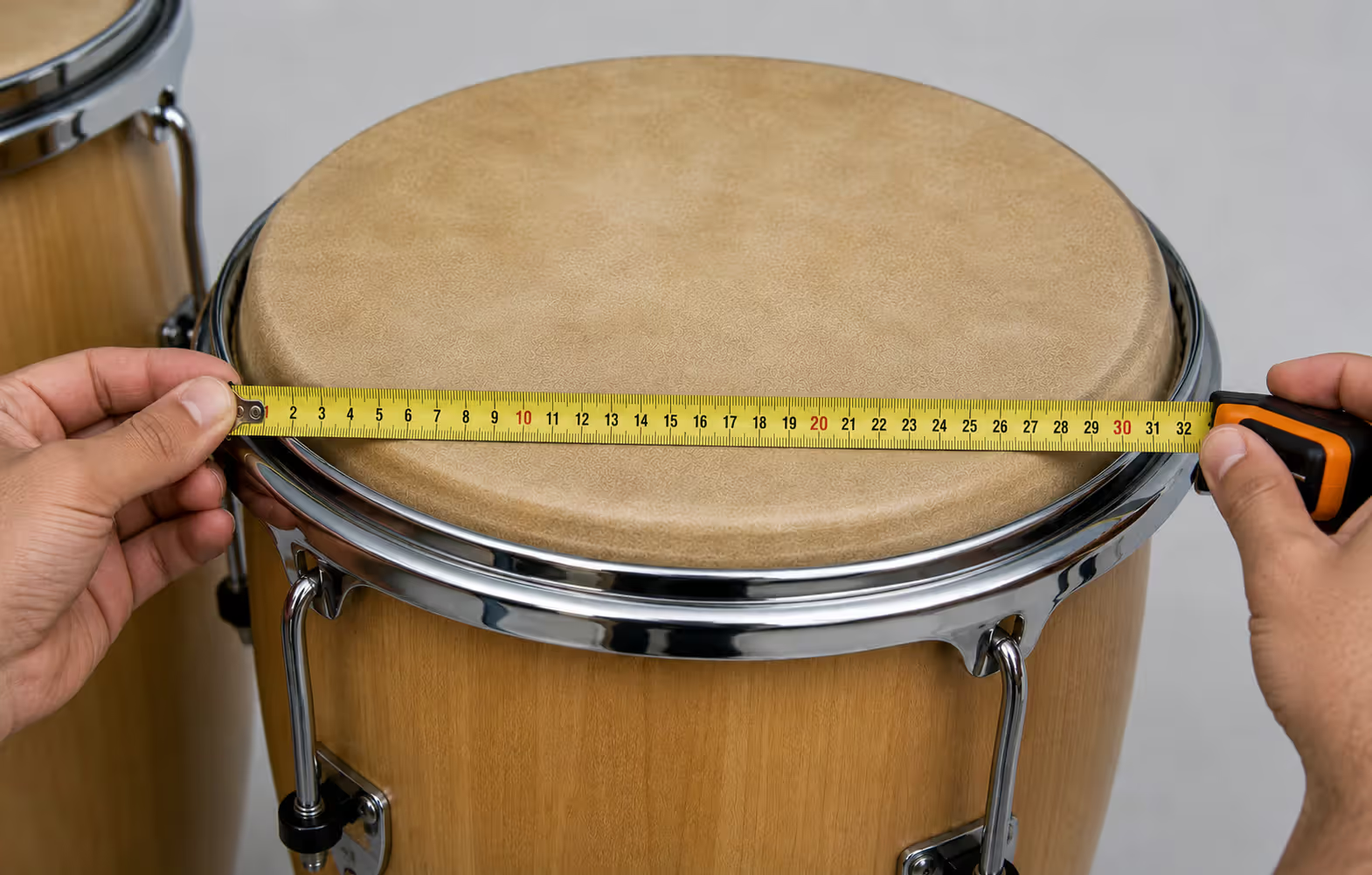
You don't need a toolbox full of equipment. A standard cloth tape measure works fine for most situations. The flexible kind tailors use is perfect—it wraps around curves easily and gives accurate readings on both flat and rounded surfaces.
For precision work, dial calipers are the gold standard. They measure down to fractions of a millimeter and eliminate guesswork. If you're measuring high-end drums or ordering custom heads, calipers are worth the investment. You can pick up a decent pair for under thirty dollars.
A rigid ruler works in a pinch, but it's tricky. You need to position it exactly across the drum's center point, and any angle throws off your measurement. I've seen people swear their drum is 11 inches when it's actually 11.75 inches—all because the ruler wasn't perfectly aligned.
Here's a drumhead measurement tip most people miss: measure twice with different tools if possible. Your tape measure might read 11 inches while calipers show 11.06 inches. That six-hundredths matters when you're ordering a replacement head.
Keep a notepad handy. Don't trust your memory, especially if you're measuring multiple drums. Write down each measurement immediately, noting which drum it corresponds to. Label them clearly: "Tumba - bearing edge - 12.5 inches."
Some drummers photograph their measurements. Smart move. Take a clear picture of the tape measure or calipers in position, showing the reading. If questions come up later when you're ordering, you've got visual proof.
Step-by-Step Guide to Measuring Your Conga Drum
The process is straightforward once you know what you're looking for. But measuring the wrong part of the drum is the number one mistake people make. Let's break it down.
Measuring the Bearing Edge Diameter
This is the measurement that matters most. The bearing edge is where the drumhead physically rests, so this diameter determines what size head you need.
Start by looking straight down at the drum from above. You'll see the wooden rim at the top of the shell—that's your bearing edge. If there's an old head still on, remove it completely along with the hoop and any hardware.
Place your tape measure across the drum, making sure it passes directly through the center point. You're measuring from one inside edge of the bearing edge to the opposite inside edge. Not the outside of the shell—the inside where the head actually touches wood.
Here's where people go wrong: they measure across the widest part of the shell instead of the bearing edge. The shell might flare slightly at the top, making it wider than the actual bearing edge. Always measure where the head will sit.
For the most accurate reading, take three measurements at different angles—basically rotating your tape measure to create a cross pattern. The bearing edge should be perfectly round, but older drums sometimes develop slight irregularities. If your three readings vary by more than 1/8 inch, use the smallest measurement when ordering.
Round to the nearest quarter inch for standard heads. If you measure 11.3 inches, that's an 11.25-inch bearing edge for practical purposes. Most manufacturers offer heads in quarter-inch increments: 10", 10.25", 10.5", 10.75", 11", and so on.
Author: Savannah Quillmere;
Source: lamat-records.com
Measuring the Outer Shell Diameter
This measurement isn't used for ordering heads, but it's helpful for reference and documentation. The outer shell diameter tells you the drum's overall width.
Measure straight across the widest part of the shell's exterior. This is simpler than the bearing edge measurement because you don't need to worry about interior surfaces. Just stretch your tape measure across the outside.
The outer diameter is typically 1 to 2 inches larger than the bearing edge diameter. A drum with an 11-inch bearing edge might have a 12.5-inch outer shell. This difference comes from the shell thickness and any decorative elements.
Why bother recording this? It helps when you're talking to drum techs or manufacturers about your specific instrument. Some vintage drums have unusual proportions, and the outer diameter can help identify the maker or model.
Recording Your Measurements Correctly
Write down both metric and imperial measurements if you're comfortable with conversions. Some manufacturers list heads in centimeters, others in inches. Having both saves you from scrambling with a calculator later.
Your notes should look something like this:
- Drum type: Tumba
- Bearing edge diameter: 12.5 inches (31.75 cm)
- Outer shell diameter: 14 inches (35.56 cm)
- Date measured: [current date]
Include the drum's height too, even though it doesn't affect head sizing. This complete picture helps if you're discussing the drum with others or trying to identify its specific model years later.
Take photos of your written measurements alongside the drum. Sounds excessive, but you'll thank yourself when you're ordering heads six months later and can't find that scrap of paper.
Understanding Conga Drum Size Standards
Congas come in standard sizes, but there's more variation than you'd expect. The three main types—quinto, conga (or segundo), and tumba—each have typical diameter ranges, though individual drums can fall outside these norms.
Here's what you'll typically encounter:
| Drum Type | Typical Bearing Edge Diameter | Outer Shell Diameter | Common Head Sizes Available |
| Quinto | 10"–11" | 11.5"–12.5" | 10", 10.5", 11" |
| Conga/Segundo | 11"–11.75" | 12.5"–13.5" | 11", 11.25", 11.5", 11.75" |
| Tumba | 12"–12.5" | 13.5"–15" | 12", 12.25", 12.5" |
| Super Tumba | 13"–14" | 15"–16.5" | 13", 13.5", 14" |
These ranges aren't universal laws. Different manufacturers have their own standards, and vintage drums often used completely different sizing. Latin Percussion, Gon Bops, Pearl, and Toca all have slight variations in their specifications.
Brand variations matter when you're sizing conga drumheads. A Gon Bops conga might have an 11.06-inch bearing edge while an LP conga measures exactly 11 inches. That sixty-thousandths of an inch means you might need different head sizes even though both are labeled as 11-inch congas.
The pattern I see most often is that handmade drums from smaller builders vary more than factory-produced drums. A craftsman in Puerto Rico might make a "tumba" that's actually 12.75 inches because that's what sounded best with that particular shell. Nothing wrong with that—you just need to measure carefully.
Shell taper also affects things. Some drums have straight sides while others taper toward the bottom. The bearing edge diameter is what counts, but a heavily tapered drum might look smaller than its actual head size suggests.
After thirty years of building and repairing congas, I can tell you that the single biggest mistake people make is assuming all 'eleven-inch' drums are the same. I've measured drums from five different manufacturers, all labeled 11 inches, with bearing edges ranging from 10.875 to 11.125 inches. Always measure your specific drum—never order based on what the label says.
— Rodriguez Michael
Common Mistakes When Measuring Hand Drum Heads
The wrong measurement point trips up even experienced drummers. They measure the outside of the shell, or they measure where the old head was stretched to, or they eyeball it and guess. None of these work.
Measuring the stretched head instead of the drum is particularly common. Someone removes their old head, measures across it while it's still stretched out, and orders that size. But drumheads stretch significantly during installation—sometimes a half-inch or more. That "12-inch" head you measured might have started as an 11.5-inch head.
Rounding errors seem minor until you're trying to mount the head. Rounding 11.3 inches up to 11.5 inches instead of down to 11.25 inches can mean the difference between a snug fit and a head that won't seat properly. When in doubt, round down for measuring hand drum heads.
Confusing the bearing edge with the shell's inner diameter causes problems too. Some drums have a lip or groove just below the bearing edge. This recess is narrower than the bearing edge itself. If you measure there by mistake, you'll order a head that's too small.
Not accounting for bearing edge damage is another issue. Older drums sometimes have chips, dings, or wear on the bearing edge. These imperfections can throw off your measurement. Always measure at the smoothest, most intact section of the edge.
Using a warped or stretched tape measure gives false readings. Check your tape measure against a ruler periodically. Fabric tapes especially can stretch over time, making everything measure slightly smaller than it really is.
Measuring with the drum on its side seems logical but introduces error. The tape measure sags in the middle, giving you a shorter reading than the true diameter. Always measure with the drum upright and the tape measure pulled taut across the top.
How to Match Measurements When Replacing Conga Heads
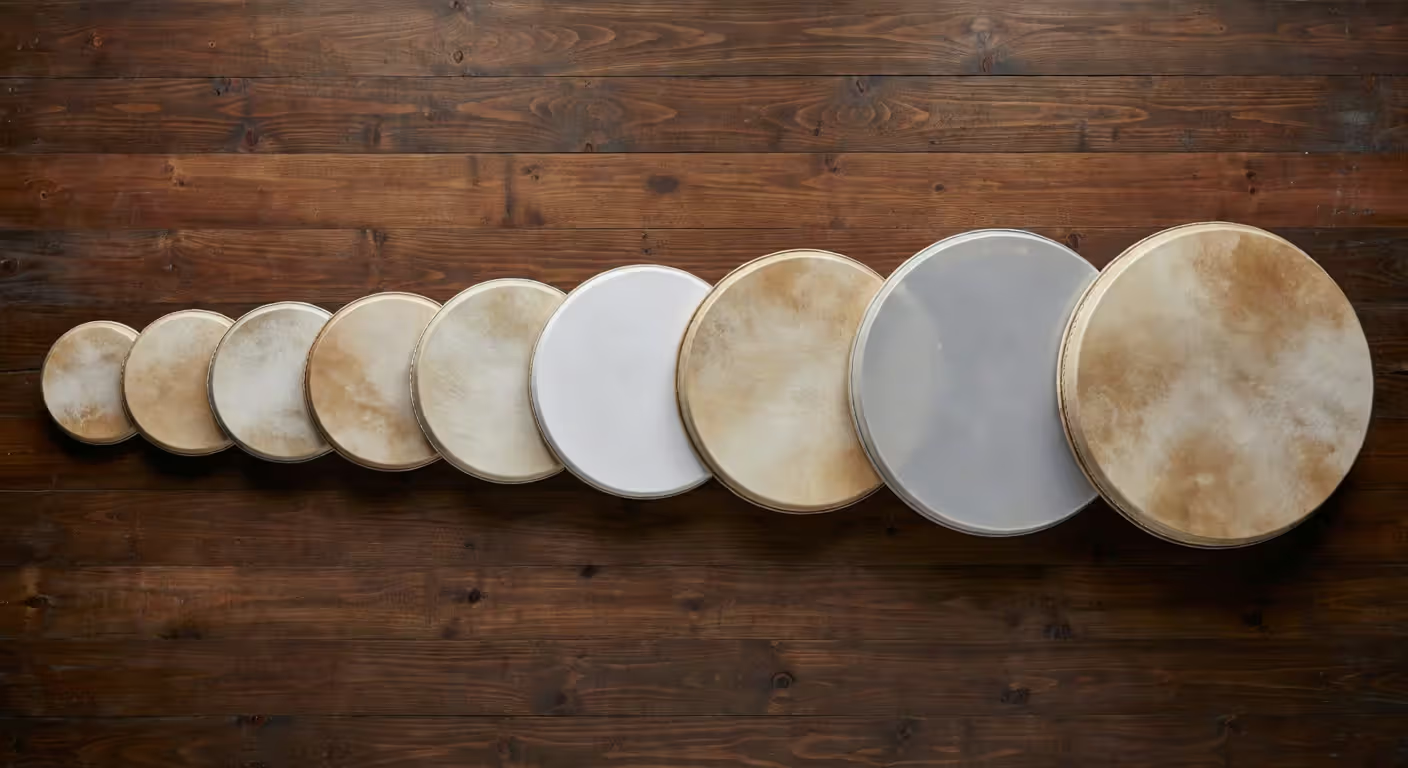
Once you've got your measurements, finding the right replacement head is usually straightforward. Most manufacturers offer heads in quarter-inch increments for common sizes, with half-inch jumps for larger drums.
If your bearing edge measures exactly 11.5 inches, you'll order an 11.5-inch head. Simple. But what if you measured 11.38 inches? You've got options.
Size tolerance ranges give you wiggle room. A quality drumhead can typically stretch about a quarter-inch beyond its nominal size. An 11.5-inch head can usually fit an 11.75-inch bearing edge if you're patient during installation. Going the other direction is trickier—you can't shrink a head that's too large.
The simpler option usually wins here: round down to the nearest quarter-inch. That 11.38-inch measurement? Order an 11.25-inch head. It'll fit with room to spare and give you good tension range for tuning.
Brand compatibility matters less than you'd think for replacing conga heads. Remo heads fit LP drums, LP heads fit Gon Bops drums, and so on. The bearing edge diameter is what matters, not who made the drum or the head. That said, some brands use proprietary mounting systems—always check before ordering.
When to size up or down depends on your playing style and tuning preferences. If you like high, tight tuning, go with a head that's slightly smaller than your bearing edge measurement. This gives you more tuning range at the top end. For lower, looser sounds, a head that exactly matches your bearing edge measurement works better.
Buffalo skin heads have different sizing than synthetic heads. Natural skin shrinks and stretches with humidity changes, so you typically order them slightly larger than your bearing edge measurement. Synthetic heads stay more stable, so you can match the bearing edge more precisely.
Author: Savannah Quillmere;
Source: lamat-records.com
Buying from specialty percussion shops versus general music stores makes a difference. Percussion specialists usually stock more size options and can guide you through fitting a new drumhead if your measurements fall between standard sizes. They've seen every weird drum dimension out there.
FAQ: Measuring and Fitting Conga Drumheads Questions Answered
Getting your conga head measurements right the first time saves money, frustration, and that sinking feeling when a new head arrives and doesn't fit. Take your time, measure the bearing edge carefully, and write everything down. The few minutes you invest now pay off with a perfectly fitted head that sounds great and lasts for years.
Related Stories

Read more
Read more



The content on this website is provided for general informational and educational purposes only. It is intended to explain concepts related to music production, recording, mixing, mastering, music industry roles, and distribution.
All information on this website, including articles, guides, and examples, is presented for general educational purposes. Results and success in music production may vary depending on skill level, equipment, and effort.
This website does not provide professional music production services or guarantees of commercial success, and the information presented should not be used as a substitute for consultation with qualified music producers, audio engineers, or music industry professionals.
The website and its authors are not responsible for any errors or omissions, or for any outcomes resulting from decisions made based on the information provided on this website.