
What Does an Engineer Do in Music Production
What Does an Engineer Do in Music Production?

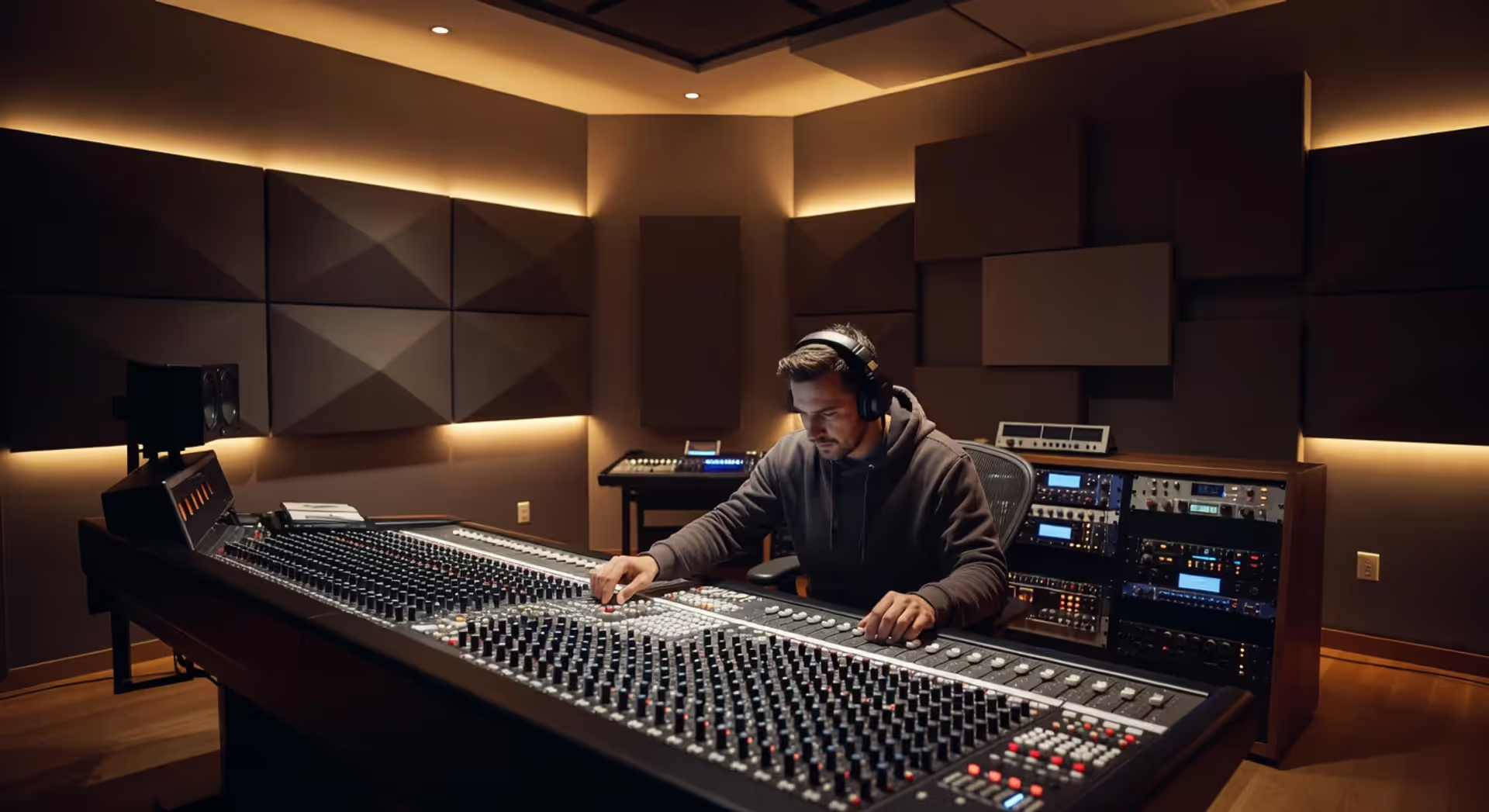
Music engineers are the invisible architects behind every track you hear. They turn raw performances into polished recordings, balance frequencies you didn't know existed, and solve technical problems in real time while artists focus on creativity. Without them, even the best song would sound like a rough demo recorded in a basement. But what exactly do they do all day? Let's break down the real work that happens behind the mixing console and inside the DAW.
Core Responsibilities of a Music Engineer
Music engineer responsibilities span the entire lifecycle of a recording project. At the most basic level, engineers capture sound, shape it, and prepare it for distribution. But that's like saying a chef just cooks food—it misses the nuance.
During pre-production, engineers assess the technical requirements of a project. They determine which microphones suit a vocalist's timbre, calculate how many inputs they'll need for a full band, and troubleshoot potential phase issues before anyone hits record. This planning phase prevents expensive studio time from being wasted on technical fumbles.
Once recording begins, engineer involvement in recording becomes constant. They monitor signal levels to prevent clipping, adjust headphone mixes so performers hear themselves clearly, and make split-second decisions about takes. Should you punch in that chorus, or run the whole song again? The engineer's experience guides these calls.
Post-production is where engineers spend the bulk of their hours. Editing takes, aligning vocals, removing breaths, tuning pitches—these tasks happen before mixing even starts. Then comes the actual mix, where every element finds its place in the stereo field. Finally, mastering engineers apply the last layer of polish that makes a track ready for Spotify, vinyl, or radio.
One thing people underestimate: engineers are problem-solvers first, button-pushers second. When a guitar amp hums, a vocal sounds thin, or a kick drum disappears in the mix, the engineer diagnoses and fixes it. Often without the artist even noticing there was a problem.
Author: Savannah Quillmere;
Source: lamat-records.com
What Recording Engineers Handle During Studio Sessions
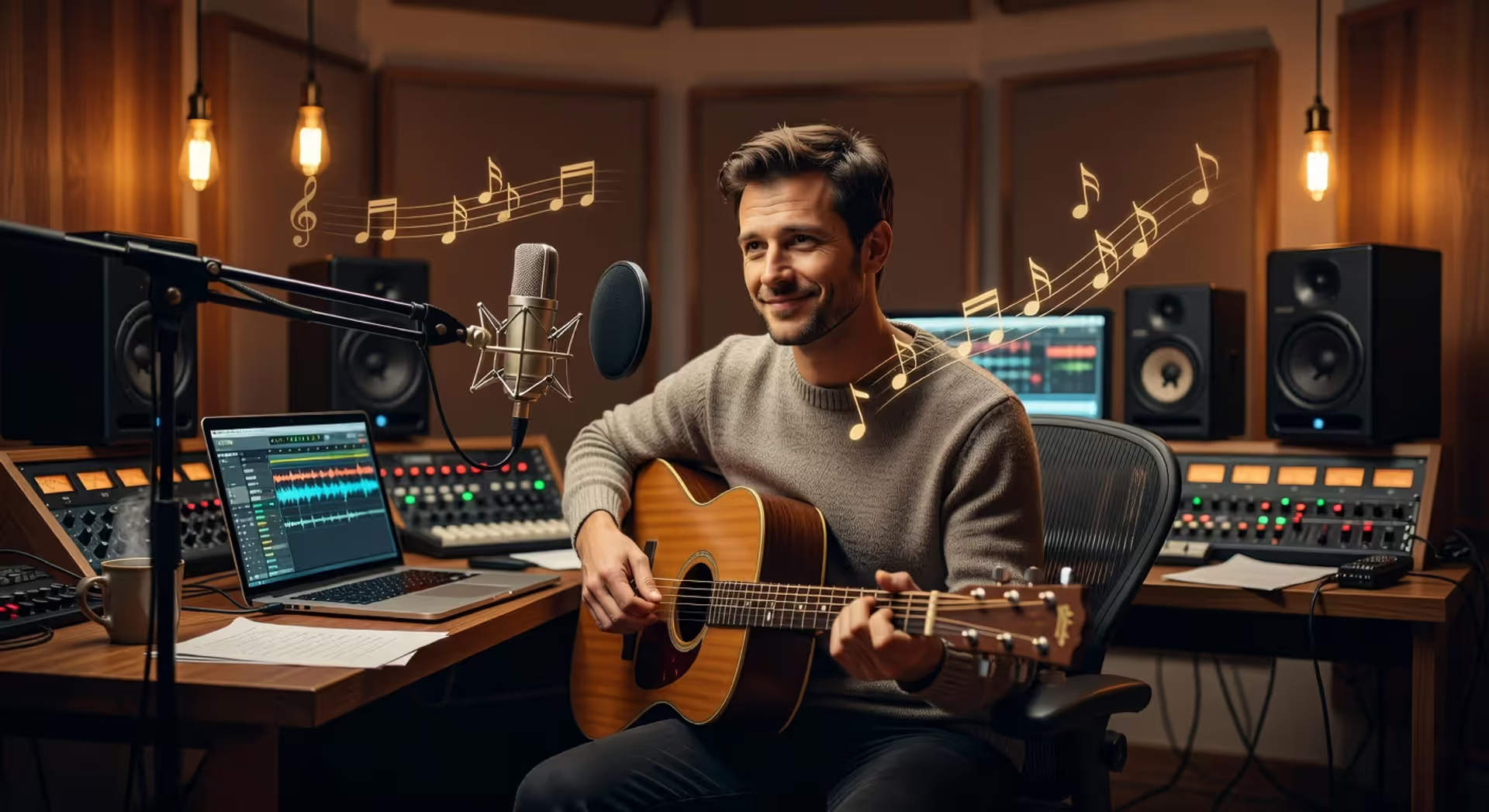
The role of a recording engineer during tracking sessions is part technical operator, part psychologist. Before the first note is played, they've already spent an hour setting up. Microphone placement alone can make or break a recording—moving a mic two inches changes the entire character of a snare drum.
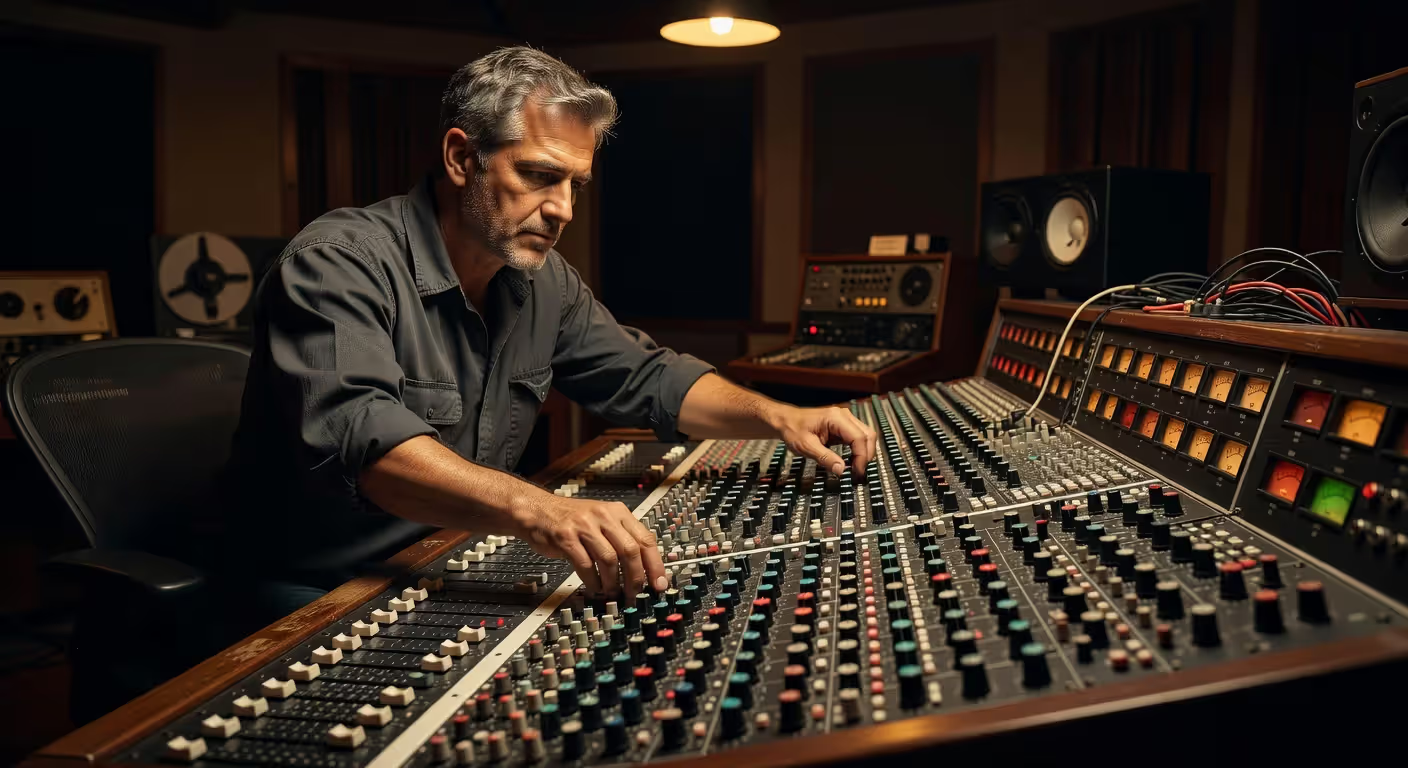
What engineers handle in studios during sessions includes signal routing through preamps, compressors, and sometimes outboard EQ before the sound even reaches the computer. They set input gains carefully, leaving enough headroom to avoid distortion while capturing a strong signal. Digital clipping can't be fixed later, so this step matters immensely.
During takes, recording engineers watch meters, listen for technical issues, and take notes. Was there a mouth click in verse two? Did the bassist's cable crackle at 2:37? They mark these moments for later editing. They also manage the session file—organizing tracks, naming takes, creating playlists for multiple versions.
Communication is half the job. Engineers translate between the artist's creative language and technical reality. When a singer says "I want it to sound warmer," the engineer knows that might mean rolling off some high frequencies, adding subtle saturation, or simply adjusting the headphone mix so the singer performs differently.
The common mistake here? Assuming the engineer is just pressing record. They're actively shaping the sound from the first moment. A great recording engineer captures not just accurate audio, but audio that's already 70% of the way to a finished mix.
Engineering Tasks in Mixing and Mastering
After tracking wraps, the technical side of music production shifts into mixing. This is where engineering tasks in production become deeply creative. Mixing engineers receive multitrack sessions—sometimes 60+ individual tracks—and sculpt them into a cohesive stereo file.
The process starts with organization and cleanup. Removing unwanted noises, fades on track edges, grouping similar instruments. Then comes gain staging: setting initial levels so nothing distorts and there's proper dynamic range to work with.
Next, the real work begins:
Equalization (EQ): Carving out frequency space so each instrument occupies its own sonic territory. The bass guitar sits below the kick drum, vocals cut through the midrange, cymbals sparkle up top without harshness.
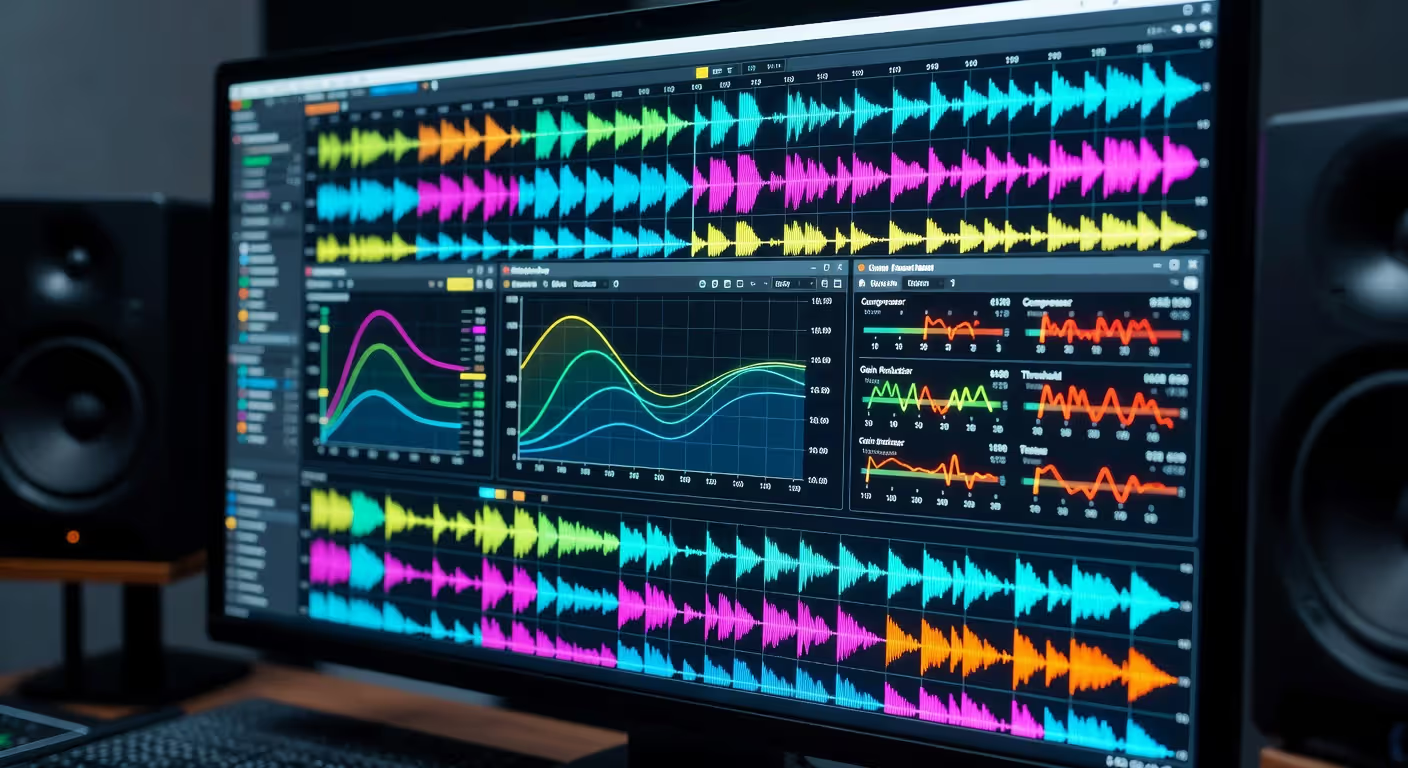
Compression: Controlling dynamics so quiet parts are audible and loud parts don't overwhelm. A vocal compressor might tame peaks by 3-6 dB, making the performance more consistent without sounding squashed.
Effects: Reverb creates space and depth. Delay adds movement and interest. Saturation adds warmth and harmonic richness. Modulation effects like chorus or phaser provide texture.
Panning: Placing elements in the stereo field. Drums slightly spread, guitars wider, vocals centered, backing vocals flanking the lead.
Automation: Volume, panning, and effect parameters change throughout the song. A vocal might be 0.5 dB louder in the chorus, or a delay might only appear on the last word of each line.
Mixing typically takes 4-8 hours per song for experienced engineers, sometimes much longer for complex productions. The pattern I see most often is engineers spending the first hour just getting balances right, then diving into detailed processing.
Author: Savannah Quillmere;
Source: lamat-records.com
Mastering is the final engineering phase. Mastering engineers receive the stereo mix and apply subtle processing to optimize it for distribution. They adjust overall EQ balance, apply gentle compression for loudness and cohesion, set the final peak and integrated loudness levels, add limiting to maximize volume without distortion, and ensure the track translates well across playback systems—from earbuds to club speakers.
Mastering is subtle. If you can easily hear what a mastering engineer did, they probably did too much. The changes are measured in fractions of decibels and narrow EQ adjustments.
Technical Skills and Equipment Music Engineers Use
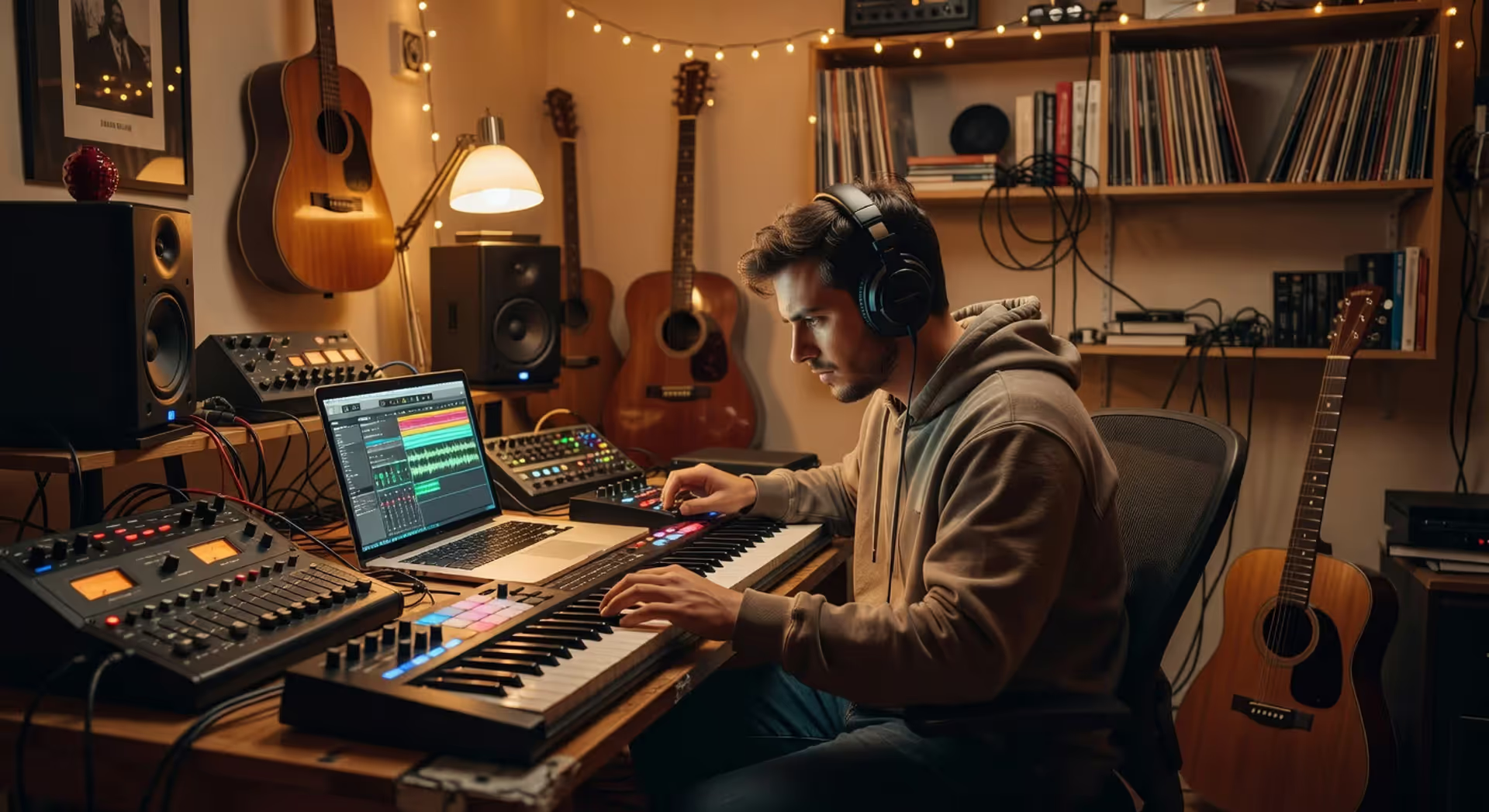
Studio engineer work demands a broad technical toolkit. The foundation is understanding signal flow—how audio travels from a microphone through preamps, converters, software, and back out to speakers. Without this mental map, troubleshooting becomes impossible.
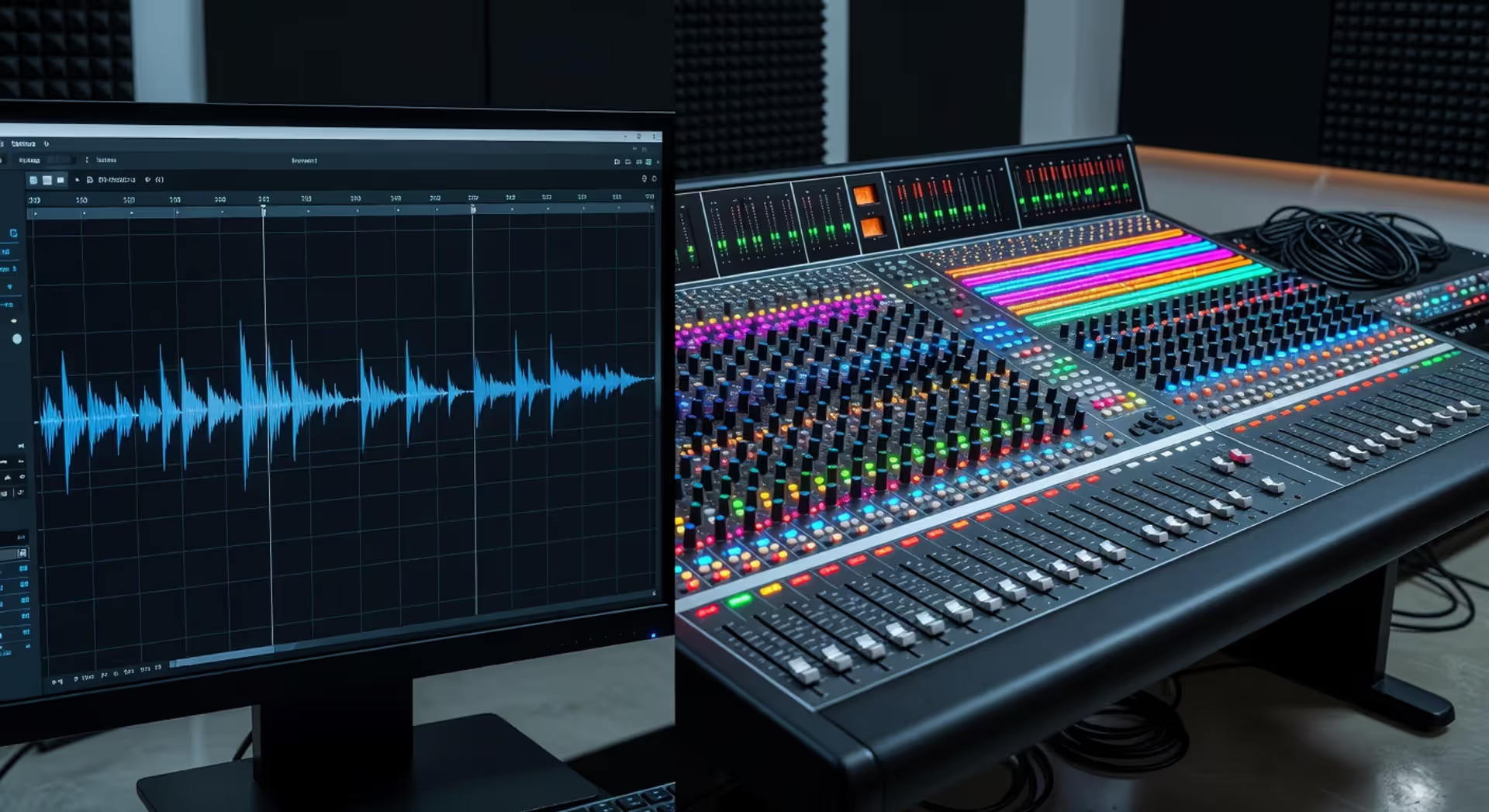
Digital Audio Workstations (DAWs) are the central hub. Pro Tools remains the industry standard in professional studios, though Logic Pro, Ableton Live, and Studio One are common too. Engineers need deep fluency in at least one DAW—knowing keyboard shortcuts, editing workflows, and hidden features that speed up work.
Plugin knowledge is equally important. Engineers build libraries of EQs, compressors, reverbs, and specialty processors. They understand which plugins color sound (adding character) versus which are transparent. A mixing engineer might own $5,000+ worth of software plugins by 2026.
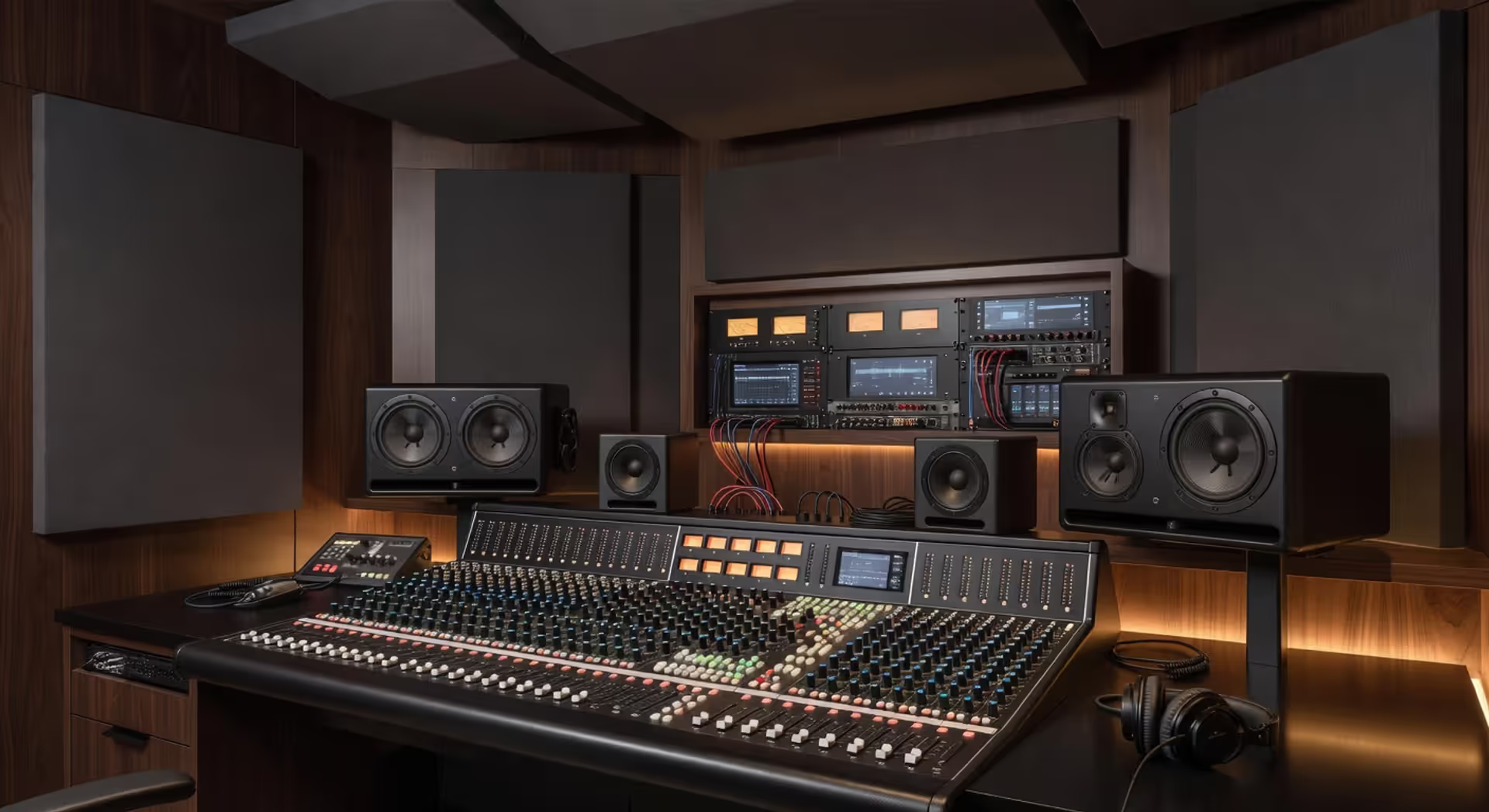
Hardware still matters. Many studios use analog preamps, compressors, and EQs for the sonic character they impart. Engineers need to know how to integrate outboard gear into digital workflows, calibrate levels, and maintain equipment.
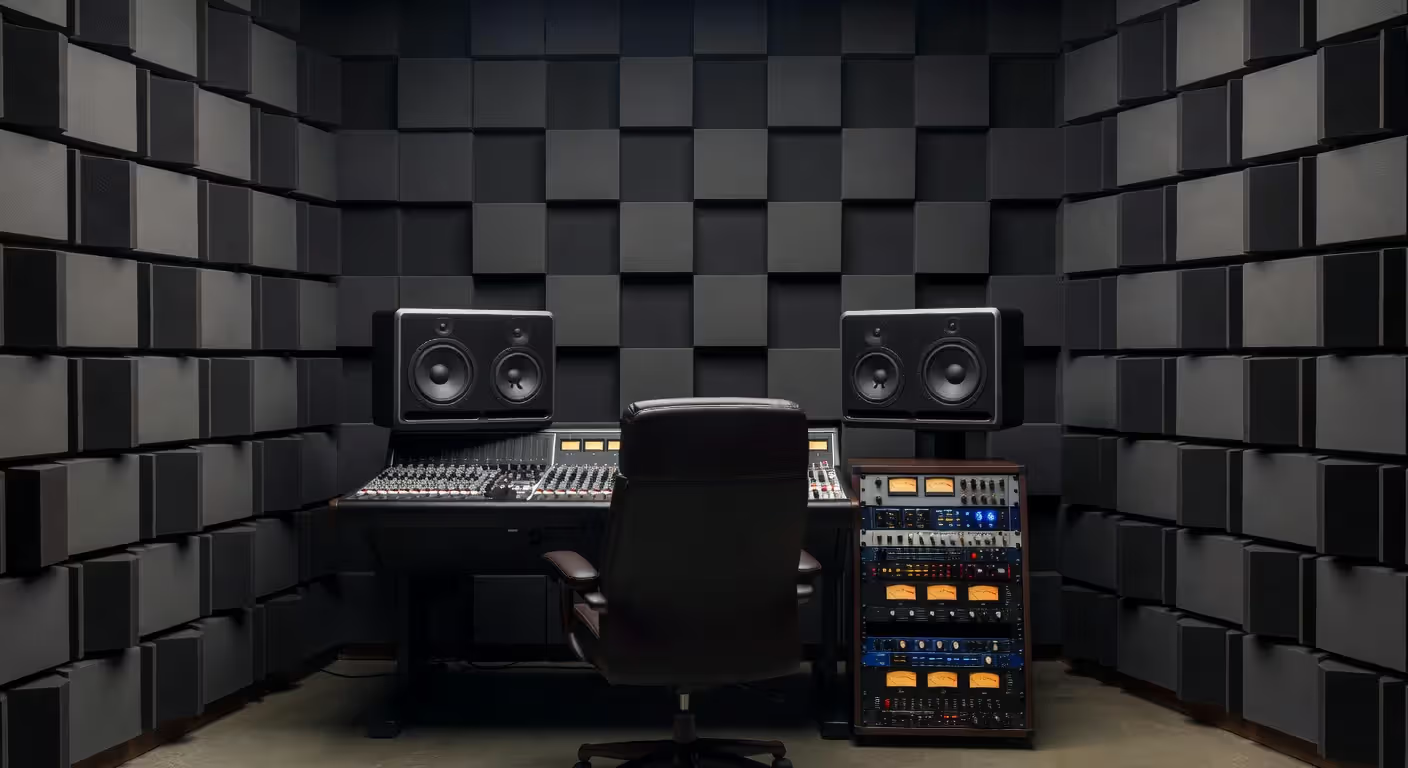
Acoustics knowledge separates good engineers from great ones. Understanding room modes, reflection points, and how to treat a space properly means their monitoring environment is trustworthy. If you can't hear accurately, you can't mix accurately.
Author: Savannah Quillmere;
Source: lamat-records.com
Critical listening skills develop over years. Engineers train their ears to identify specific frequencies (is that harshness at 3 kHz or 5 kHz?), detect phase issues, recognize compression artifacts, and judge spatial characteristics. This isn't natural talent—it's learned through thousands of hours of focused practice.
Different Types of Music Engineers and Their Roles
The term "music engineer" actually covers several specialized roles. Each requires overlapping but distinct skill sets.
Recording Engineer
Recording engineers focus on capturing performances. They work directly with artists during tracking sessions, operating the recording equipment and making real-time decisions about sound. Their primary concern is getting clean, characterful recordings that provide good raw material for mixing.
Recording engineers typically work in professional studios, though some operate project studios or travel to record on location. They're involved from pre-production through the end of tracking. Success in this role requires strong interpersonal skills—you're working with artists who may be nervous, perfectionistic, or difficult.
Mixing Engineer
Mixing engineers take recorded tracks and create the final stereo mix. They often work independently, receiving files remotely and mixing in their own rooms. Many mixing engineers specialize in specific genres—hip-hop mixing requires different skills than jazz or metal mixing.
The mixing phase is where the creative vision fully materializes. A great mixing engineer can make a mediocre recording sound professional, though they can't fix fundamentally flawed performances or recordings. They typically charge per song ($300-$2,000+ depending on experience) or day rates for album projects.
Mastering Engineer
Mastering engineers are the final quality control step. They work in carefully calibrated rooms with high-end monitoring, applying subtle processing to finished mixes. Mastering also includes technical tasks like setting track spacing for albums, encoding metadata, and creating different versions for various formats (streaming, CD, vinyl).
Mastering engineers need exceptional ears and restraint. The temptation to over-process is constant, but the best mastering is nearly invisible. They work alone, typically handling 3-5 songs per day.
Live Sound Engineer
Live sound engineers work in venues and touring situations, mixing sound in real time for audiences. There's no undo button—every decision is permanent. They deal with acoustic challenges, feedback management, and equipment failures while keeping the show running smoothly.
This role requires quick thinking and stress tolerance. The environment is completely different from a quiet studio. Live engineers often work nights and weekends, traveling extensively if they're on tour.
| Engineer Type | Primary Focus | Typical Work Environment | Key Tools Used | When Involved |
| Recording Engineer | Capturing performances | Recording studios, live rooms | Microphones, preamps, DAWs, monitoring systems | Pre-production through tracking |
| Mixing Engineer | Balancing and processing tracks | Home studios, mixing suites | DAW, plugins, analog outboard gear, reference monitors | Post-tracking to final mix |
| Mastering Engineer | Final polish and optimization | Dedicated mastering rooms | Mastering-grade converters, linear-phase EQ, limiters, metering | After mixing, before distribution |
| Live Sound Engineer | Real-time audience mixing | Venues, festivals, tours | Digital mixing consoles, PA systems, wireless systems | During live performances |
How Engineers Collaborate With Artists and Producers
Engineer involvement in recording extends beyond technical execution. The best engineers contribute creatively while respecting the artist's vision. This balance is delicate—too passive and they're just button-pushers, too assertive and they overstep their role.
Communication starts before the session. Engineers ask questions: What's the vibe you're going for? What references should I listen to? Are there specific sonic elements you want to feature? This homework prevents misalignment later.
During sessions, engineers often make suggestions. "Want to try doubling that vocal?" "This guitar part might work better panned wide." "Let's add some room ambience to the drums." These aren't demands—they're options presented for consideration. The artist or producer makes the final call.
Problem-solving is where engineers prove their value. When something isn't working, they diagnose why and propose solutions. The vocal sounds thin? Maybe it needs a different mic, or maybe the arrangement is too dense and masking it. The drums lack punch? Could be the room, the tuning, the playing, or the processing.
Translating artistic vision into technical execution is the core skill. When a producer says "make it sound bigger," the engineer knows that might mean adding width with stereo imaging, depth with reverb, or low-end weight with EQ and compression. They test options until something clicks.
The relationship works best when there's mutual respect. Artists and producers bring the creative vision; engineers bring the technical means to realize it. Neither can do the other's job, and acknowledging that creates smooth collaboration.
The engineer's job is to be the bridge between the artist's emotion and the listener's ears. We're not making decisions for ourselves—we're serving the song and making sure the artist's intention comes through clearly and powerfully.
— Pensado Dave
Common Mistakes to Avoid When Working With a Studio Engineer
Artists and bands often sabotage their own sessions through preventable mistakes. Understanding what engineers handle in studios helps you work with them more effectively.
Poor preparation tops the list. Showing up without finalized arrangements, out-of-tune instruments, or unrehearsed parts wastes expensive studio time. Engineers can't fix fundamental performance issues—they can only capture what you play. Rehearse thoroughly before booking studio time.
Unrealistic expectations about what's possible create frustration. No, the engineer can't "make me sound like Beyoncé" if you're an untrained singer. They can optimize your performance, but they're not magicians. Auto-Tune helps pitch, but it can't add soul or timing.
Over-directing the engineer micromanages the technical process. You hired them for their expertise—let them use it. Saying "I want the vocal warmer" is helpful. Saying "add exactly 3.2 dB at 250 Hz" when you don't know what you're talking about is counterproductive.
Bringing too many opinions into the session slows everything down. If five people all have different ideas about the snare sound, you'll spend two hours on drums. Designate one person (usually the producer or bandleader) to make final calls.
Ignoring the engineer's advice when something's technically wrong is foolish. If they say the vocal is clipping and needs to be re-recorded, they're right. You might not hear it on the studio monitors, but it'll be obvious on the final mix.
Not communicating about budget and timeline creates awkward situations. Be upfront about how many hours you've booked and what you need to accomplish. Engineers can work faster if they know you're on a tight schedule, or take more experimental approaches if time allows.
The simpler option usually wins here: treat your engineer as a skilled collaborator, come prepared, communicate clearly, and trust their technical judgment. Your sessions will run smoother and yield better results.
| Engineer Type | Recording Engineer | Mixing Engineer | Mastering Engineer | Live Sound Engineer |
| Primary Focus | Capturing performances | Balancing and processing tracks | Final polish and optimization | Real-time audience mixing |
| Typical Work Environment | Recording studios, live rooms | Home studios, mixing suites | Dedicated mastering rooms | Venues, festivals, tours |
| Key Tools Used | Microphones, preamps, DAWs, monitoring systems | DAW, plugins, analog outboard gear, reference monitors | Mastering-grade converters, linear-phase EQ, limiters, metering | Digital mixing consoles, PA systems, wireless systems |
| When Involved | Pre-production through tracking | Post-tracking to final mix | After mixing, before distribution | During live performances |
FAQ: Music Engineering Questions Answered
Understanding what engineers do in music production reveals just how technical and creative the role truly is. They're problem-solvers, sound sculptors, and collaborative partners who turn artistic vision into sonic reality. Whether you're an aspiring engineer or an artist preparing for studio sessions, recognizing the depth of this work helps you appreciate the craft—and get better results from your projects.
Related Stories

Read more
Read more

The content on this website is provided for general informational and educational purposes only. It is intended to explain concepts related to music production, recording, mixing, mastering, music industry roles, and distribution.
All information on this website, including articles, guides, and examples, is presented for general educational purposes. Results and success in music production may vary depending on skill level, equipment, and effort.
This website does not provide professional music production services or guarantees of commercial success, and the information presented should not be used as a substitute for consultation with qualified music producers, audio engineers, or music industry professionals.
The website and its authors are not responsible for any errors or omissions, or for any outcomes resulting from decisions made based on the information provided on this website.