
What Is a Small Piano Called and Which Type Fits Your Space
What Is a Small Piano Called?

Content
Content
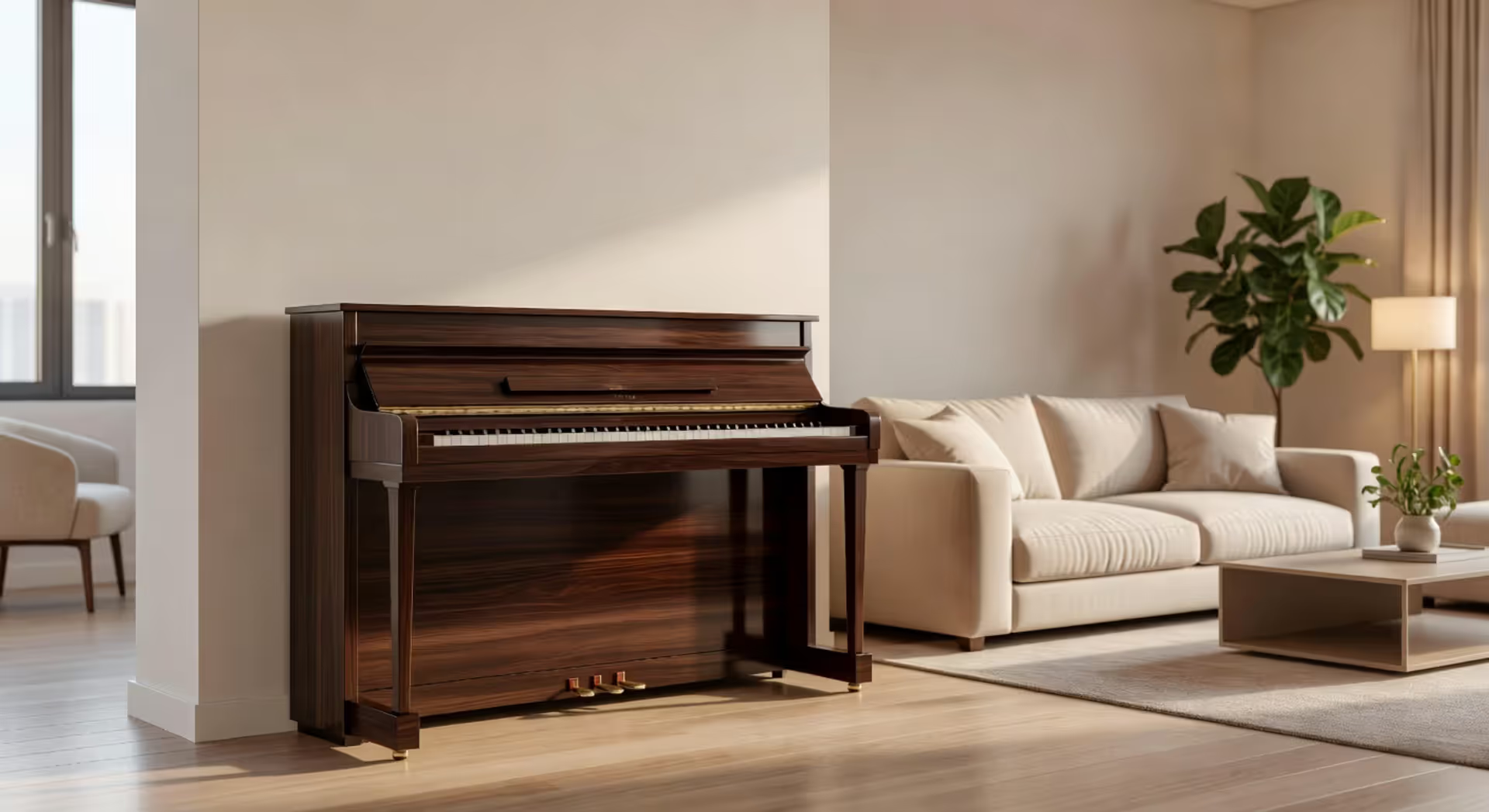
If you're shopping for a piano but don't have a concert hall's worth of space, you've probably wondered: what is a small piano called? The answer isn't quite as simple as you might think. There's no single term that covers all compact pianos. Instead, the piano world uses several specific names to describe different types of smaller instruments, each with its own size range, sound characteristics, and ideal use cases. Understanding these categories will help you choose the right instrument for your home without getting lost in confusing terminology.
Common Names for Small Pianos
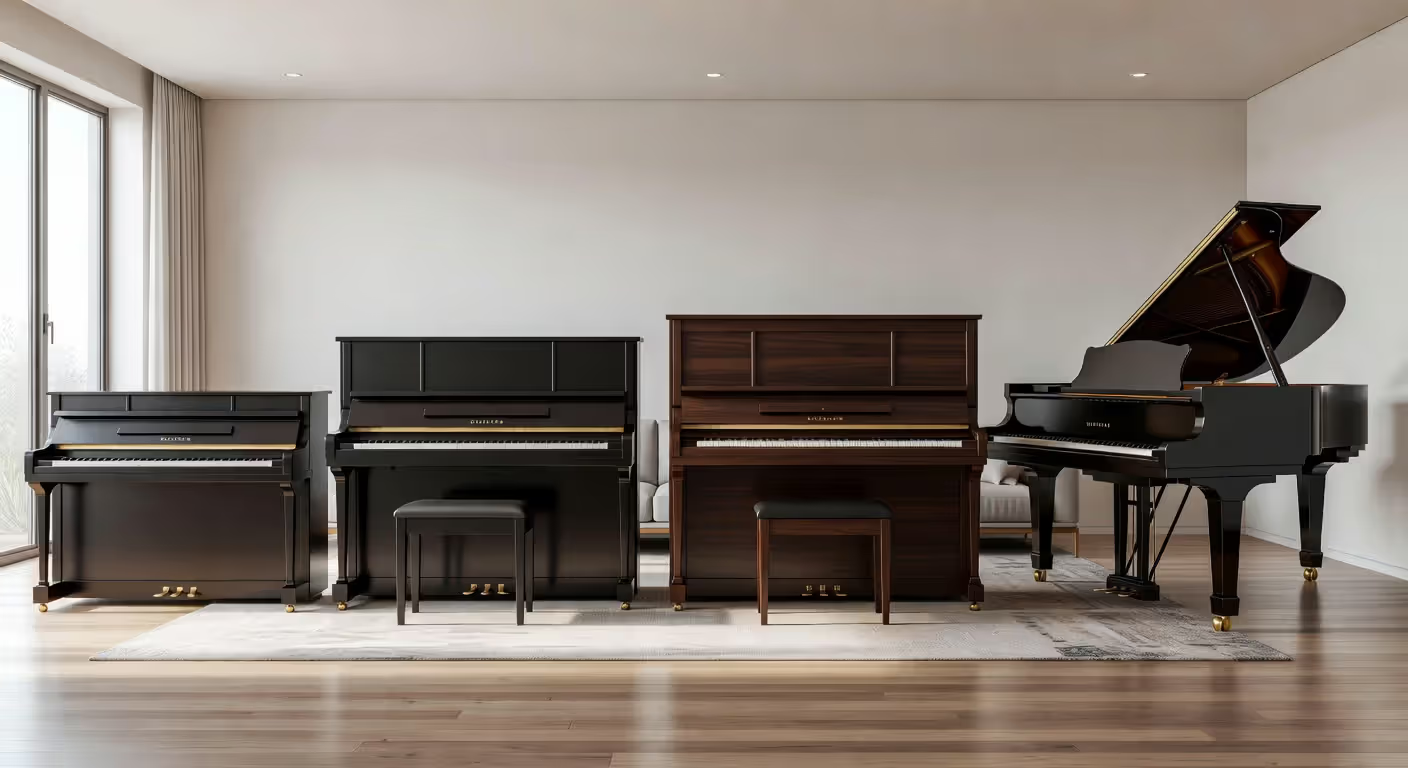
The piano family includes several compact varieties, and each has earned its own distinct name over the years. The most common names for small pianos include spinet, console, studio upright, and baby grand. These aren't interchangeable terms—they refer to specific size categories with measurable differences.
Spinet pianos stand as the smallest upright pianos you can buy, typically measuring 36 to 40 inches tall. They were wildly popular in American homes during the mid-20th century when space was at a premium and families still wanted a real piano in the living room.
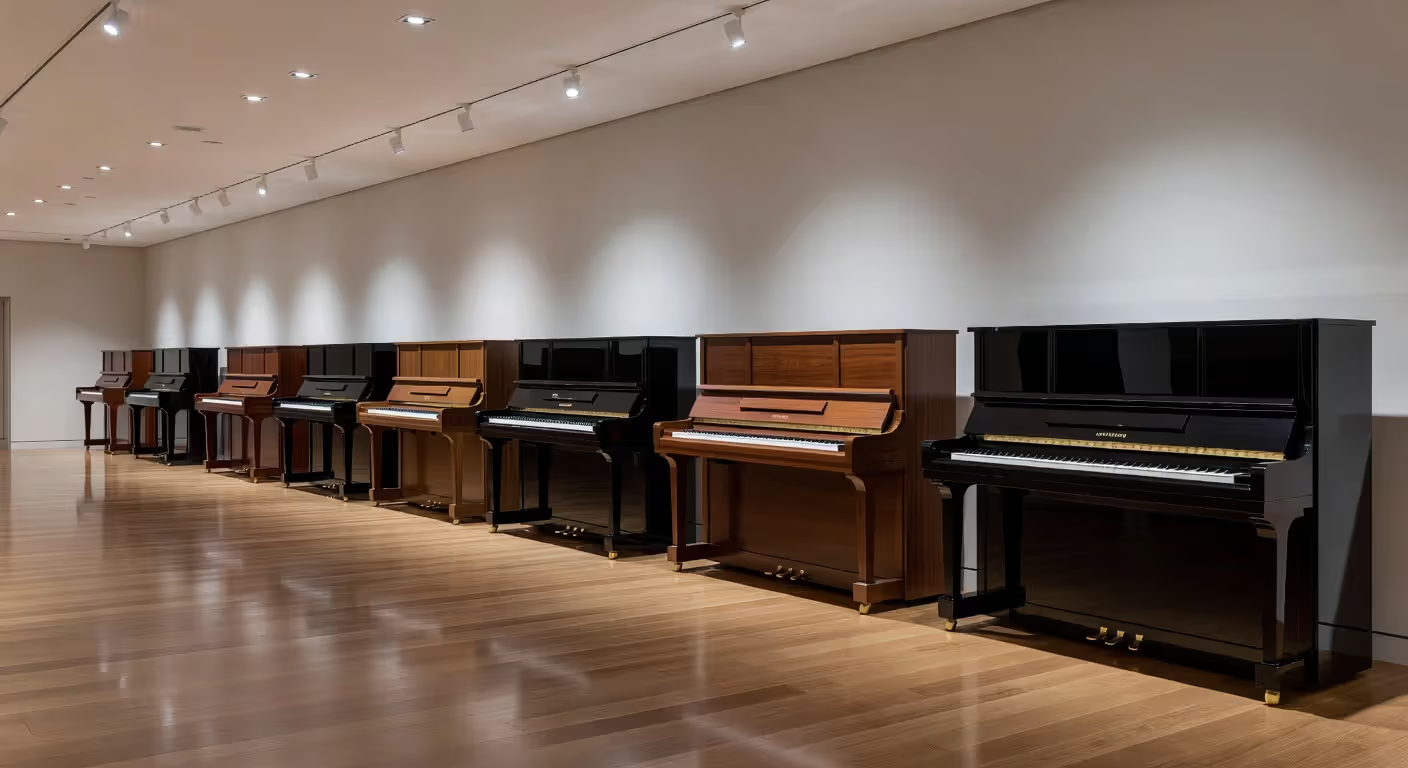
Console pianos occupy the middle ground, standing roughly 40 to 44 inches in height. They offer a bit more sound depth than spinets while still fitting comfortably against most walls. You'll find these in apartments, practice rooms, and homes where floor space matters but sound quality can't be completely sacrificed.
Studio uprights push taller, ranging from 45 to 48 inches. Despite being called "small" in comparison to full-size uprights, they deliver substantially better tone than their shorter cousins. Many music schools and serious students prefer this size.
Baby grand pianos take a different approach to compact design. Instead of standing tall, they stretch horizontally, typically measuring 4'6" to 5'6" in length. They're the smallest of the grand piano family but still demand more floor space than any upright.
Author: Miles Arbordale;
Source: lamat-records.com
Each category serves different needs. The pattern I see most often is that buyers initially want the smallest possible option, then regret it once they hear the tonal difference a few extra inches can make.
Spinet Pianos: The Smallest Upright Option
When you need the absolute smallest acoustic piano that still functions as a real instrument, the spinet is your answer. These compact uprights typically measure 36 to 40 inches tall and about 58 inches wide. Their depth usually runs around 24 inches, making them remarkably space-efficient.
But that compact size comes with trade-offs. Spinet pianos use a "drop action" mechanism where the action sits below the keys rather than at key level. This design choice was necessary to fit everything into such a short cabinet. The result? A touch that feels less responsive than larger pianos, with a slightly mushy quality that experienced players notice immediately.
Sound quality represents another compromise. The shorter strings in a spinet simply can't produce the same richness and resonance as longer strings. Bass notes in particular suffer, often sounding thin or tinny compared to larger instruments. The soundboard is smaller too, which limits volume and tonal complexity.
So why would anyone choose a spinet? Space constraints are the main driver. If you live in a small apartment, dorm room, or compact house where every square foot counts, a spinet might be your only acoustic option. They're also significantly lighter than larger pianos—usually 300 to 400 pounds versus 500+ pounds for bigger uprights—making moves easier.
The used market is flooded with spinets from the 1950s through 1980s. Many are available for free or very cheap, but buyer beware. Old spinets often need extensive restoration work that costs more than the piano is worth. A spinet in poor condition isn't just a bad investment—it can actually discourage learning because of its unpleasant sound and touch.
Common mistake: assuming all small pianos are spinets. Many people use "spinet" as a catch-all term for any short piano, but consoles and studio uprights are distinctly different instruments with better performance characteristics.
Console Pianos: Mid-Size Compact Choice
Console pianos hit a sweet spot for many buyers. At 40 to 44 inches tall, they're only slightly larger than spinets but deliver noticeably better sound and touch. That extra height makes all the difference.
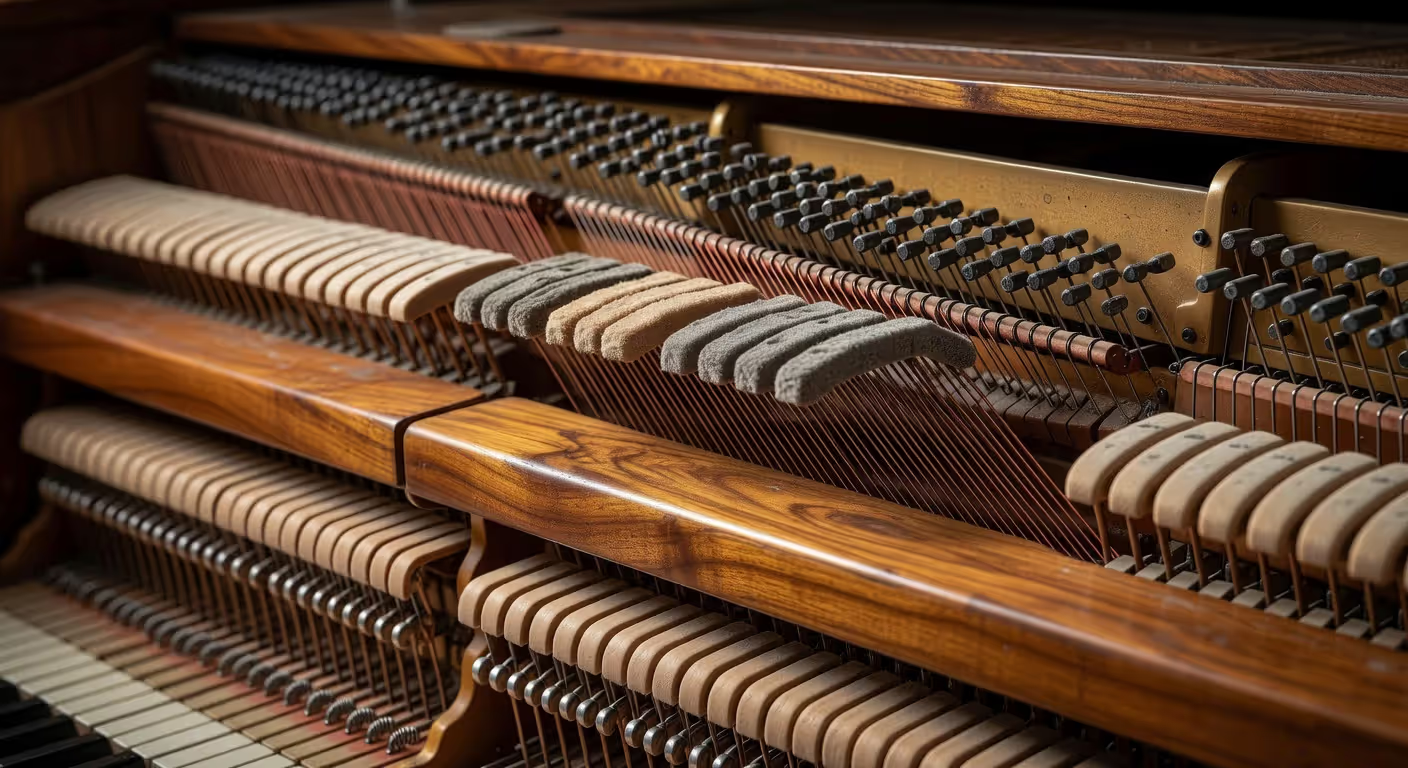
Unlike spinets, console pianos use a "direct blow" action or "compressed" action that sits at key level. This creates a more responsive feel that's closer to what you'd experience on a larger piano. The keys connect more directly to the hammers, giving you better control over dynamics and expression.
String length increases with those extra few inches of height, and longer strings mean richer tone. The bass register sounds fuller, the treble has more clarity, and the overall voice of the instrument feels more balanced. You won't mistake a console for a concert grand, but it's a legitimate musical instrument rather than just a space-saving compromise.
Console pianos became the apartment-friendly choice starting in the 1940s and remain popular today. They fit comfortably in most living rooms without dominating the space. Many manufacturers still produce new console models, unlike spinets which have largely disappeared from production lines.
Price-wise, expect to pay $3,000 to $7,000 for a decent used console in good condition, or $5,000 to $12,000 for a new one from a reputable brand like Yamaha, Kawai, or Boston. That's more than most spinets but less than studio uprights or baby grands.
Author: Miles Arbordale;
Source: lamat-records.com
The console's popularity in apartments isn't just about size. The moderate volume output works well in buildings with shared walls. You get enough sound to practice effectively without rattling your neighbors' windows during evening practice sessions.
Studio and Upright Piano Sizes Explained
Studio upright pianos, standing 45 to 48 inches tall, represent a significant step up in sound quality. These instruments were originally designed for music school practice rooms and professional studios—hence the name—where space efficiency mattered but tone couldn't be compromised.
The extra height allows for longer strings and a larger soundboard, which translates directly to better sound. Bass notes gain depth and power. The overall tonal range expands. Many studio uprights can hold their own against baby grands in blind listening tests, especially in smaller rooms where a grand's sound can actually be overwhelming.
Touch response improves too. Studio uprights typically use full-size actions that closely mimic the feel of grand piano actions. Serious students and professional players often prefer practicing on a good studio upright over a mediocre baby grand.
Full-size uprights push even taller, ranging from 48 to 52+ inches. These larger instruments approach the sound quality of grand pianos while maintaining a vertical footprint. But they're heavy (often 600+ pounds), harder to move, and visually dominant in a room. They're less common in homes and more often found in churches, schools, and performance venues.
Here's where size really matters for sound: string length determines the fundamental pitch characteristics of each note. In a 36-inch spinet, the lowest bass strings might be only 48 inches long. In a 52-inch upright, those same notes use strings up to 72 inches long. Longer strings vibrate with more complexity, producing richer overtones and a more pleasing tone.
The soundboard size difference is equally important. A larger soundboard can move more air, creating greater volume and projection. It also supports a wider dynamic range—the difference between the softest and loudest sounds you can produce.
Price ranges for studio uprights typically run $6,000 to $15,000 used, or $10,000 to $25,000+ new for quality brands. Full-size uprights can exceed $30,000 for premium models.
Baby Grand vs. Compact Uprights
Baby grand pianos confuse the "small piano" conversation because they're simultaneously compact (compared to larger grands) and space-demanding (compared to any upright). Let's break down the real-world differences.
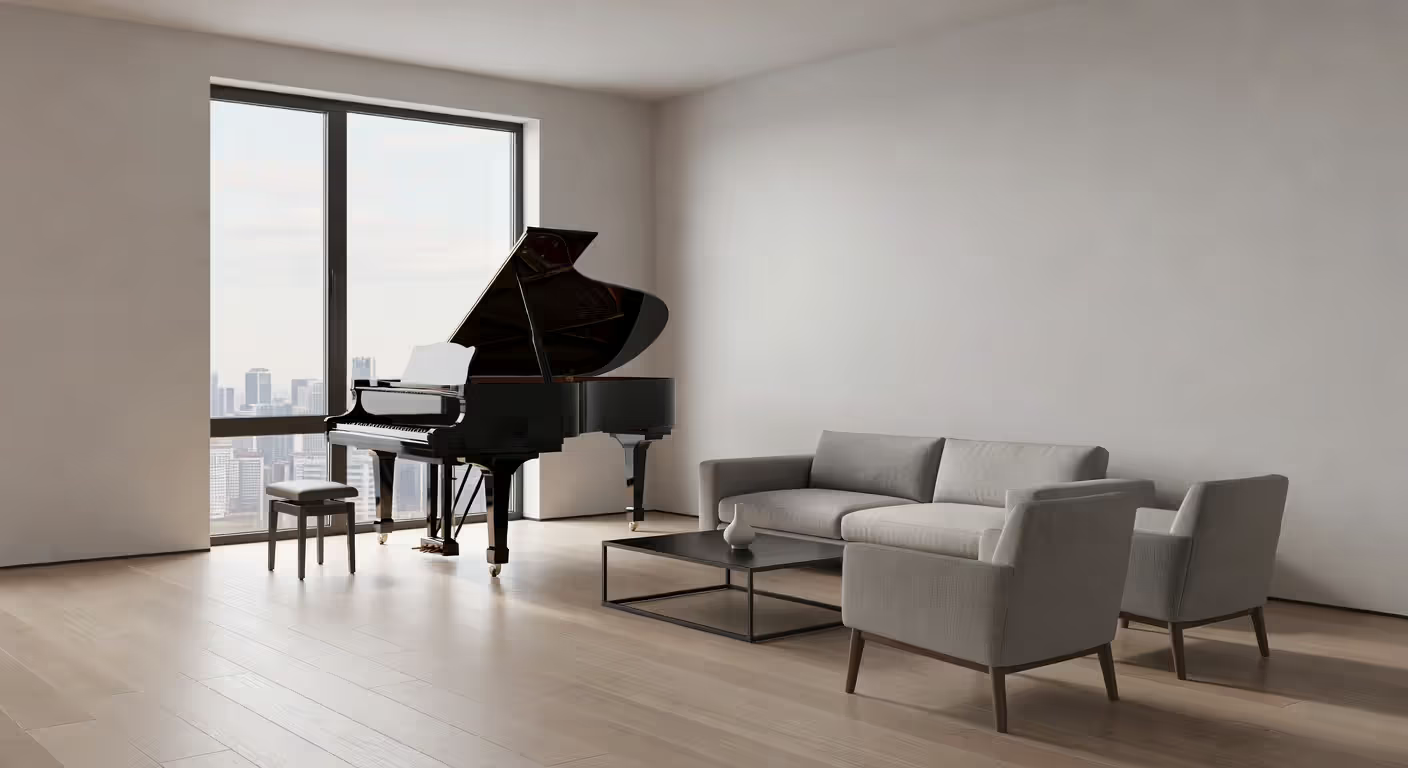
A typical baby grand measures 4'6" to 5'6" in length and about 5 feet in width. That creates a footprint of roughly 22 to 28 square feet. Compare that to a console piano's footprint of about 12 square feet, or even a studio upright's 14 square feet. The baby grand demands significantly more floor space.
But here's what you get for that extra space: horizontal strings. In a grand piano, the strings run horizontally and the hammers strike from below. This creates a more responsive action with faster key repetition and better control. The lid can open to project sound upward and outward, filling a room more effectively than an upright's front-facing sound.
Sound quality between a baby grand and a studio upright is closer than many people expect. A high-quality 48-inch studio upright can actually outperform a cheap 5-foot baby grand. String length matters more than orientation. A studio upright with 60-inch bass strings will produce richer bass than a 5-foot baby grand with 58-inch bass strings.
Author: Miles Arbordale;
Source: lamat-records.com
Can you fit a baby grand in an apartment? Sometimes. You need a room that's at least 10 feet by 10 feet, and ideally larger. The piano shouldn't block pathways or crowd other furniture. Some luxury apartments and lofts have the space. Most standard apartments don't, at least not without making the room feel cramped.
Weight is another consideration. Baby grands typically weigh 500 to 700 pounds, similar to larger uprights. But that weight is distributed over a larger area, which can actually make floor loading less of an issue in older buildings.
The simpler option usually wins here: if you're tight on space, a studio upright gives you better sound-per-square-foot than a baby grand. Save the grand for when you have a dedicated music room.
How to Choose the Right Small Piano for Your Home
Choosing a small piano starts with measuring your space, but it shouldn't end there. Here's a practical framework for making the decision.
First, measure your available floor space. Don't just measure the wall where the piano will sit—account for the bench space too. You need at least 3 feet of clearance in front of the piano for comfortable playing. Measure ceiling height if you're considering a full-size upright; some won't fit through standard doorways or up staircases.
Second, define your sound priorities honestly. Are you a beginner who needs a functional practice instrument? A console will serve you well. Are you an intermediate or advanced player who'll notice tonal limitations? You'll probably need a studio upright minimum. Are you buying for a young child who might quit in six months? Don't overspend on your first instrument.
Budget reality check: you can find free or cheap spinets all day long, but many will need $1,000+ in repairs and tuning to become playable. A well-maintained used console for $4,000 is often a better investment than a $500 spinet that needs work.
New versus used is a personal calculation. New pianos come with warranties and predictable condition but cost significantly more. Used pianos offer better value but require careful inspection. Always hire a qualified piano technician to inspect a used piano before buying. Their $150 inspection fee can save you from a $3,000 mistake.
Consider these questions:
Will this piano get regular use? If you're serious about playing, invest in better sound quality. If it's decorative furniture that gets played occasionally, a console is fine.
How long will you own it? If this is a starter instrument you'll upgrade in a few years, buy used and save money. If it's a long-term investment, quality matters more.
Can you hear the difference? Visit a piano store and play spinets, consoles, and studio uprights back-to-back. If you genuinely can't hear a difference, save your money and buy smaller.
What's your building situation? Renters should consider weight limits, move-in logistics, and whether they'll want to take the piano when they move. A 300-pound console is much easier to relocate than a 600-pound studio upright.
Author: Miles Arbordale;
Source: lamat-records.com
One counterintuitive point: buying the smallest possible piano to "save space" often backfires. If the sound quality disappoints you, the piano becomes furniture rather than an instrument you actually play. It takes up space without delivering value. Sometimes a slightly larger piano that you'll actually enjoy playing is the smarter space investment.
Comparison of Small Piano Types
| Piano Type | Height/Dimensions | Typical Price Range | Sound Quality | Best For |
| Spinet | 36-40" tall, 58" wide | $0-$2,000 used; rarely made new | Fair; thin bass, limited dynamics | Extreme space constraints; casual players who prioritize size over sound |
| Console | 40-44" tall, 58" wide | $3,000-$7,000 used; $5,000-$12,000 new | Good; balanced tone, adequate for most players | Apartments and homes; beginners to intermediate players; best size-to-sound ratio |
| Studio Upright | 45-48" tall, 58" wide | $6,000-$15,000 used; $10,000-$25,000 new | Very good; rich tone, full dynamics | Serious students; small teaching studios; players who prioritize sound quality |
| Baby Grand | 4'6"-5'6" long, ~5' wide | $8,000-$20,000 used; $15,000-$40,000+ new | Excellent; superior action, full tonal range | Larger apartments and homes; advanced players; those who value grand piano touch |
The biggest mistake I see is people choosing a piano based purely on measurements and price. A piano that frustrates you because of poor tone or sluggish action won't get played, no matter how perfectly it fits your floor plan. I always tell clients: buy the best-sounding piano you can fit and afford, even if that means going six inches taller than you initially planned. Those extra inches translate to years of playing enjoyment versus years of regret.
— Steinberg Marcus
FAQ: Small Piano Questions Answered
Choosing what small piano fits your space isn't just about measurements—it's about balancing size constraints with your sound expectations and playing goals. A console piano offers the best compromise for most people, delivering decent tone in an apartment-friendly package. But if you have room for a studio upright and can hear the difference, those extra inches are worth it. Start by playing different sizes in person, measure your space honestly, and remember that a piano you'll actually enjoy playing is always a better investment than one that just fits.
Related Stories
Read more
Read more

The content on this website is provided for general informational and educational purposes only. It is intended to explain concepts related to music production, recording, mixing, mastering, music industry roles, and distribution.
All information on this website, including articles, guides, and examples, is presented for general educational purposes. Results and success in music production may vary depending on skill level, equipment, and effort.
This website does not provide professional music production services or guarantees of commercial success, and the information presented should not be used as a substitute for consultation with qualified music producers, audio engineers, or music industry professionals.
The website and its authors are not responsible for any errors or omissions, or for any outcomes resulting from decisions made based on the information provided on this website.